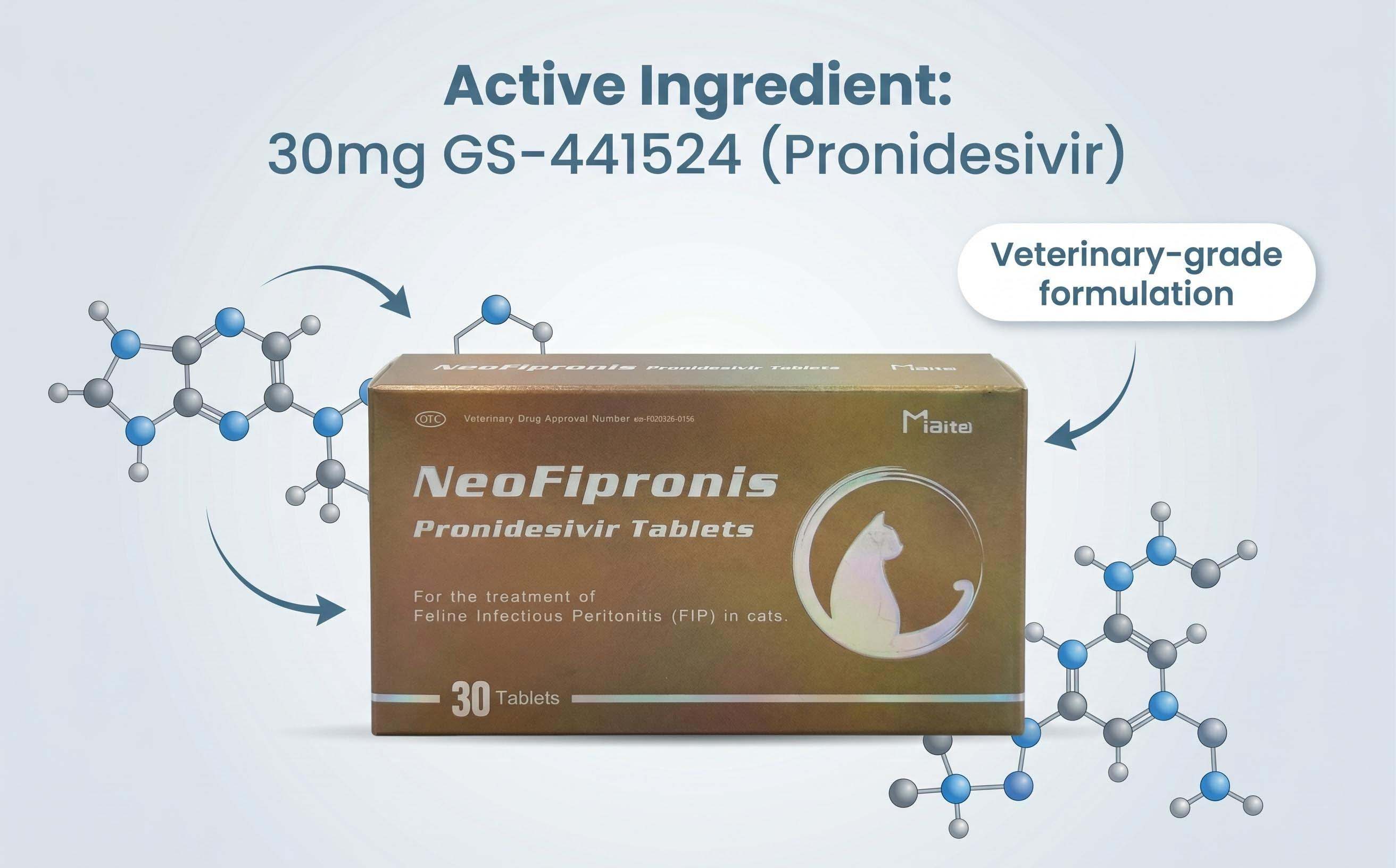
What Are the Indications and Contraindications of NeoFipronis (Pronidesivir)

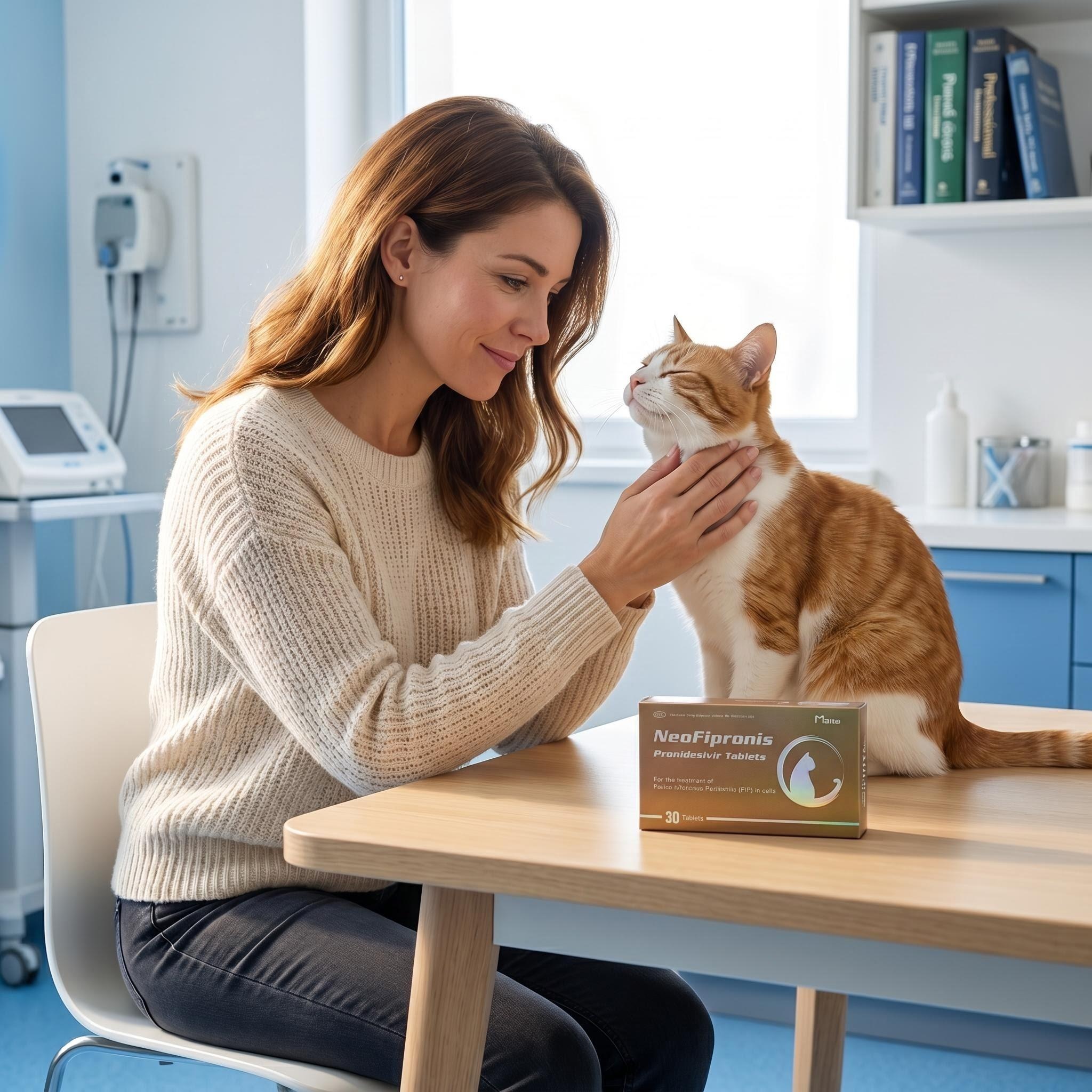
NeoFipronis (Pronidesivir) is positioned as an oral FIP treatment for cats suffering from feline infectious peritonitis (FIP), a serious and often life-threatening viral disease. Its active ingredient, GS-441524, is widely discussed in FIP care because of its strong antiviral activity and its ability to help control the progression of disease signs associated with FIP. In practical use, NeoFipronis is commonly considered for cats showing poor appetite, lethargy, fever, abdominal effusion, pleural effusion, enlarged lymph nodes, inflammatory granulomas, neurological impairment, and uveitis. Because FIP can affect different organs and present in different forms, the treatment plan should always match the cat’s clinical status and the veterinarian’s recommendation.
Indications of NeoFipronis (Pronidesivir)
NeoFipronis is mainly indicated for cats diagnosed with FIP or strongly suspected of having FIP based on clinical signs, laboratory findings, and veterinary assessment. It is especially relevant for wet FIP with abdominal fluid or chest fluid, dry FIP with inflammatory lesions or enlarged lymph nodes, and mixed or complicated cases involving the eyes or nervous system. Cats with reduced appetite, weight loss, persistent fever, weakness, or breathing difficulty caused by effusion may benefit from timely antiviral support. For neurologic and ocular FIP, higher dosing is often required under veterinary supervision because these forms can be more difficult to treat and may need stronger drug exposure.
Contraindications and When to Avoid Use
NeoFipronis should not be used in cats that are known or suspected to be allergic or hypersensitive to GS-441524 or any component of the formulation. It is also not appropriate for non-feline species, and it must never be given to humans. Caution is advised in cats with severe concurrent illness, especially advanced liver disease, significant kidney dysfunction, or unstable systemic conditions, unless a veterinarian determines that treatment benefits outweigh the risks. Kittens, pregnant cats, nursing queens, and very fragile patients should also be evaluated carefully before use. If a cat has an unclear diagnosis, or if symptoms may be caused by another disease, veterinary confirmation is essential before starting treatment.
Dosage, Administration, and Monitoring
The commonly described dosage is 15 mg per kilogram of body weight once daily, which is often described as half a tablet, while neurological or ocular FIP may require dose escalation to 30 mg/kg according to veterinary guidance. It is generally recommended to give the medication on an empty stomach, either one hour before feeding or two hours after meals, to support absorption. Treatment should be continued for no less than 12 weeks without missed doses, because interrupted therapy may reduce effectiveness and increase the risk of relapse. During treatment, owners should monitor appetite, temperature, energy level, breathing, and neurological or eye-related changes. Regular bloodwork and liver and kidney function checks are strongly recommended.
Safety Profile and Practical Considerations
NeoFipronis is marketed as a fast-absorbing, well-tolerated oral option with relatively few side effects, which makes it attractive for long-term FIP management. Even so, any cat receiving antiviral therapy should be observed closely for vomiting, diarrhea, appetite changes, or abnormal laboratory results. Although the product may be sold without prescription in some markets, veterinary supervision is still the safest choice, especially for confirmed FIP, severe cases, or cats with comorbidities. For product quality and authenticity, purchase only through the official NeoFipronis website or verified channels.