Veterinary Treatment for FIP
Pathogenesis and Clinical Impact
Feline infectious peritonitis (FIP) is one of the most serious viral diseases in cats, caused by a mutation of feline coronavirus within the host. While many cats are exposed to feline coronavirus without becoming severely ill, a small proportion develop FIP when the virus changes its behavior and spreads through macrophages and inflammatory pathways. The disease can affect kittens, young cats, and adults, especially those living in crowded environments, shelters, breeding facilities, or multi-cat households. Because FIP often progresses rapidly and can damage multiple organ systems, timely veterinary treatment is essential. Common clinical signs include persistent fever, weight loss, reduced appetite, lethargy, abdominal enlargement, breathing difficulty, jaundice, ocular inflammation, and neurological abnormalities. The disease appears in two major forms: effusive FIP, which causes fluid accumulation in the abdomen or chest, and non-effusive FIP, which is more associated with granulomatous inflammation in organs, eyes, or the nervous system.
Diagnosis in Veterinary Practice
Diagnosing FIP can be challenging because no single test confirms every case with perfect accuracy. Veterinarians usually combine history, clinical signs, physical examination, bloodwork, imaging, and analysis of body cavity fluid when present. Typical laboratory findings may include elevated globulins, a low albumin-to-globulin ratio, anemia, and inflammatory changes. Ultrasound or radiography may reveal effusion, enlarged lymph nodes, or organ abnormalities. In cats with ocular or neurologic disease, the diagnosis may rely heavily on the overall clinical picture. Polymerase chain reaction testing, immunocytochemistry, and fluid analysis can support the diagnosis in selected cases, but interpretation must be careful because feline coronavirus exposure is common and not every positive result means FIP. For this reason, veterinary treatment decisions often begin with a presumptive diagnosis based on the full clinical presentation rather than waiting for one definitive laboratory result.
Core Veterinary Treatment for FIP
Modern veterinary treatment for FIP focuses on antiviral therapy, supportive care, and close monitoring. In recent years, nucleoside analogues have changed the outlook for many affected cats by directly inhibiting viral replication. These medications are often paired with individualized supportive therapy, such as nutritional support, fluid management, anti-nausea medication, pain control, and treatment of secondary complications. Cats with effusive disease may need drainage of abdominal or thoracic fluid if breathing or comfort is compromised, although repeated drainage alone is not curative. If the eyes are involved, ophthalmic examination and targeted treatment are important, and neurologic cases may require longer therapy and more intensive follow-up. The duration of treatment commonly extends over several weeks to months, depending on the patient’s condition, response to therapy, and relapse risk. Veterinary supervision is critical throughout the treatment course, as dose adjustments and monitoring are often necessary.
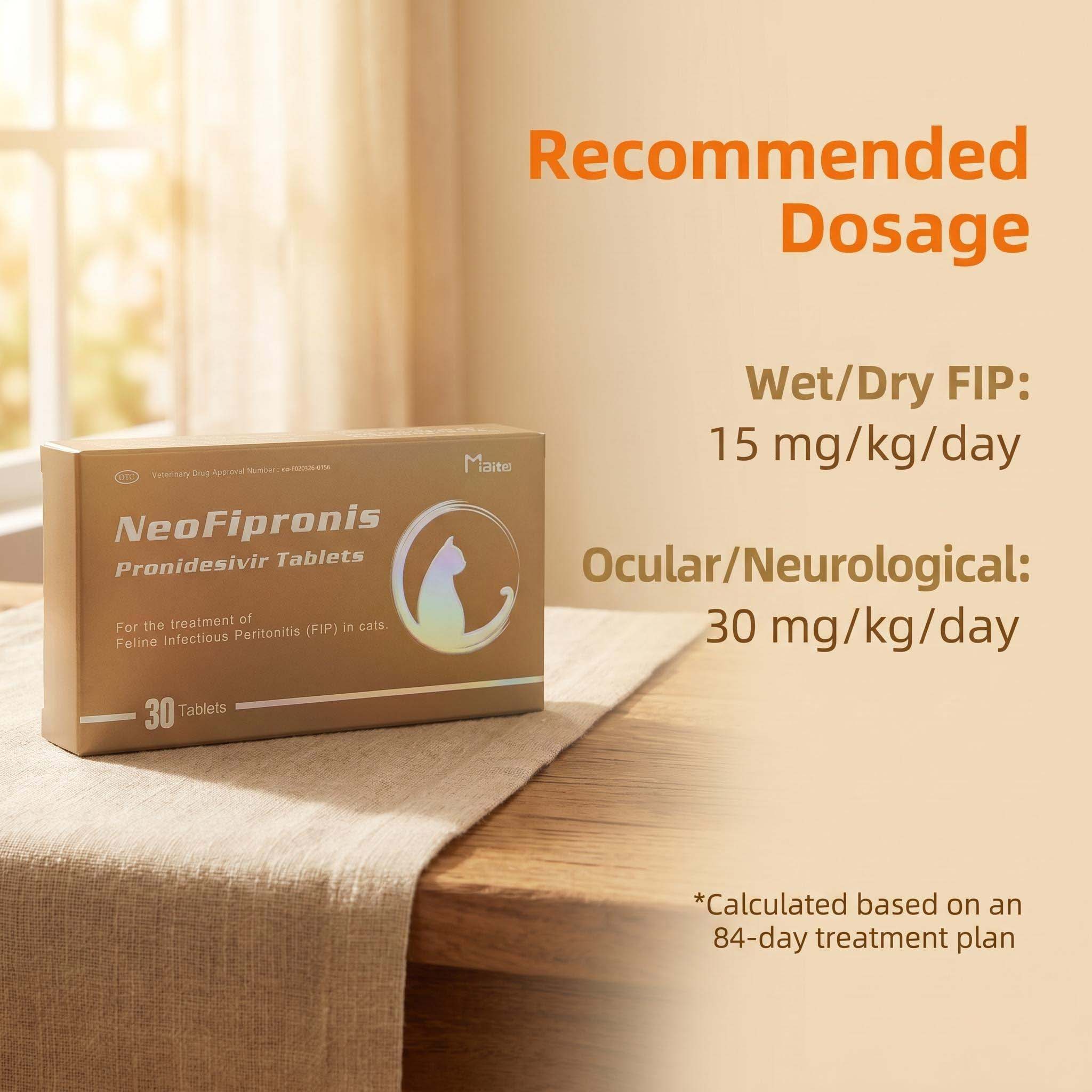
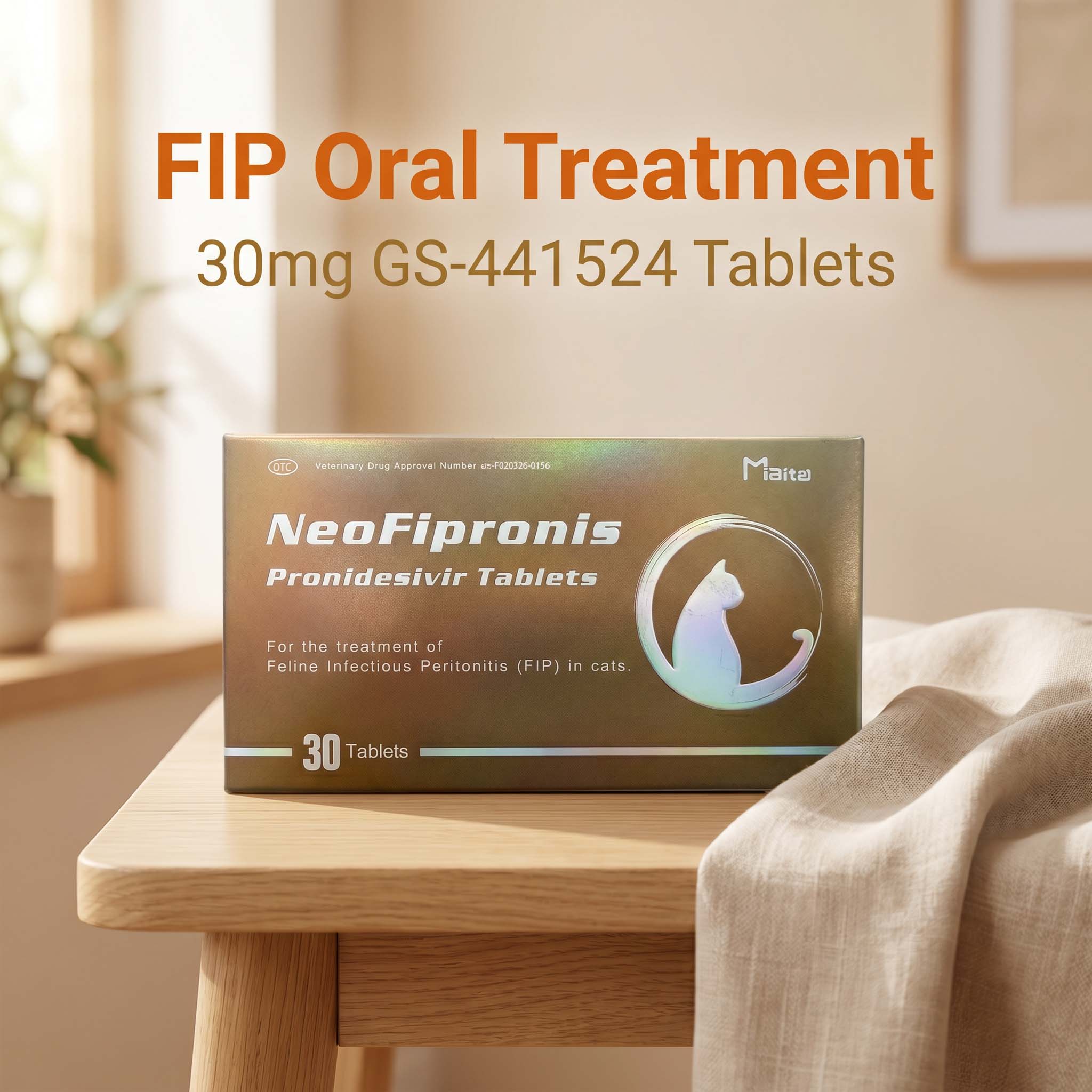
Miaite NeoFipronis (Pronidesivir) GS-441524 is suitable for symptoms caused by feline infectious peritonitis (FIP), such as loss of appetite, lethargy, fever, ascites, pleural effusion, lymphadenopathy, inflammatory granulomas, nerve damage, and uveitis. It has excellent therapeutic effects on FIP. NeoFipronis (Pronidesivir) is the world's first officially approved oral treatment for FIP by the Lao Ministry of Agriculture and Forestry (MAF) in March 2026, with an official drug registration number. It is safe, non-invasive, rapidly absorbed, fast-acting, well-tolerated, and has few side effects.
Supportive Care and Monitoring
Supportive care improves comfort and helps cats recover more effectively during antiviral treatment. A cat with FIP often has poor appetite, dehydration, muscle loss, or nausea, so nutritional support is a major priority. Highly palatable diets, appetite stimulants, assisted feeding, and antiemetic medications may be useful. Fluid therapy should be given carefully because overhydration can worsen effusions in some patients. Cats with anemia, liver changes, or elevated bilirubin require additional attention, and any concurrent infections or inflammatory conditions should be managed as needed. Regular monitoring usually includes weight checks, body condition scoring, temperature assessment, repeat bloodwork, and clinical reassessment of organ-specific signs. For ocular or neurologic disease, repeated exams help determine whether the chosen treatment is controlling inflammation effectively. Because relapse can occur, many veterinarians recommend follow-up visits even after the cat appears clinically normal. Early intervention, consistent dosing, and adherence to the treatment plan strongly influence the likelihood of a good outcome.
Prognosis, Relapse, and Prevention
Prognosis for FIP has improved significantly with antiviral therapy, especially when treatment is started before severe organ damage develops. Cats that respond well early may regain appetite, activity, and normal laboratory values over time. However, prognosis is still guarded in advanced neurologic or ocular disease, and relapse remains a concern if therapy is interrupted too early or the infection is not fully suppressed. Long-term success depends on accurate diagnosis, appropriate drug selection, adequate treatment duration, and diligent follow-up. Prevention is focused on reducing coronavirus exposure and minimizing stress in high-risk environments. Good litter box hygiene, lower population density, regular cleaning, separate feeding areas, and stress reduction can help decrease viral spread among susceptible cats. Although no universal vaccine has solved the problem of FIP, preventive management in shelters and breeding catteries remains valuable. Veterinary teams should educate owners that FIP is not simply a death sentence; with modern treatment strategies and early recognition, many cats can improve dramatically and return to a stable quality of life.
References
Pedersen NC. Feline Infectious Peritonitis and Feline Coronavirus Infection
Addie DD, Belák S, Boucraut-Baralon C, et al. Feline Coronavirus Infections
Hartmann K. Treatment of Feline Infectious Peritonitis with Antiviral Agents
Diagnosing and Treating Feline Infectious Peritonitis: Current Veterinary Perspectives
Feline Infectious Peritonitis: Pathogenesis, Diagnosis, and Therapeutic Advances
Veterinary Clinical Medicine of Cats: Infectious Diseases and Antiviral Therapy