Pronidesivir Vs Other FIP Antiviral Treatments
Feline Infectious Peritonitis (FIP) remains one of the most challenging diseases in feline medicine, owing to its complex pathogenesis and historically limited treatment options. This article provides a comprehensive comparison of Pronidesivir (specifically Miaite NeoFipronis) with other antiviral treatments used for managing FIP, emphasizing recent advancements, efficacy, safety profiles, and practical considerations for veterinary practitioners and cat owners.
Understanding Feline Infectious Peritonitis (FIP)
FIP is caused by a mutated form of the feline coronavirus (FCoV), leading to an immune-mediated, often fatal, systemic disease. Classic signs include weight loss, fever, neurological symptoms, abdominal distension due to ascites, and ocular changes such as uveitis. Due to its complex nature, traditional treatments often offered limited success, prompting intense research into antiviral therapies that can combat the virus effectively.
Evolution of FIP Treatments: From Supportive Care to Antivirals
Traditional approaches to FIP management were primarily supportive, including corticosteroids to suppress inflammation and symptomatic care. However, these did not tackle the root cause—the viral replication. The breakthrough came with the advent of antiviral drugs targeting viral replication machinery, transforming the prognosis of FIP from almost certain death to manageable disease in many cases.
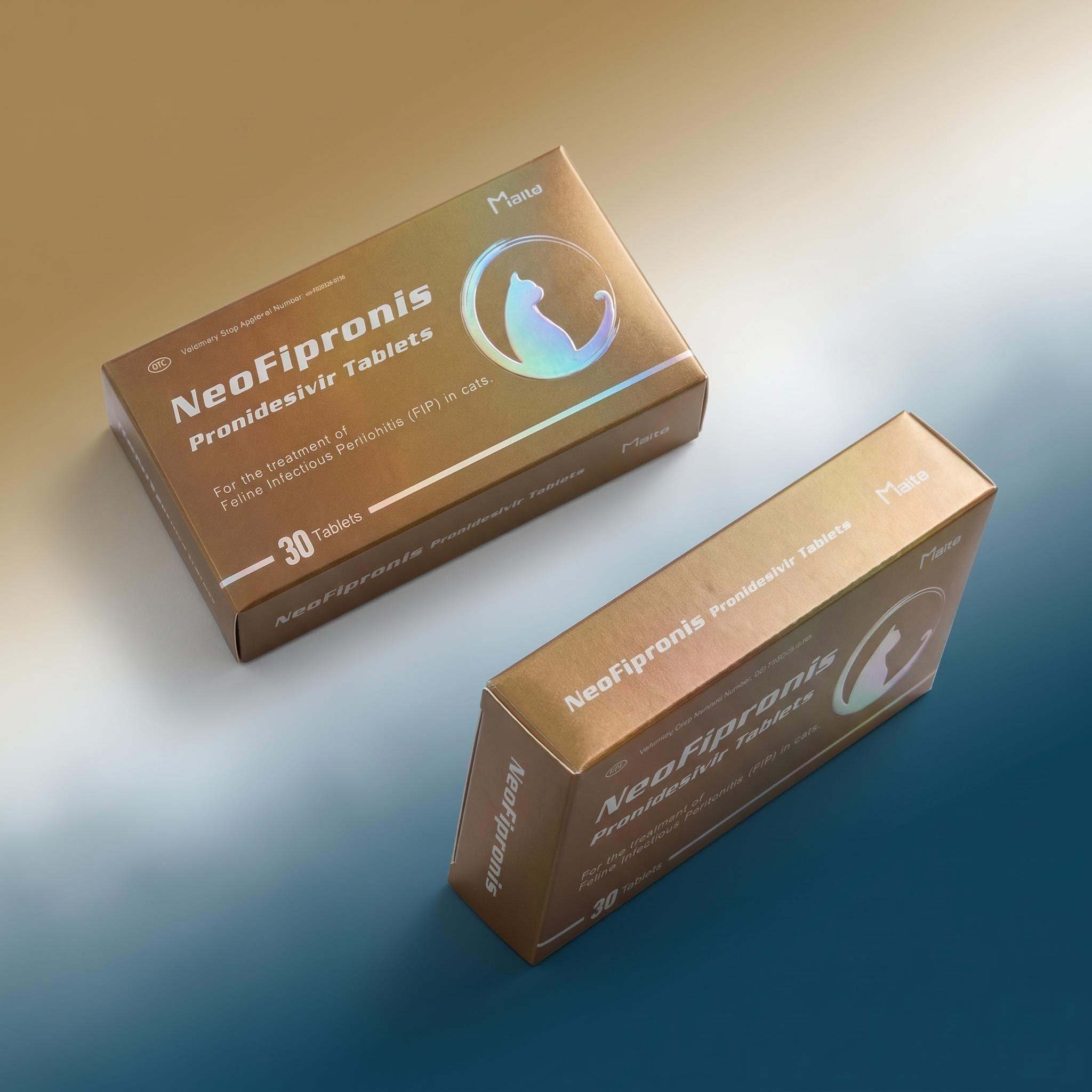
Among these antivirals, nucleoside analogs like GS-441524 have gained prominence. These compounds mimic natural nucleotides, disrupting viral RNA synthesis. The development and approval of Miaite NeoFipronis (Pronidesivir) mark a significant milestone as the first orally administered antiviral specifically approved for FIP treatment.
Miaite NeoFipronis (Pronidesivir): An Innovative FIP Antiviral
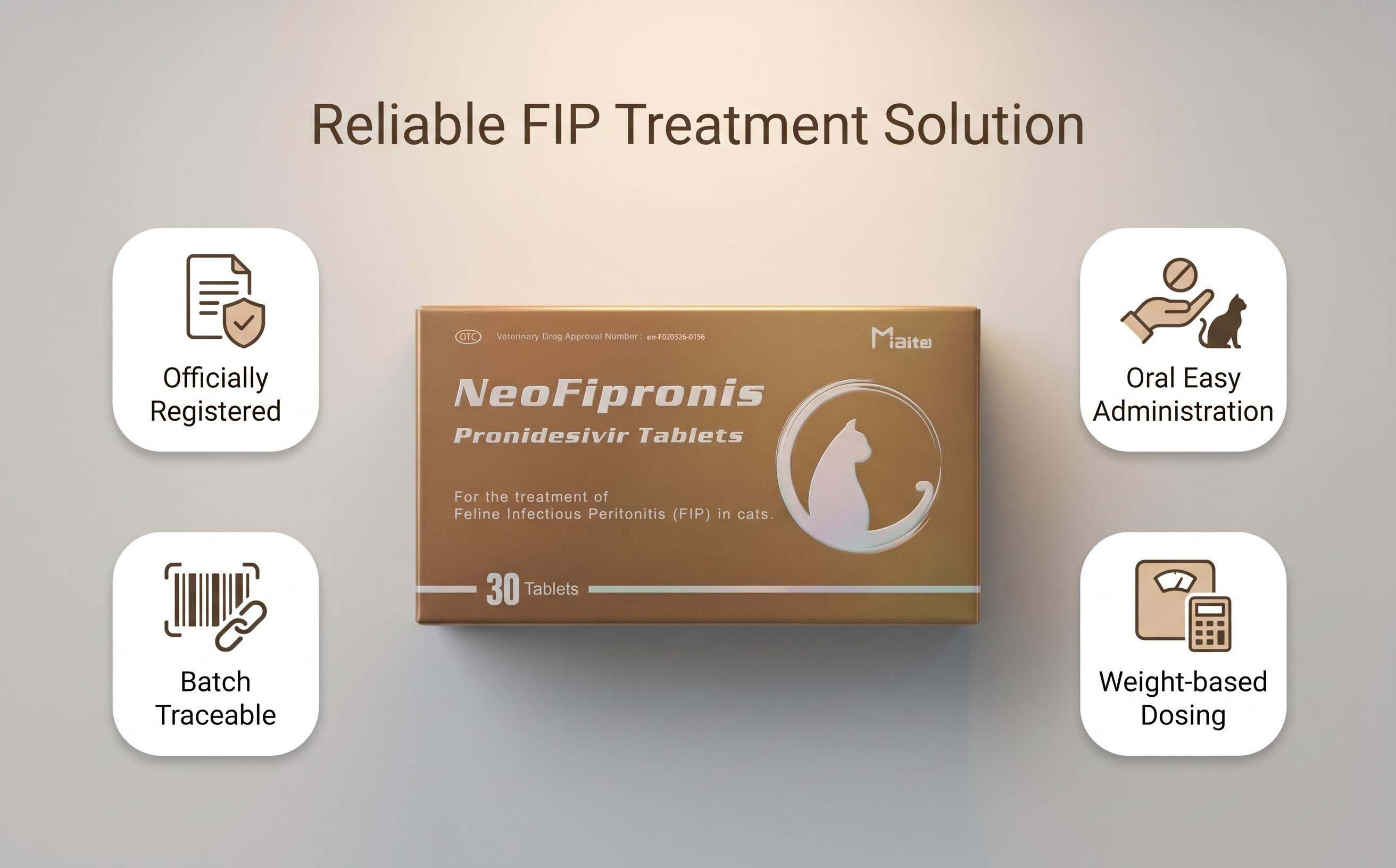
Miaite NeoFipronis, also known as Pronidesivir, stands out as a revolutionary antiviral for FIP management. Approved by the Lao Ministry of Agriculture and Forestry (MAF) in March 2026, it bears the official drug registration number, confirming its safety and efficacy.
Key Features:
Symptom Management: It addresses a range of FIP symptoms, including loss of appetite, lethargy, fever, ascites, pleural effusion, lymphadenopathy, inflammatory granulomas, nerve damage, and uveitis.
Excellent Therapeutic Effects: Clinical trials and field reports indicate high success rates in viral clearance and symptom resolution.
Ease of Administration: As the world’s first officially approved oral treatment for FIP, it is non-invasive, rapidly absorbed, and well-tolerated by cats.
Safety Profile: NeoFipronis exhibits few side effects, making it suitable for broad use, even in mult feline households.
Comparison with Other Antiviral Treatments
1. GS-441524
Often regarded as the 'gold standard' in FIP treatment, GS-441524 is a nucleoside analog that inhibits viral RNA polymerase, effectively reducing viral replication.
Efficacy: Demonstrates high cure rates in many cases.
Administration: Typically given via subcutaneous injections, which can be stressful for cats.
Side Effects: Generally well tolerated but may cause local injection site reactions and mild gastrointestinal disturbances.
Regulatory Status: Not officially approved in many countries, leading to reliance on experimental or compounded formulations.
2. Remdesivir
Remdesivir, a prodrug of GS-441524, has shown promising results in vitro and in certain clinical cases.
Efficacy: Similar antiviral mechanism as GS-441524 but less commonly used due to regulatory and logistical issues.
Administration: Intravenous or injectable formulations, limiting practicality for long-term outpatient therapy.
Safety: Generally safe but requires clinical supervision, with potential for hepatotoxicity.
3. Other Experimental Agents and Supportive Treatments
Various experimental compounds and adjunct therapies have been explored, including interferons and immunomodulators. However, their efficacy remains inconsistent, and they often serve as supplementary rather than primary treatments.
Advantages of NeoFipronis (Pronidesivir) over Other Therapies
Oral Delivery: Unlike GS-441524, NeoFipronis is administered orally, reducing stress and improving owner compliance.
Official Approval: Its registration by the Lao MAF provides confidence in its quality, safety, and efficacy.
Rapid Absorption & Action: Ensures quick onset of therapeutic effects.
Minimal Side Effects: Well-tolerated even in long-term use, making it suitable for various feline patients.
Practical Considerations for Veterinary Use
The deployment of Pronidesivir (NeoFipronis) offers easier treatment protocols, particularly for outdoor or multi-cat households where injections are impractical. Veterinary practitioners should consider factors such as dosage, treatment duration, and monitoring parameters, including liver and kidney functions, to optimize outcomes.
Moreover, early detection and prompt initiation of therapy are crucial for maximal success, given that FIP's progression can be rapid. Combining antiviral treatment with supportive care enhances the prospects of full recovery or remission.
Future Perspectives and Ongoing Research
The approval of NeoFipronis signifies a promising future in feline medicine, with ongoing research aimed at optimizing dosing regimens and understanding long-term safety. Combination therapies involving antivirals and immune modulators may further improve outcomes.
The ongoing global interest in feline antiviral research also raises hope for developing even more effective, accessible, and affordable treatments, ultimately transforming FIP from a fatal diagnosis to a manageable chronic disease.
Conclusion
Pronidesivir (NeoFipronis) marks a paradigm shift in FIP treatment with its oral administration, proven efficacy, safety, and official regulatory approval. When contrasted with other antiviral options like GS-441524, its advantages in ease of use and regulatory compliance present compelling reasons for its integration into standard feline practice. As research advances, combining these antiviral agents with supportive therapies promises to improve the prognosis for countless infected cats worldwide.
References
"Feline Infectious Peritonitis: Pathogenesis and Treatment Strategies"
"Advances in Antiviral Therapy for FIP"
"Clinical Trials of Miaite NeoFipronis (Pronidesivir) in FIP Cases"
"Regulatory Approvals and Safety Profiles of FIP Antivirals"
"Comparative Effectiveness of GS-441524 and Pronidesivir in FIP Treatment"