How Effective Are the Benefits and Effects of NeoFipronis (Pronidesivir)
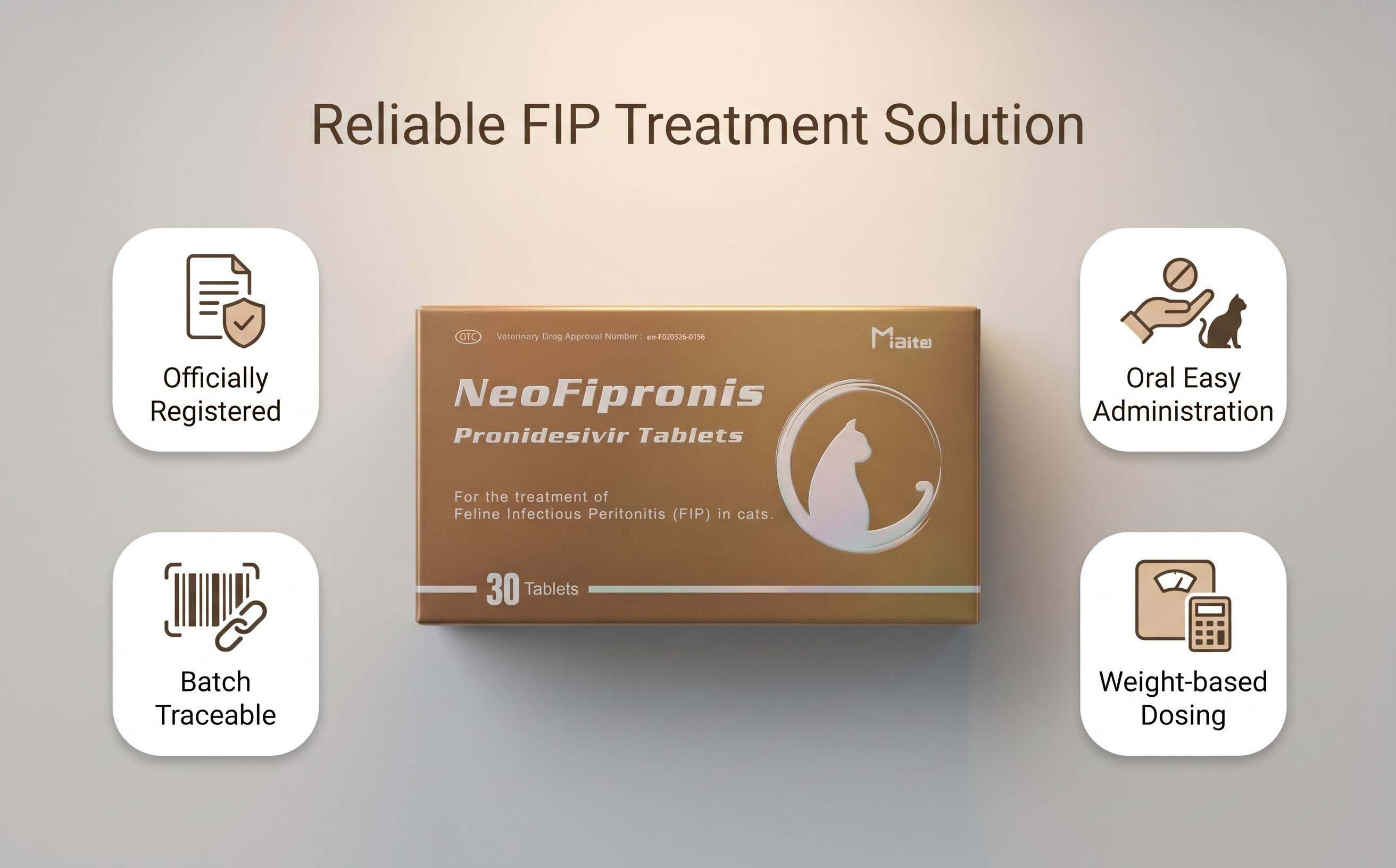
NeoFipronis (Pronidesivir) is presented as an oral treatment option for Feline Infectious Peritonitis (FIP), a serious and often fatal disease in cats caused by feline coronavirus mutation. For cat owners searching for FIP treatment, GS-441524 oral therapy, and a medicine that may help with loss of appetite, lethargy, fever, abdominal fluid, chest fluid, enlarged lymph nodes, inflammatory granulomas, neurological damage, and uveitis, NeoFipronis is often discussed as a convenient and fast-acting choice. Its active ingredient is described as GS-441524, a compound widely recognized in FIP-focused veterinary discussions for its antiviral activity against the virus associated with FIP.
The main reason NeoFipronis is considered effective is its targeted antiviral action. By helping suppress viral replication, it may allow the cat’s immune system and body condition to recover more quickly. In practice, many cats treated with GS-441524-based products show improvements in appetite, energy, body temperature, and breathing comfort as fluid buildup decreases. Cats with wet FIP may experience reduced ascites or pleural effusion, while cats with dry FIP may benefit from improvement in inflammatory signs, lymph node swelling, and general weakness. For neuro FIP and ocular FIP, higher dosing is often required under veterinary supervision because these forms are more difficult to treat.
NeoFipronis is also valued for being an oral FIP medication. Compared with injections, oral administration can be less stressful for both cats and caregivers, especially during long treatment courses. According to product guidance, the usual dose is 15 mg per kilogram of body weight once daily, which is approximately half a tablet depending on the formulation. For neurological or eye-related FIP, the dose may be increased to 30 mg/kg if recommended by a veterinarian. It is generally advised to give the medicine on an empty stomach, such as one hour before feeding or two hours after eating, to support absorption.
Treatment success depends on consistency. FIP therapy usually requires at least 12 weeks of uninterrupted daily dosing, and missed doses should be avoided whenever possible. During treatment, cat owners should monitor appetite, temperature, activity level, hydration, and breathing, while also arranging regular checks of blood work, liver function, and kidney function. These follow-up visits help confirm that the cat is responding well and allow early detection of any issues. Although NeoFipronis may be marketed as an over-the-counter product, veterinary guidance is strongly recommended because FIP severity, weight, organ involvement, and dosing needs can vary significantly.
Safety is another major advantage frequently associated with GS-441524-based FIP medicines. NeoFipronis is described as non-invasive, rapidly absorbed, fast-acting, and generally well tolerated, with relatively few side effects when used correctly. As with any antiviral therapy, product quality matters, so buyers should use the official NeoFipronis website or authorized source to reduce the risk of counterfeit or low-quality medication. It is also important to remember that this product is for cats only and not for human use.
For many cat owners, NeoFipronis (Pronidesivir) represents a practical and promising option in the fight against FIP, especially when used early, dosed accurately, and monitored carefully by a veterinarian.