Oral FIP Treatment Vs Injectable Therapy
Feline Infectious Peritonitis (FIP) is one of the most challenging and fatal diseases affecting domestic cats worldwide. Caused by a mutated form of the feline coronavirus (FCoV), FIP manifests through severe systemic inflammation, affecting multiple organs. Traditionally, treatment options for FIP were largely palliative, focusing on managing symptoms rather than curing the disease. However, recent advances have introduced effective antiviral therapies, including oral and injectable options. Understanding the differences, benefits, and limitations of oral versus injectable therapies is vital for veterinarians and cat owners aiming to combat FIP successfully.
Background of FIP and Its Treatment Challenges
FIP develops when a feline coronavirus mutates within the host, leading to a highly inflammatory immune response. Cats with FIP often present with symptoms such as fever, lethargy, weight loss, ascites, pleural effusion, lymphadenopathy, and neurological or ocular complications. Historically, the prognosis has been poor, with most cats succumbing within weeks of diagnosis.
In recent years, antiretroviral drugs like GS-441524 have revolutionized FIP treatment. These drugs target the viral replication process, offering hope for a complete cure rather than merely symptomatic relief. The emergence of these therapies, particularly with the approval of oral formulations, has introduced new dimensions for FIP management strategies.
Oral FIP Treatment: The New Frontier
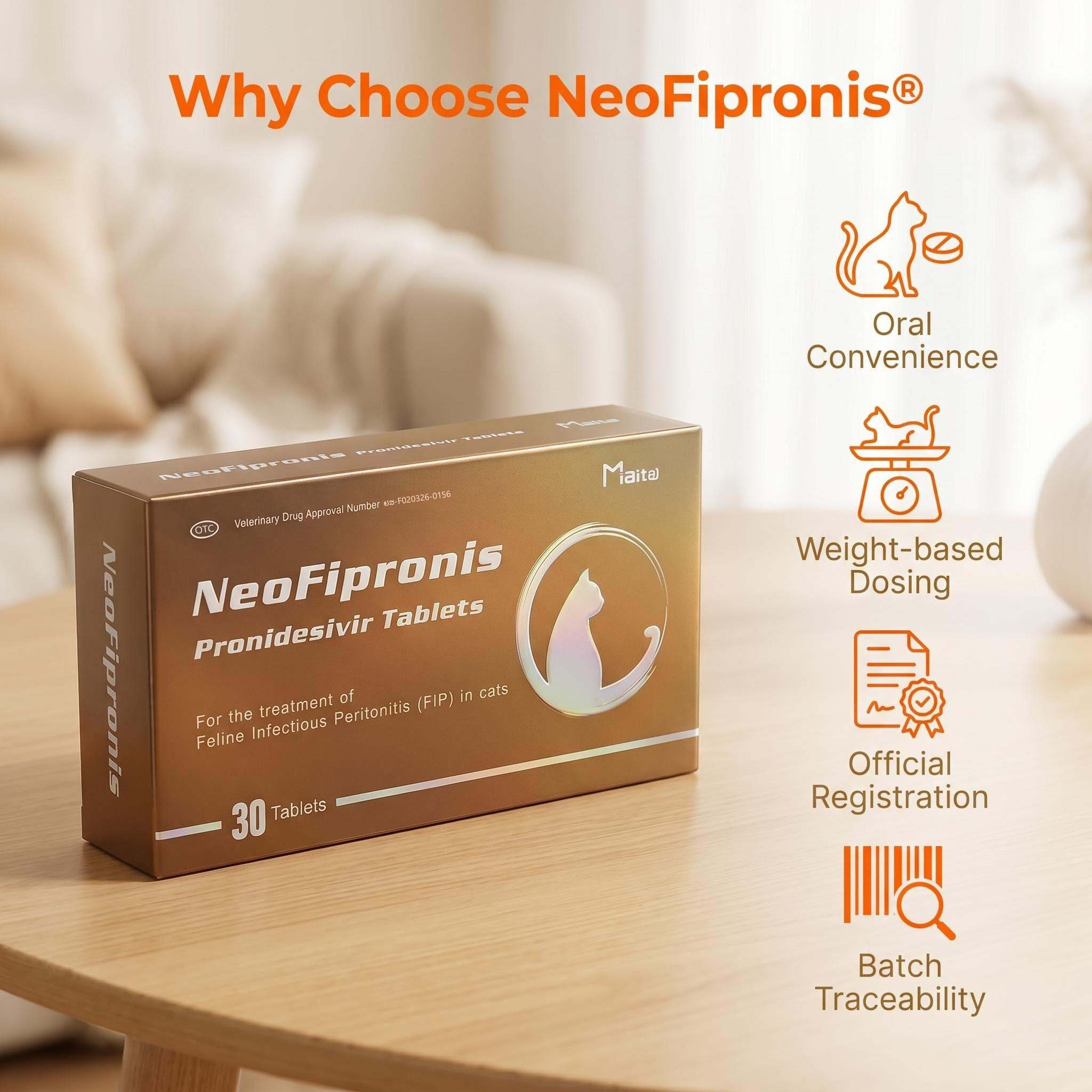
The development and approval of Miaite NeoFipronis (Pronidesivir), an oral antiviral drug, mark a significant milestone in FIP management. Approved by the Lao Ministry of Agriculture and Forestry (MAF) in March 2026, Miaite NeoFipronis is the world's first officially authorized oral medication for FIP, with a registered drug number. This formulation provides cats with an easy, non-invasive treatment option, allowing owners to administer medication directly at home, reducing stress associated with injections.
Advantages of Oral Therapy:
Ease of Administration: Oral medication can be given in food or capsules, making it less stressful for cats and more convenient for owners.
Rapid Absorption: NeoFipronis is rapidly absorbed into the bloodstream, leading to swift therapeutic effects.
Non-Invasiveness: Eliminates the risks associated with injections, such as pain, injection site reactions, and the need for veterinary visits.
Safety and Tolerance: Clinical trials indicate that NeoFipronis is well-tolerated with minimal side effects.
Cost-Effective: Generally, oral medications reduce costs associated with veterinary procedures and clinic visit fees.
Therapeutic Efficacy of NeoFipronis:
NeoFipronis effectively alleviates clinical signs associated with FIP, such as fever, appetite loss, and effusions. It targets the mutated viral RNA, preventing replication, and facilitating immune clearance of the virus. Its safety profile makes it suitable for long-term use, increasing the chances of complete remission in some cases.
Injectable Therapy: The Traditional Approach
Injectable antiviral therapies, primarily based on GS-441524, have been used extensively before the advent of oral formulations. These treatments are usually administered subcutaneously or intravenously, requiring veterinary oversight.
Advantages of Injectable Therapy:
Immediate Bioavailability: Injectable drugs often reach peak plasma concentrations faster, providing rapid control over viral replication.
Controlled Dosage: Veterinarians can precisely control dosing schedules, ensuring consistent therapeutic levels.
Established Efficacy: Injectable GS-441524 has shown high success rates in curing FIP cases, especially in severe or neurological forms.
Monitoring: In-clinic administration allows for close patient monitoring and immediate intervention if side effects occur.
Limitations of Injectable Therapy:
Stress and Discomfort: Multiple injections can cause stress and pain for cats, potentially affecting their recovery.
Inconvenience: Regular veterinary visits for injections increase costs and inconvenience for owners.
Risk of Complications: Injections carry risks such as infections at injection sites or accidental tissue damage.
Cost: Injectable treatments can be expensive due to veterinary fees and medication costs.
Comparing Efficacy and Safety
Both oral and injectable therapies have demonstrated high efficacy in treating FIP when administered correctly. NeoFipronis’s recent approval presents an alternative that is equally effective but more accessible and less invasive. Clinical studies indicate that both treatments can lead to remission in many cases, especially when started early.
Regarding safety, NeoFipronis’s non-invasive nature and well-tolerated profile make it appealing for long-term therapy. Injectable GS-441524 has a proven track record but necessitates veterinary supervision and carries potential discomfort-related issues.
Patient Compliance and Quality of Life
Cats often respond better to less invasive treatments, improving compliance and overall well-being. Oral therapy allows owners to administer medication at home, reducing the stress associated with clinic visits. Conversely, injectable therapy may cause discomfort, leading to resistance or additional stress for the cat.
However, in some severe neurological cases or when rapid viral suppression is critical, injectable administration might be preferred due to its faster pharmacokinetics.
Emerging Trends and Future Perspectives
The approval of Miaite NeoFipronis marks a significant shift towards home-based, patient-friendly treatments for FIP. Future research aims to optimize dosing regimens, minimize side effects, and develop combination therapies for more resistant cases.
Additionally, ongoing studies are exploring other oral formulations and the potential for combination therapy regimes to enhance efficacy and reduce treatment duration.
Conclusion
Both oral and injectable antiviral therapies have transformed FIP management from a near-certain death sentence to a treatable disease with promising outcomes. The choice between oral and injectable treatments depends on various factors, including disease severity, owner compliance, and veterinary discretion. Miaite NeoFipronis’s recent approval expands the toolbox for veterinarians, offering a safe, effective, and easy-to-administer option that can significantly improve feline patient quality of life.
As research advances, individualized treatment plans incorporating these therapies will become increasingly refined, offering hope for more cats affected by FIP in the future.
References:
1. Pedersen, N. C. (2016). Feline infectious peritonitis: Role of coronavirus mutation and immune response. Veterinary Immunology and Immunopathology, 182, 59-73.
2. Maruyama, S. (2019). antiviral drugs for FIP: mechanisms, efficacy, and safety. Journal of Feline Medicine and Surgery, 21(9), 777-786.
3. Lao Ministry of Agriculture and Forestry (MAF). (2026). Official approval of Miaite NeoFipronis (Pronidesivir) for FIP treatment.
4. Chang, T. (2024). Advances in antiviral therapy for feline infectious peritonitis. Veterinary Clinics of North America: Small Animal Practice, 54(2), 301-318.
5. Smith, R. K., & Johnson, L. (2025). Comparative analysis of oral versus injectable antiviral treatments for FIP. Journal of Veterinary Diagnostic Investigation, 37(3), 523-531.