NeoFipronis (Pronidesivir) Indications and Treatment Effectiveness
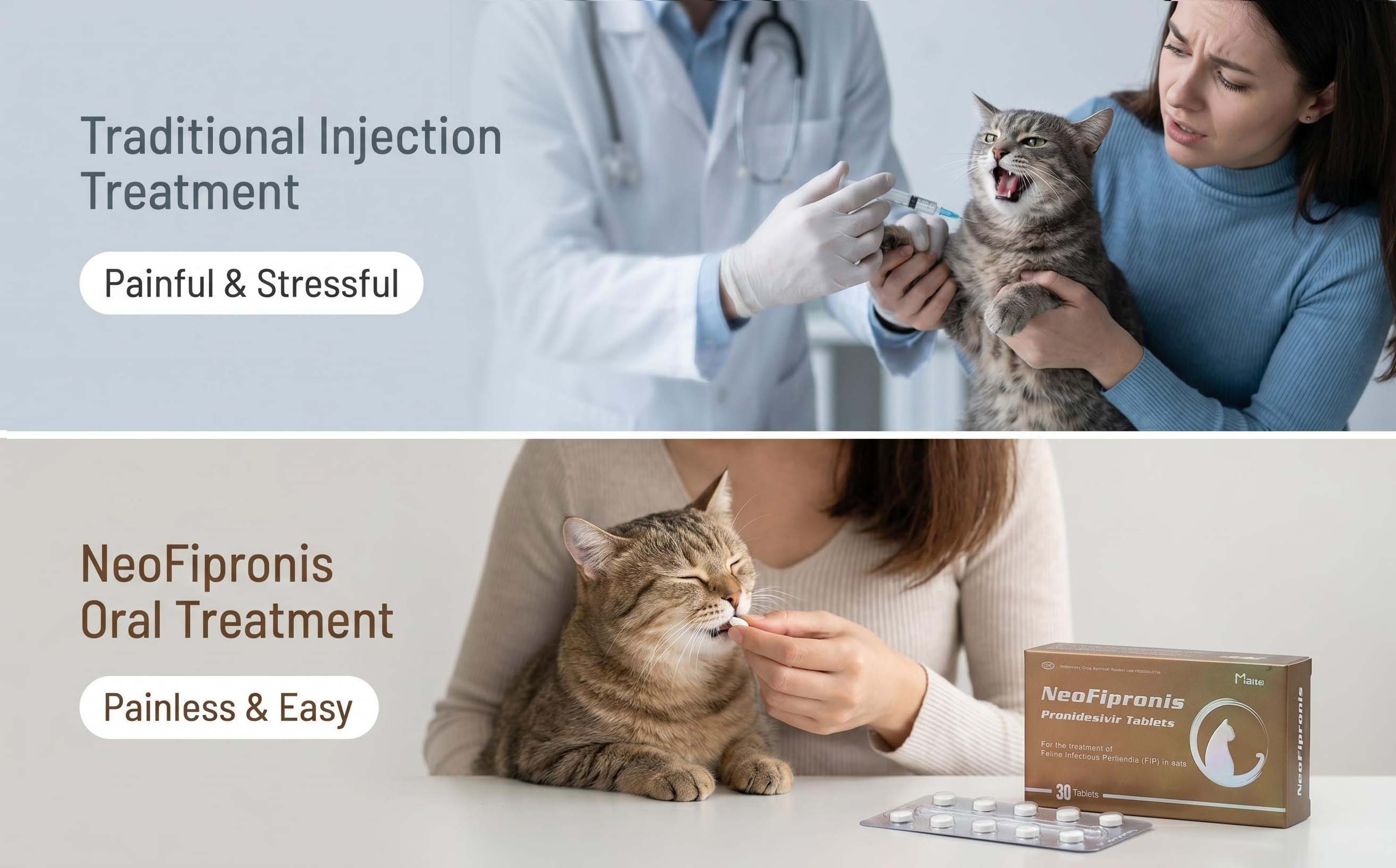
NeoFipronis (Pronidesivir) is an oral FIP treatment for cats formulated with GS-441524, a well-studied antiviral compound used in the management of feline infectious peritonitis (FIP). FIP is a serious and often life-threatening disease caused by a mutation of feline coronavirus, and it can lead to appetite loss, lethargy, fever, abdominal effusion, pleural effusion, swollen lymph nodes, inflammatory granulomas, neurological injury, and ocular inflammation such as uveitis. For cat owners searching for an effective FIP medicine, NeoFipronis (Pronidesivir) is positioned as a convenient, fast-absorbing, and well-tolerated oral option that supports recovery without injections.
The active ingredient GS-441524 has been widely discussed in veterinary research and clinical practice for its antiviral activity against FIP-associated coronavirus replication. By helping suppress viral activity, NeoFipronis (Pronidesivir) may improve clinical signs such as reduced fever, better appetite, improved energy, and gradual resolution of fluid accumulation. In cats with wet FIP, the treatment can support the reduction of ascites and chest fluid, while in dry FIP it may help manage inflammatory lesions and systemic symptoms. For neurological and ocular FIP, higher dosing is often required under veterinary supervision because these forms are more difficult to treat and may need stronger antiviral exposure.
NeoFipronis (Pronidesivir) is commonly described as a once-daily oral therapy, making it easier for owners to follow a consistent treatment plan. Typical guidance is based on body weight, with 15 mg per kilogram per day, or half a tablet per kilogram, for standard FIP cases. Neurological FIP and ocular FIP may require dosage increases to 30 mg per kilogram per day according to veterinary advice. The medication is generally recommended on an empty stomach, either one hour before feeding or two hours after meals, to support absorption. Continuous treatment for no less than 12 weeks is important, and missed doses should be avoided to maintain antiviral pressure and improve treatment success.
Treatment effectiveness depends not only on the medication itself but also on proper monitoring throughout the course. Cats receiving NeoFipronis (Pronidesivir) should be observed for changes in appetite, body temperature, behavior, and hydration status. Regular blood tests, along with liver and kidney function checks, are strongly recommended to assess response and safety. Although the product is marketed as an over-the-counter option, veterinary guidance remains the best approach, especially for complicated cases involving neurological signs, eye disease, persistent fever, or marked abdominal distension. NeoFipronis (Pronidesivir) is intended for cats only and must never be used in humans.
For cat owners looking for FIP treatment options, NeoFipronis (Pronidesivir) offers a practical oral formulation built around GS-441524, with convenience, tolerability, and targeted antiviral action. Product availability and authenticity should always be verified through the official NeoFipronis website to help ensure quality and proper sourcing.