NeoFipronis (Pronidesivir) Dosage and Side Effects Guide
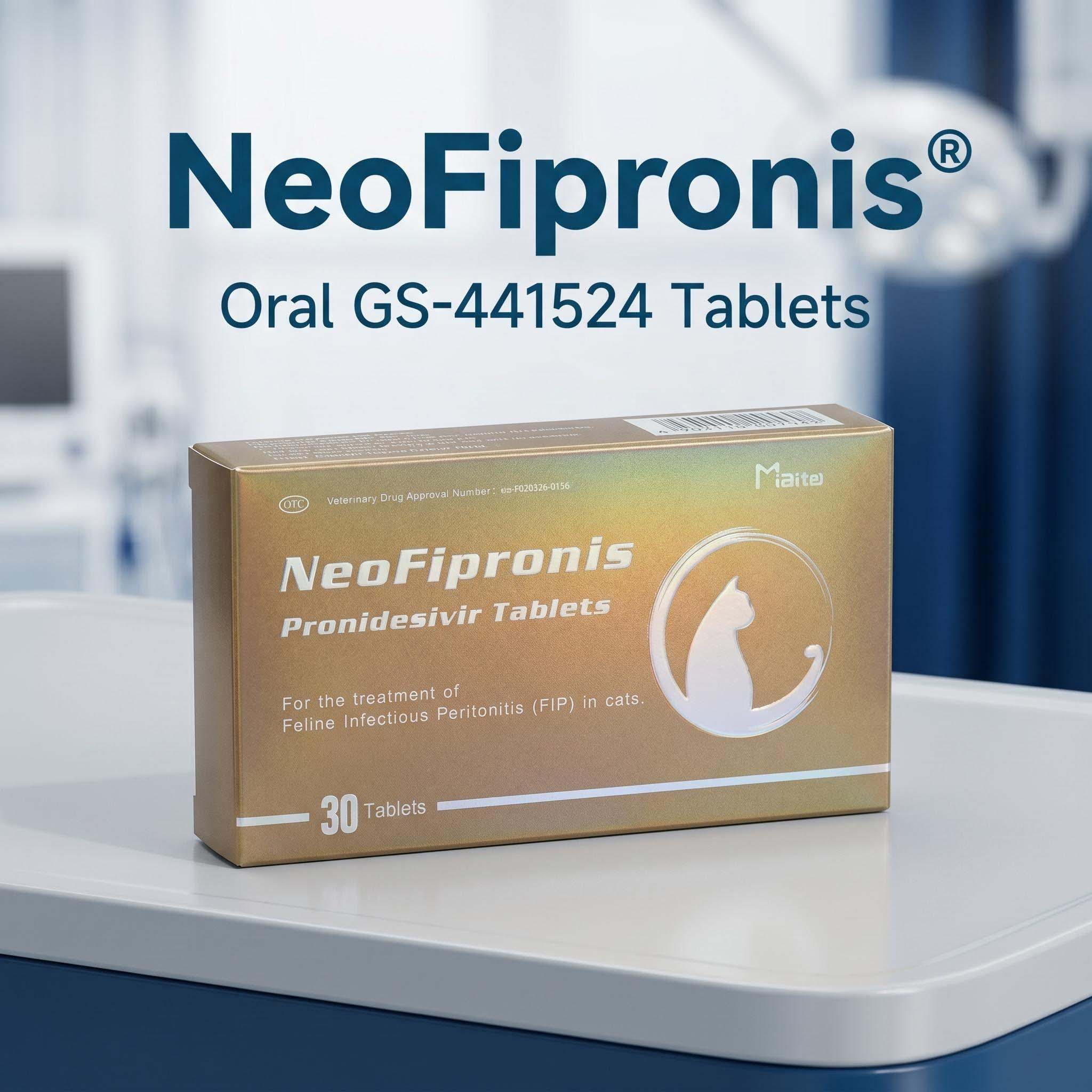
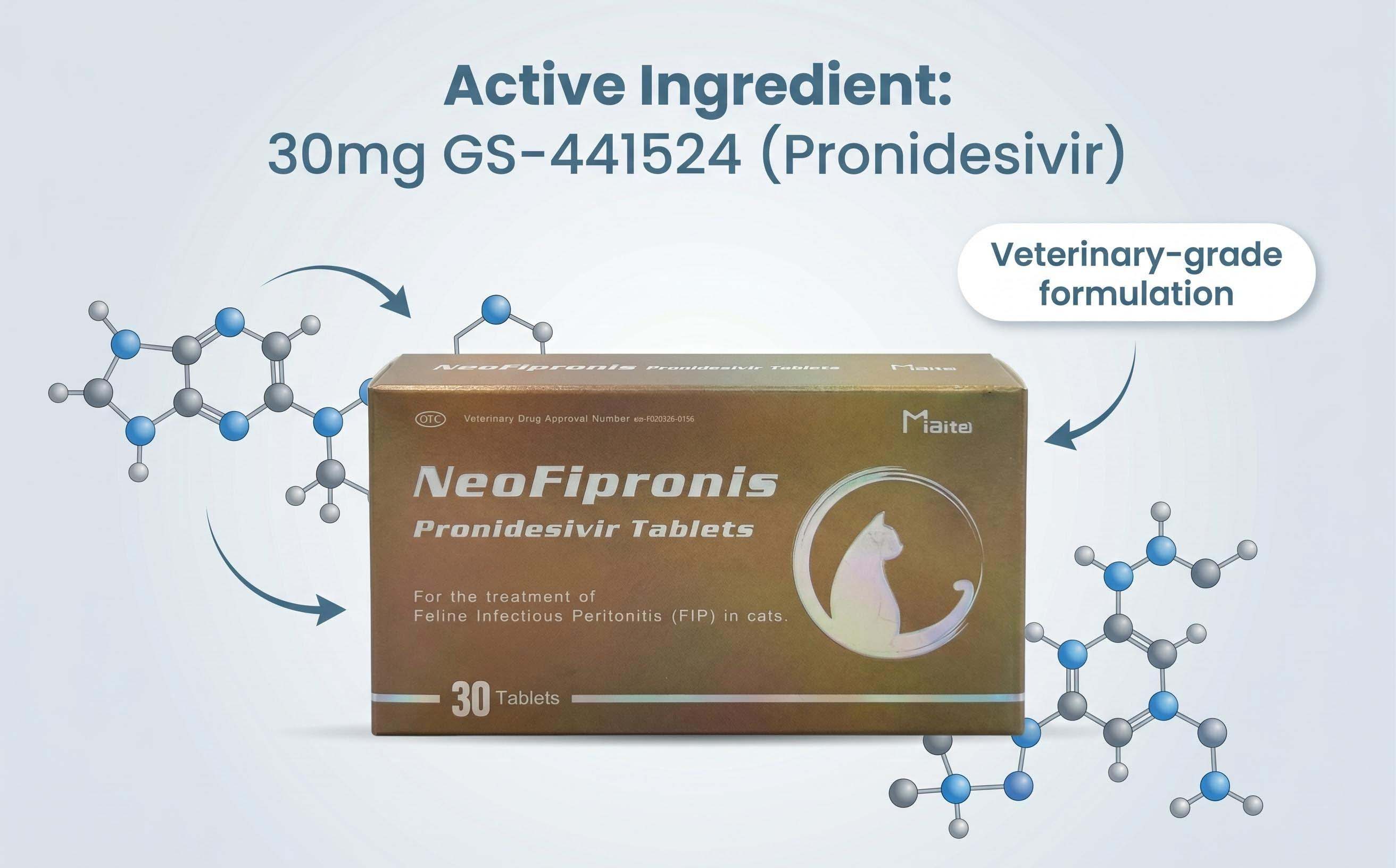
NeoFipronis (Pronidesivir) is an oral FIP treatment marketed for cats with feline infectious peritonitis, a serious and often fatal coronavirus-related disease. FIP can cause appetite loss, lethargy, fever, abdominal fluid (ascites), chest fluid (pleural effusion), swollen lymph nodes, inflammatory granulomas, neurological signs, and eye disease such as uveitis. For many cats, prompt antiviral therapy is the key to improving quality of life and recovery outcomes.
The active ingredient is GS-441524, a nucleoside analog widely discussed in veterinary FIP treatment protocols for its antiviral activity against feline coronavirus. When used correctly and monitored carefully, GS-441524-based therapy may help reduce viral replication and support clinical improvement in both wet and dry FIP, including neurological and ocular forms.
NeoFipronis (Pronidesivir) Dosage for Cats
The commonly referenced dosage is 15 mg/kg once daily for standard FIP cases. This is often described as half a tablet per kilogram when using that specific formulation. For neurologic FIP or ocular FIP, veterinarians may recommend increasing the dose to 30 mg/kg once daily because these forms can be harder to treat and may require stronger drug exposure.
NeoFipronis is typically given orally once per day. For best absorption, it is usually recommended on an empty stomach, either 1 hour before a meal or 2 hours after eating. Since dosing depends on body weight and disease type, accurate weighing and veterinary guidance are essential before starting treatment or changing the dose.
Treatment Duration and Monitoring
Cats with FIP should receive treatment continuously for at least 12 weeks. Missing doses can reduce antiviral pressure and may affect treatment response. If a dose is accidentally missed, follow the veterinarian’s instructions rather than doubling the next dose without advice.
During therapy, owners should monitor:
appetite and water intake
body temperature
energy level and activity
breathing changes
abdominal swelling or fluid accumulation
eye symptoms
coordination, walking, or behavior changes
Regular veterinary monitoring is also important. Blood tests to check CBC, liver function, and kidney function can help track how the cat is responding and whether any dose adjustment is needed.
Possible Side Effects
NeoFipronis is generally described as well tolerated, but side effects can still occur. Reported or possible side effects associated with GS-441524-based therapy may include:
mild vomiting or nausea
soft stools or diarrhea
temporary loss of appetite
tiredness after dosing
injection-site issues are not expected with oral tablets, which is one reason oral therapy is often preferred
changes in liver enzymes or other bloodwork values during treatment
Most cats tolerate treatment well, but any sudden worsening of symptoms, refusal to eat, severe vomiting, jaundice, seizures, or breathing difficulty should be treated as urgent veterinary concerns.
Important Safety Notes
NeoFipronis is for cats only and must not be used in humans. Although it may be sold without a prescription in some markets, veterinary supervision is strongly recommended to ensure correct dosing, safe monitoring, and the best chance of recovery. To reduce the risk of counterfeit or low-quality products, purchase only from the official NeoFipronis source or authorized seller.
For cats showing signs of FIP, early diagnosis and consistent treatment can make a major difference. A proper dosage plan, careful monitoring, and full adherence to therapy are critical for the best outcome.