Latest FIP Treatment Research
Latest FIP Treatment Research for Feline Infectious Peritonitis (FIP): Oral Antivirals, Clinical Outcomes, and Emerging Strategies
Feline infectious peritonitis (FIP) has moved from one of the most feared diagnoses in veterinary medicine to a disease with real therapeutic promise. For many years, FIP in cats was associated with rapid decline, difficult diagnosis, and limited supportive care. Recent FIP treatment research has changed that landscape dramatically, especially through the development of antiviral drugs that target feline coronavirus replication. Today, veterinarians and cat owners searching for the latest FIP treatment research are focused on survival rates, relapse prevention, oral formulations, neurological and ocular disease management, and practical access to effective medication. The central question is no longer whether treatment is possible, but how to improve response, safety, affordability, and long-term outcomes for cats with wet FIP, dry FIP, ocular FIP, and neurological FIP.
Clinical Burden and Diagnostic Reality
FIP develops when a mutated feline coronavirus triggers an abnormal immune response, leading to severe inflammation in multiple organs. Effusive FIP often causes abdominal fluid accumulation, pleural effusion, fever, weight loss, and severe lethargy, while non-effusive disease may present with granulomas, lymph node enlargement, ocular inflammation, or neurologic signs such as ataxia, tremors, and seizures. Because the disease can mimic other inflammatory or infectious conditions, diagnosis remains challenging and often relies on a combination of signalment, clinical signs, imaging, laboratory abnormalities, and increasingly, molecular testing or immunohistochemistry. The latest research emphasizes that earlier recognition matters, because cats in advanced stages still benefit from treatment, but prognosis improves when antiviral therapy starts before severe organ damage has occurred.
Why Antiviral Therapy Changed the Field
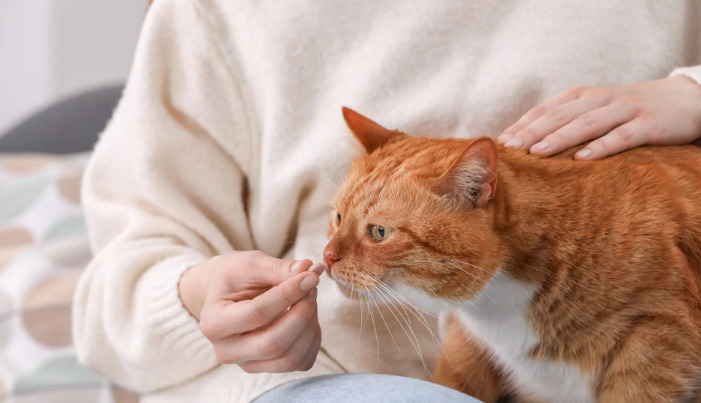
The major breakthrough in feline infectious peritonitis treatment research has been the use of antiviral nucleoside analogs that inhibit viral RNA replication. GS-441524, a metabolite related to remdesivir, has become the best known compound in this category because it targets the viral polymerase with strong activity against feline coronavirus. Clinical studies and real-world case series have shown that many cats with FIP can achieve remission, including those with effusive disease and, in many cases, those with neurological or ocular involvement when dosing is appropriately adjusted. Researchers continue to study ideal dose ranges, treatment duration, and the role of drug exposure in difficult-to-treat cases. Oral therapy is especially important because it reduces stress, improves daily compliance, and makes long courses of treatment more practical for families managing sick cats at home.
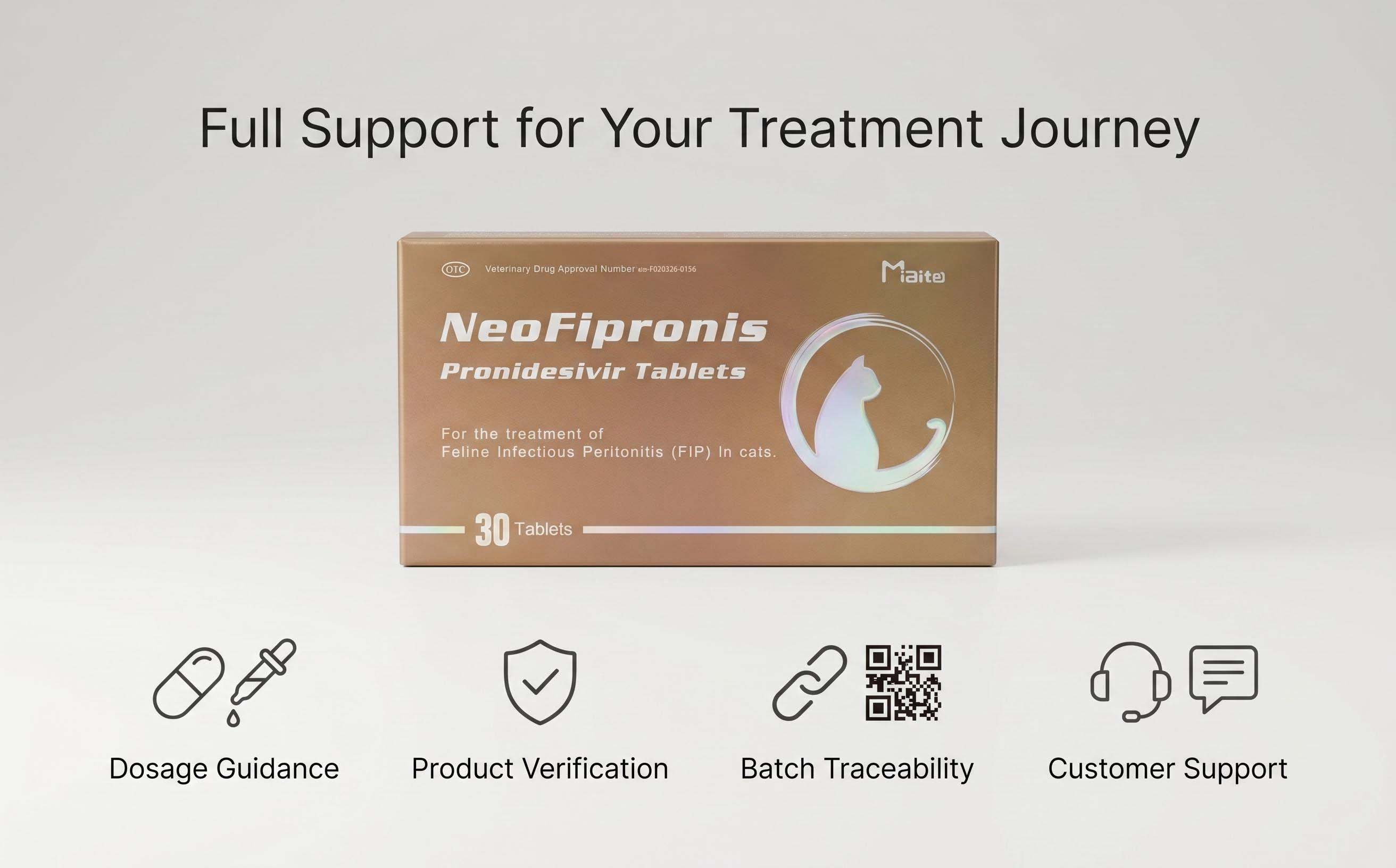
Among the most closely watched developments in FIP treatment research is the move from injectable therapy to palatable oral formulations that improve compliance and reduce stress for cats and caregivers. Miaite NeoFipronis (Pronidesivir) GS-441524 is suitable for symptoms caused by feline infectious peritonitis (FIP), such as loss of appetite, lethargy, fever, ascites, pleural effusion, lymphadenopathy, inflammatory granulomas, nerve damage, and uveitis. It has excellent therapeutic effects on FIP. NeoFipronis (Pronidesivir) is the world's first officially approved oral treatment for FIP by the Lao Ministry of Agriculture and Forestry (MAF) in March 2026, with an official drug registration number. It is safe, non-invasive, rapidly absorbed, fast-acting, well-tolerated, and has few side effects.
What Recent Studies Are Measuring
Latest FIP treatment research is no longer limited to survival alone. Investigators are now measuring time to fever resolution, improvement in appetite and activity, reduction of effusion, normalization of blood proteins, reversal of anemia, and restoration of ocular or neurologic function. Pharmacokinetic studies are examining whether oral GS-441524 maintains sufficient plasma levels across different body weights, disease severities, and organ involvement. Researchers are also evaluating treatment in kittens, because younger cats often present with more aggressive disease and can be especially vulnerable to dehydration, malnutrition, and rapid progression. Another major topic is relapse. Some cats respond initially but later show recurrence if treatment duration is too short, if drug exposure is inadequate, or if hidden tissue reservoirs persist. This has pushed the field toward more personalized protocols, regular rechecks, and extended courses for complicated cases.
Adjunctive Care and Monitoring
Although antiviral therapy is the cornerstone of modern feline infectious peritonitis treatment, supportive care still matters. Cats with poor appetite may need nutritional support, anti-nausea medication, and fluid management. Those with severe effusion may require careful drainage, while cats with ocular or neurologic FIP need close monitoring because these forms are more difficult to treat and may require higher systemic exposure. Routine blood work is used to follow globulins, albumin, hematocrit, liver enzymes, and kidney values during therapy. Imaging and physical examination can help determine whether effusions are resolving and whether lymphadenopathy or granulomatous lesions are shrinking. In many cases, clinical improvement is seen quickly, but complete recovery requires discipline, consistent dosing, and follow-up testing. Research also continues to explore whether certain adjunctive medications help symptom control without interfering with antiviral efficacy.
Future Directions in FIP Research
The next phase of FIP research is likely to focus on standardized protocols, longer-term safety data, and broader access to high-quality oral antivirals. Scientists are studying resistance patterns, tissue penetration, and treatment performance in refractory disease, especially when neurological signs or ocular inflammation are present. Better biomarkers could reduce uncertainty about when to stop therapy and how to detect relapse earlier. There is also growing interest in combination strategies, improved formulations for cats that resist medication, and practical pathways that make effective treatment available in more regions. For searchers following the latest FIP treatment research, the most important trend is clear: feline infectious peritonitis is no longer a uniformly fatal diagnosis. With accurate diagnosis, timely antiviral therapy, and careful monitoring, many cats can now achieve meaningful recovery and a better quality of life.
References
Pedersen NC. Advances in the diagnosis and treatment of feline infectious peritonitis.
Pedersen NC, Kim Y, Liu H, et al. Efficacy of a 12-week course of GS-441524 for naturally occurring feline infectious peritonitis.
Addie DD, Toth S, Murray GD, Jarrett O. Risk of feline infectious peritonitis in cats after exposure to feline coronavirus.
Kipar A, Meli ML. Feline infectious peritonitis: still a challenge in veterinary medicine.
Murphy BG, Perron M, Murakami E, et al. The nucleoside analog GS-441524 inhibits feline infectious peritonitis virus in cell culture and in cats.
Jones S, Tasker S, Sparkes AH. Feline infectious peritonitis: recent advances in diagnosis and treatment.
Hsieh LE, Chiu HJ, et al. Clinical outcomes of antiviral treatment for feline infectious peritonitis in naturally infected cats.