How to Discuss Treatment Options With Your Vet
Navigating a diagnosis of Feline Infectious Peritonitis (FIP) can be overwhelming for cat owners. This complex and often serious disease requires careful discussion with your veterinarian to understand the available treatment options and choose the best course of action for your feline friend. Effective communication can help you make informed decisions, manage expectations, and ensure your cat receives the most appropriate care.
Understanding Feline Infectious Peritonitis (FIP)
FIP is caused by a mutated form of the feline coronavirus, which can lead to widespread inflammation in the abdomen, chest, or other organs. Symptoms vary but commonly include weight loss, lethargy, fever, swelling of the abdomen (ascites), difficulty breathing due to pleural effusion, lymph node enlargement, nerve damage, and uveitis (eye inflammation). Historically, FIP was considered almost invariably fatal, but recent advancements have introduced promising treatment options.
Preparing for the Veterinary Consultation
Before your visit, gather relevant information such as your cat's medical history, recent symptoms, and any tests performed. Write down your questions in advance—including concerns about prognosis, treatment options, side effects, costs, and the potential quality of life for your cat. Being well-prepared ensures a productive discussion and helps you understand complex medical information.
Communicating Effectively with Your Vet
Clear and open communication with your veterinarian is essential. Use simple language to express your concerns and listen attentively to explanations. Don’t hesitate to ask for clarification if medical terms or treatment plans are unclear. Remember, your vet is there to guide you through this process and help you understand the options available.
Exploring Treatment Options for FIP
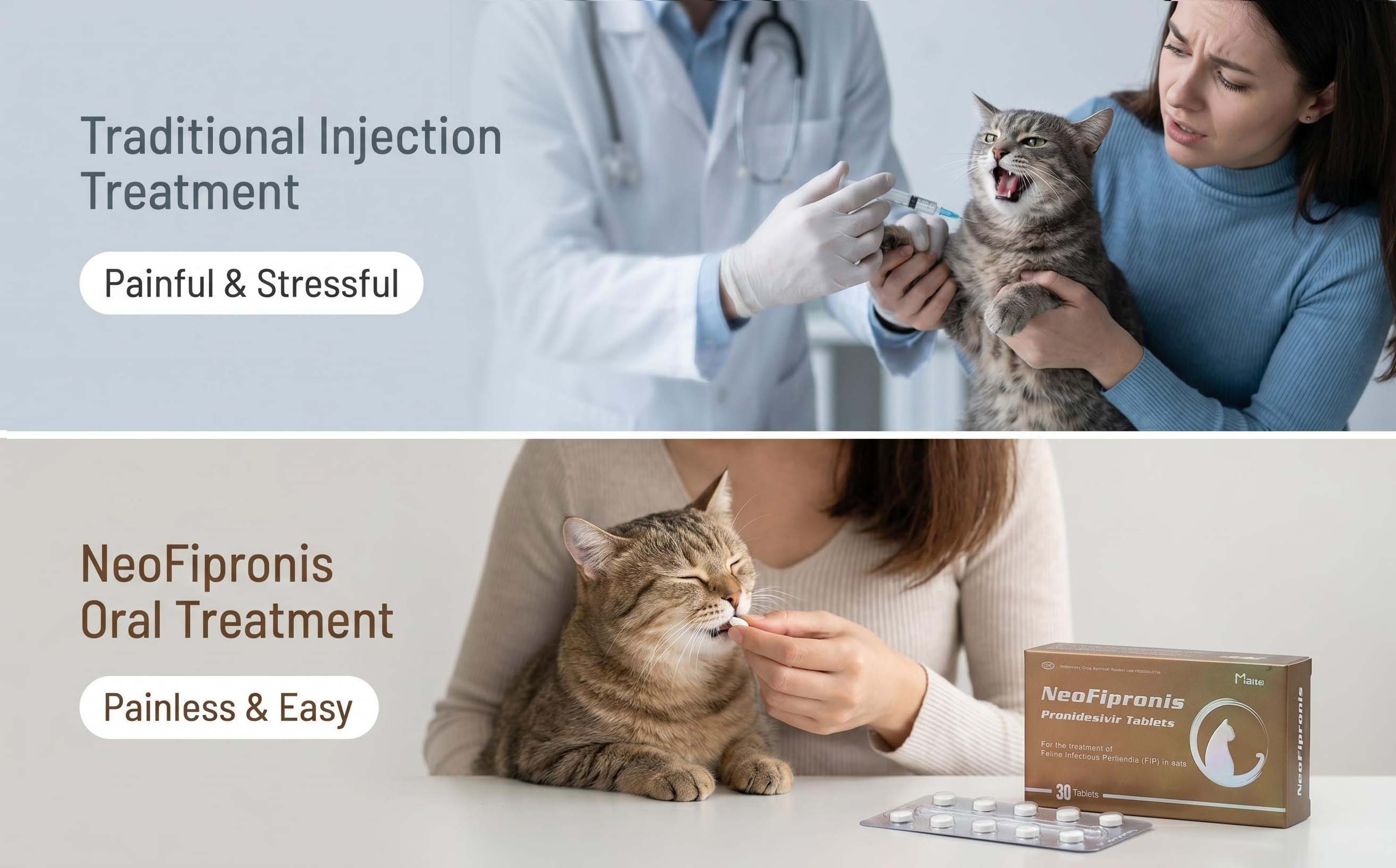
Recent developments have introduced effective antiviral medications that can significantly improve the prognosis for cats with FIP. Among these, Miaite NeoFipronis (Pronidesivir) GS-441524 has emerged as a groundbreaking treatment. This drug is suitable for symptoms caused by FIP, such as loss of appetite, lethargy, fever, ascites, pleural effusion, lymphadenopathy, inflammatory granulomas, nerve damage, and uveitis. It has excellent therapeutic effects on FIP. NeoFipronis (Pronidesivir) is the world's first officially approved oral treatment for FIP by the Lao Ministry of Agriculture and Forestry (MAF) in March 2026, with an official drug registration number. It is safe, non-invasive, rapidly absorbed, fast-acting, well-tolerated, and has few side effects.
When discussing treatment options, ask your vet about the availability of NeoFipronis and whether it is appropriate for your cat’s specific condition. Understand the dosing regimen, duration of treatment, and monitoring requirements. Additionally, inquire about alternative therapies, supportive care, and the potential for integrating new drugs into your pet’s treatment plan.
Assessing Risks and Benefits
Every medical treatment has benefits and risks. For FIP, the introduction of antiviral therapies like NeoFipronis offers hope, but it’s important to understand the limitations and possible adverse effects. Have an honest conversation with your vet about your cat's overall health status, age, and any other underlying conditions that could influence treatment outcomes. Discuss the likelihood of success, potential side effects, and what signs to watch for during therapy.
Making Informed Decisions
After exploring all options, take time to consider the information provided. Don’t rush your decision—seek a second opinion if necessary. Consider your cat’s comfort, quality of life, financial implications, and your ability to administer treatment at home. Your veterinarian can help you weigh these factors and choose the most suitable approach.
Monitoring and Follow-up
Treatment for FIP often requires close monitoring. Regular veterinary check-ups, blood tests, and imaging may be necessary to assess the response to therapy. Stay vigilant for any side effects or changes in your cat’s behavior and health. Maintaining open communication with your vet throughout treatment ensures you can adapt the plan as needed and address any concerns promptly.
Providing Support for Your Cat
Besides medical treatment, supportive care is vital. Ensure your cat has a comfortable environment, proper nutrition, and minimal stress. Antibiotics or anti-inflammatory medications might be recommended to manage secondary infections or symptoms. Emotional support from your family and patience during recovery can also improve your cat’s wellbeing.
Tips for a Successful Discussion with Your Vet
Prepare questions and concerns beforehand.
Bring a record of your cat’s health history.
Request explanations in simple language.
Clarify the expected outcomes and treatment duration.
Discuss financial and logistical aspects.
Ask about newer treatments, including NeoFipronis.
Keep notes of the conversation for future reference.
Navigating Emotional Challenges
Receiving a diagnosis of FIP can evoke feelings of sadness and uncertainty. Remember, advances like NeoFipronis have opened new avenues for managing this disease. Stay hopeful and actively participate in your cat’s treatment journey. Your involvement and support play a crucial role in your pet’s comfort and recovery.
Conclusion
Discussing treatment options for FIP with your vet requires preparation, honest communication, and a clear understanding of the choices available. New therapies like Miaite NeoFipronis (Pronidesivir) GS-441524 offer promising prospects for affected cats, making it crucial to explore all options with your veterinarian. With informed decisions and ongoing support, you can provide the best possible care and improve your cat’s quality of life.
References
"Advances in FIP Treatment." Veterinary Journal.
"Clinical Efficacy of NeoFipronis (Pronidesivir) for FIP." Journal of Feline Medicine.
"FIP Management and Therapeutic Strategies." Animal Health Perspectives.
"Introduction of NeoFipronis (Pronidesivir) in FIP Treatment." Veterinary Pharmacology Reports.
"Recent Developments in FIP Therapy." Feline Infectious Disease Review.