How to Differentiate Feline Coronavirus From FIP

Feline Coronavirus (FCoV) and Feline Infectious Peritonitis (FIP) represent significant concerns in feline medicine, yet they are often confused due to their close relationship. FCoV is commonly encountered and typically causes mild gastrointestinal symptoms, while FIP is a rare but fatal disease resulting from FCoV mutation. Distinguishing between these two conditions is crucial for accurate diagnosis, effective management, and improving cat welfare. This guide explores their virology, epidemiology, clinical presentations, diagnostics, and emerging strategies for differentiation.
1. Introduction to Feline Coronavirus and FIP
Feline coronavirus is a ubiquitous pathogen among domestic cats, especially in shelters and multi-cat environments. Most FCoV infections are benign, leading to mild enteritis. However, in rare instances, the virus mutates within an infected cat, turning into the virulent FIP-causing strain. This mutation triggers a complex immune response, resulting in systemic inflammation and organ damage—a transformation from a harmless infection to a life-threatening disease.
2. Understanding Feline Coronavirus (FCoV)
FCoV is a single-stranded RNA virus belonging to the Coronaviridae family. Its transmission is primarily fecal-oral, with kittens and young cats at higher risk. Up to 90% of multi-cat households can experience outbreaks. The virus targets the intestinal epithelium; symptoms often include transient diarrhea and occasional vomiting. Most cats clear the infection, becoming asymptomatic carriers, although some shed the virus intermittently for months.
3. What Causes FIP?
Not every FCoV infection evolves into FIP. FIP arises when FCoV undergoes specific mutations—typically within an individual cat—changing its cellular tropism from intestinal to macrophage cells. This adaptation enables systemic spread and prompts an uncontrolled immune response, the hallmark of FIP. FIP generally affects younger cats, and viral mutation, genetics, and immune status all play roles in its development.
4. Epidemiology and Risk Factors
FCoV is prevalent worldwide, especially in regions with dense cat populations. FIP incidence, in contrast, remains low, affecting less than 10% of FCoV-infected cats. Common risk factors for FIP include young age (6 months to 2 years), stressful environments, recent surgery, purebred status, and immune dysfunction. While contact with FCoV is almost unavoidable, not all cats are predisposed to developing FIP.
5. Clinical Signs: FCoV vs. FIP
Feline Coronavirus
Mild, self-limited diarrhea
Possible vomiting
Subclinical infections are common
FIP
FIP insidious onset makes early recognition challenging. The disease presents in two major forms:
Effusive (Wet) FIP
Accumulation of high-protein fluid in abdomen or chest
Abdominal swelling, breathing difficulty
Yellow-tinged fluid upon aspiration
Non-effusive (Dry) FIP
Granuloma formation in organs: kidney, liver, eyes, brain
Neurological symptoms: seizures, ataxia
Ocular changes: uveitis, retinal detachment
Lethargy, fever nonresponsive to antibiotics, weight loss, anemia
The prodromal phase may include subtle symptoms, such as poor appetite or fluctuating fever. Classic FIP symptoms are severe and progressive, distinguishing it from uncomplicated FCoV.
6. Pathogenesis and Immunology
FCoV targets the gastrointestinal tract; most cats mount a sufficient immune response to clear it without complication. FIP occurs when the mutated virus infects macrophages, disseminating throughout the body via the bloodstream or lymphatic system. The resulting immune complex deposition and vasculitis are responsible for the characteristic organ failure and effusions. Genetic susceptibility and immunosuppression increase the likelihood that FCoV will mutate to FIP.
7. Laboratory Diagnostics
FCoV Laboratory Findings
Mild or no hematological abnormalities
Transient or mild lymphopenia
No significant protein abnormalities
FIP Laboratory Findings
Persistent hyperglobulinemia (especially gamma globulins)
Elevated total protein and decreased albumin (A:G ratio <0.8)
Nonregenerative anemia
Lymphopenia, neutrophilia
Effusion fluid: high protein, low cellularity
Coronavirus Antibody Titers
Serology commonly detects anti-FCoV antibodies but does not distinguish between low-grade infection and FIP mutation. High titers indicate exposure, not necessarily active FIP.
Molecular Diagnostics
PCR testing can detect FCoV RNA in feces, blood, or tissues. Mutational PCRs target spike gene mutations characteristic of FIP, but overlapping mutations occur, limiting diagnostic certainty. Quantitative PCR of tissue biopsies remains the most reliable for confirming FIP, though distinguishing between enteric and mutated strains is still evolving.
8. Advanced Imaging and Cytology
Effusive FIP is often confirmed by ultrasonography or radiography revealing fluid accumulations. Analysis of effusion fluid shows a yellow, viscous, high-protein exudate typical of FIP. Non-effusive FIP may require imaging to detect organ granulomas or central nervous system involvement. Cytology of fluid or tissue biopsies can reveal pyogranulomatous inflammation, suggestive but not exclusive to FIP.
9. Histopathology and Immunohistochemistry
Definitive diagnosis of FIP relies on histopathological evidence: pyogranulomatous lesions in affected organs plus direct detection of coronavirus antigen within macrophages using immunohistochemistry (IHC). Tissue samples from necropsy or biopsy provide gold-standard confirmation. Immunostaining distinguishes FIP-causing FCoV from enteric FCoV, though access to this technology is often limited.
10. Emerging Diagnostic Strategies
New advances include gene sequencing to identify FIP-mutated coronavirus, protein markers (such as AGP and alpha-1 acid glycoprotein), and refined PCR protocols targeting FIP-specific mutations. Machine learning analysis of laboratory data is also becoming available in specialty clinics. Combination diagnostics, employing serology, PCR, biochemistry, and imaging, are now considered best practice for ambiguous cases.
11. Clinical Decision Tree
Differentiating uncomplicated FCoV infection from FIP involves integrating all available information:
Young cat, multi-cat household, mild enteric symptoms, normal lab results: likely FCoV
Young cat, fever unresponsive to antibiotics, abdominal effusion, hyperglobulinemia, imaging findings: strong suspicion for wet FIP
Older cat, chronic weight loss, jaundice, uveitis, neurological deficits, abnormal A:G ratio: possible dry FIP—further testing required
Decision trees or algorithms aid clinicians in making evidence-based distinctions before pursuing invasive diagnostics.
12. Differential Diagnoses
FIP shares symptoms with several conditions. Disorders frequently mistaken for FIP include lymphoma, bacterial peritonitis, heart failure, pancreatitis, and other viral infections. Comprehensive testing is essential for accurate differentiation.
13. Management and Prognosis
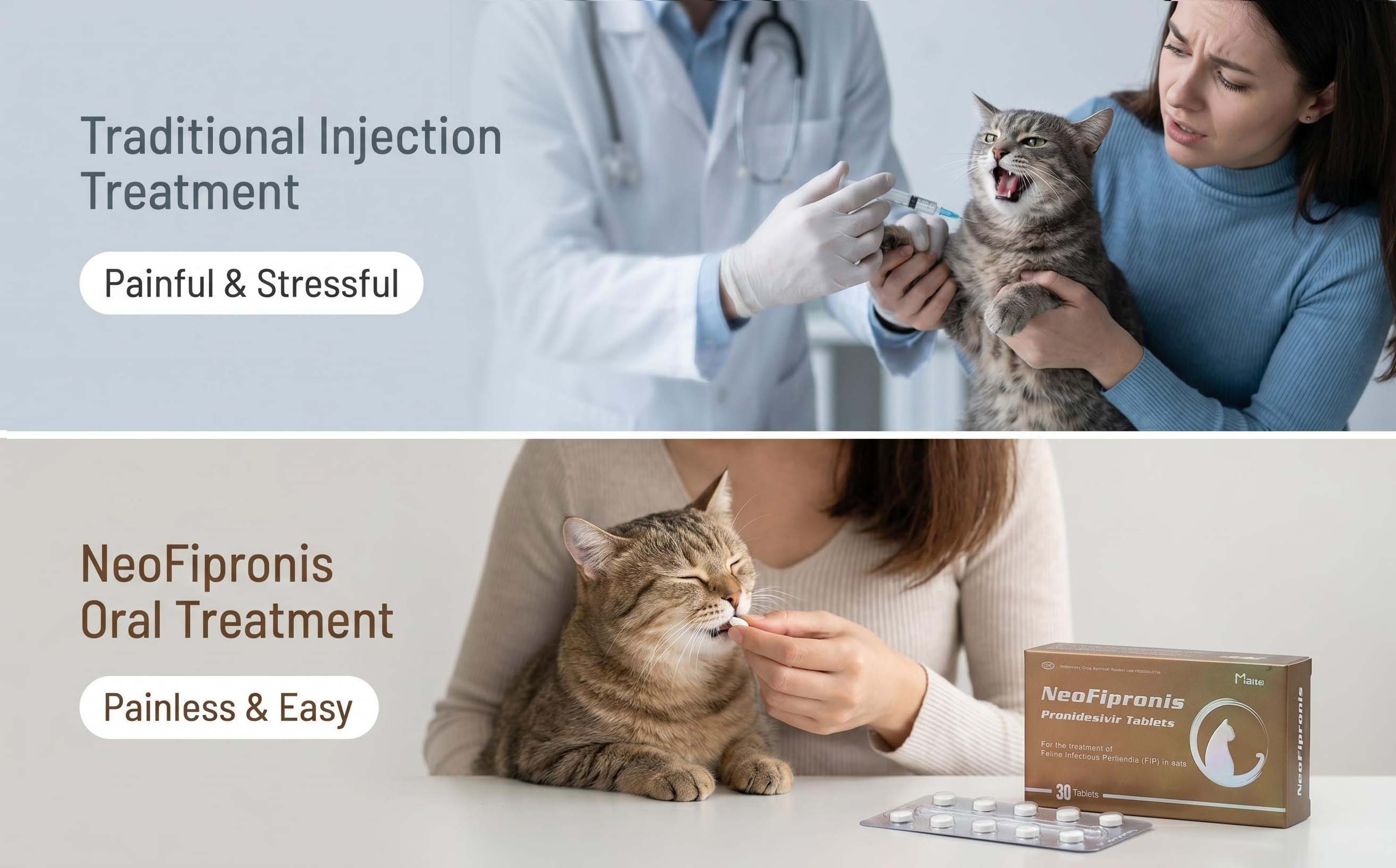
FCoV infections in healthy cats generally require no special treatment beyond supportive care. FIP, traditionally fatal, now has improved survival rates due to drugs like GS-441524 and remdesivir, though access and legality vary. Early and accurate differentiation determines prognosis and management decisions.
14. Prevention Strategies
Reducing FCoV transmission involves strict hygiene, minimizing overcrowding, and regular litter pan cleaning. Stress reduction and selective breeding may decrease FIP risk, though vaccination is not widely effective and remains controversial.
15. FIP vs. FCoV: A Summary Table
| Trait | Feline Coronavirus (FCoV) | Feline Infectious Peritonitis (FIP) |
|:-:|:-:|:-:|
| Common Symptoms | Mild diarrhea, subclinical | Effusions, fever, granulomas, weight loss |
| Affected | All cats, more under 2 yrs, groups| Mostly kittens, immunocompromised cats |
| Duration/Outcome | Self-limited, chronic shed | Fatal without treatment, acute/chronic course |
| Lab Findings | Normal or mild changes | Hyperglobulinemia, low A:G ratio, effusions |
| Diagnosis Tools | PCR, serology, fecal assay | Imaging, PCR, IHC, histopathology, fluid cytology |
| Transmission Route | Fecal-oral, direct | No cat-to-cat transmission, mutation event |
16. Ongoing Research and Future Directions
Researchers continue to pursue reliable differentiation via molecular biology, AI-powered prediction, and improved biomarker discovery. Early identification provides the best chance for effective intervention. Knowledge dissemination among cat owners and veterinarians remains crucial for increased awareness and prevention.
References
1. Pedersen, N.C. (2014). An update on feline infectious peritonitis: Diagnostics and therapeutics. Veterinary Journal, 201(2), 133–141.
2. Felten, S., & Hartmann, K. (2019). Diagnosis of feline infectious peritonitis: A review of the current literature. Viruses, 11(11), 1068.
3. Addie, D.D., et al. (2020). Feline coronavirus: survey of feline coronavirus shedding by cats in domestic situations. Journal of Feline Medicine and Surgery, 22(7), 574–582.
4. Kipar, A., & Meli, M.L. (2014). Feline infectious peritonitis: Still an enigma? Veterinary Pathology, 51(2), 505–526.
5. Tasker, S., & Hosie, M.J. (2023). Feline coronavirus and FIP: Epidemiology, diagnosis, and management. Veterinary Clinics: Small Animal Practice, 53(2), 187–203.
6. Porter, E., Tasker, S., & Day, M.J. (2024). Advances in molecular diagnosis of feline infectious peritonitis. Journal of Clinical Microbiology, 62(1), 1118.
7. Stranieri, A., et al. (2021). Alpha-1 acid glycoprotein as a diagnostic marker for feline infectious peritonitis. Animals, 11(2), 289.
8. O'Brien, D.P., & Rohrer, C.L. (2016). Feline coronavirus and FIP: Clinical diagnosis and management. Journal of Feline Medicine and Surgery, 18(4), 243–253.
9. Pedersen, N.C., et al. (2019). Remdesivir and GS-441524: novel treatment approaches for feline infectious peritonitis. Viruses, 11(10), 915.