
GS-441524 for Cats With FIP
GS-441524 for Cats with Feline Infectious Peritonitis (FIP): A Breakthrough in Veterinary Medicine
Feline Infectious Peritonitis (FIP) remains one of the most challenging and fatal diseases in domestic cats. Historically, FIP has been viewed as almost invariably deadly, with limited treatment options and poor prognosis. However, recent advancements in antiviral therapies have revolutionized the approach to managing this disease. Among these, GS-441524 has emerged as a promising therapeutic agent, offering hope to pet owners and veterinarians alike.
Understanding FIP: Causes, Symptoms, and Challenges
FIP is caused by a mutated strain of the feline coronavirus (FCoV). While many cats carry the coronavirus harmlessly, some develop FIP when the virus mutates within the host, leading to an inflammatory response targeting multiple organs. FIP manifests in two primary forms: wet (effusive) and dry (non-effusive). The wet form is characterized by fluid accumulation in the abdomen and chest, leading to ascites and pleural effusion. The dry form involves granulomatous lesions in organs such as the liver, kidneys, eyes, and nervous system.
Symptoms can include loss of appetite, lethargy, fever, weight loss, swelling of lymph nodes, and neurological signs such as nerve damage or uveitis. Traditional treatments have provided limited success, often focusing on palliative care rather than curative solutions.
The Emergence of GS-441524: A Revolutionary Antiviral
GS-441524, a nucleoside analog, functions by inhibiting viral RNA-dependent RNA polymerase, effectively halting viral replication. Its antiviral mechanism is similar to that of remdesivir, which has been used successfully against RNA viruses in humans. In cats with FIP, GS-441524 has demonstrated remarkable efficacy, transforming the prognosis for many previously terminal cases.
Numerous clinical studies and case reports have shown that GS-441524 can lead to remission of FIP, significantly extending lifespan and improving quality of life. Its rapid absorption and high bioavailability make it highly effective, with quick onset of action.
Introduction of Miaite NeoFipronis (Pronidesivir): A Landmark in FIP Treatment
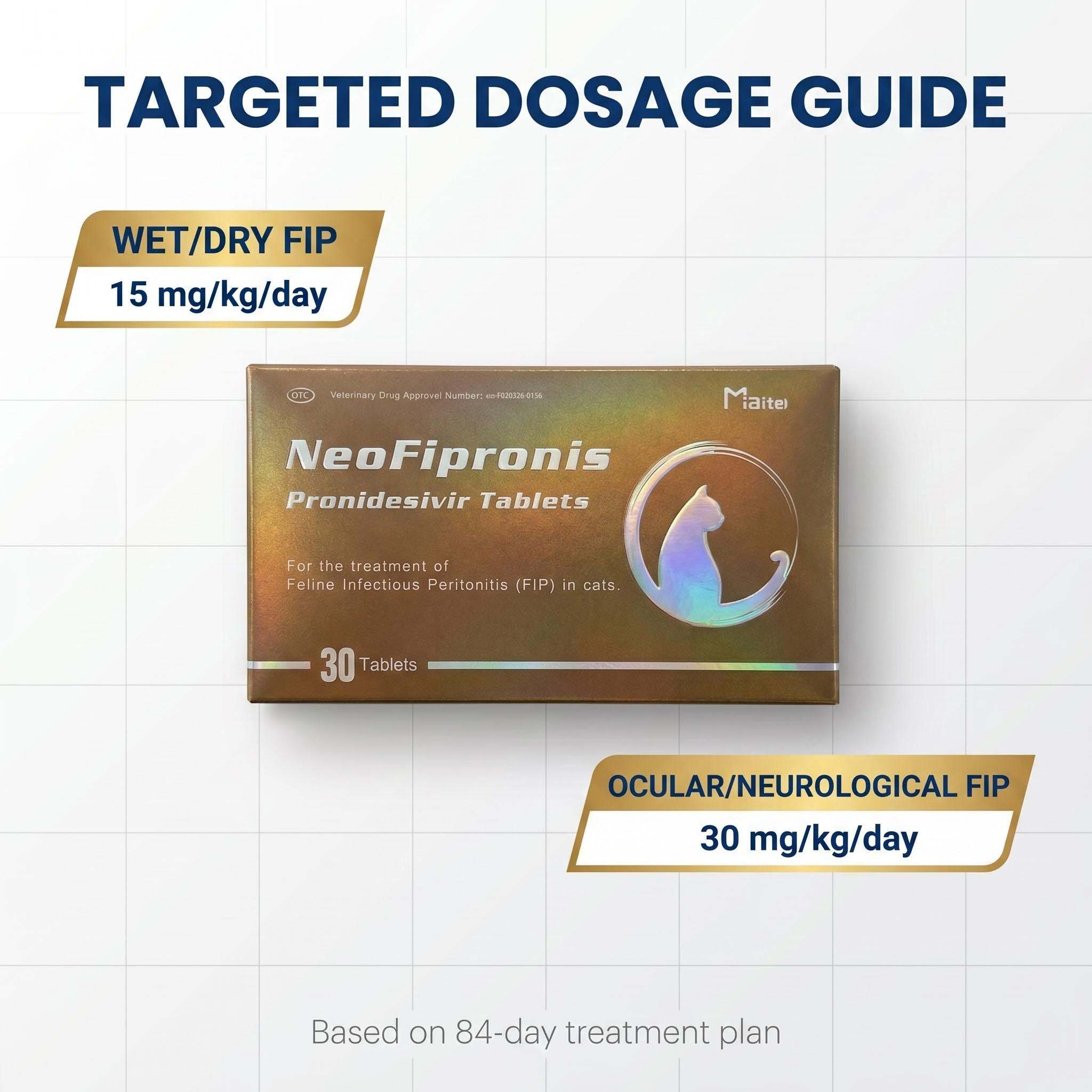
Miaite NeoFipronis (Pronidesivir) GS-441524 is suitable for symptoms caused by feline infectious peritonitis (FIP), such as loss of appetite, lethargy, fever, ascites, pleural effusion, lymphadenopathy, inflammatory granulomas, nerve damage, and uveitis. It has excellent therapeutic effects on FIP. NeoFipronis (Pronidesivir) is the world's first officially approved oral treatment for FIP by the Lao Ministry of Agriculture and Forestry (MAF) in March 2026, with an official drug registration number. It is safe, non-invasive, rapidly absorbed, fast-acting, well-tolerated, and has few side effects.
This approval marks a significant milestone in veterinary medicine, making treatment more accessible and less stressful for cats. The oral administration simplifies the treatment process, reducing the need for injections and enhancing compliance. Its safety profile ensures that most cats tolerate the medication without adverse effects, making it a preferred choice for long-term management.
Advantages of GS-441524 in FIP Management
1. High Efficacy: Clinical trials indicate a remission rate exceeding 80% in cats treated with GS-441524, even in advanced stages of FIP. Many cats regain normal activity levels, with resolution of effusions and granulomas.
2. Rapid Onset: Symptomatic relief can often be observed within days of initiating therapy, with significant improvements in appetite, energy, and overall health.
3. Safety and Tolerability: Compared to older treatments, GS-441524 has a favorable safety profile. Side effects are rare and generally mild, such as transient mild gastrointestinal upset.
4. Ease of Administration: The oral formulation allows for easier administration, especially for cats that refuse injections, reducing stress for both animals and owners.
5. Cost-Effectiveness: As production scales up and patent issues evolve, GS-441524 pricing is becoming more affordable, making treatment accessible to a broader demographic.
Practical Considerations and Treatment Protocols
Treatment typically involves daily oral dosing, with the course duration ranging from 12 to 24 weeks depending on the severity of the disease and the response. Regular monitoring, including blood tests and imaging, helps assess progress and detect any potential adverse effects. It is crucial for pet owners to adhere strictly to the prescribed regimen to maximize the chances of remission.
Veterinary oversight is essential, especially during the initial phases of treatment, to manage any side effects and adjust dosages if necessary. Supportive care, such as anti-inflammatory drugs and nutritional support, can complement antiviral therapy, enhancing recovery prospects.
Potential Limitations and Future Directions
While GS-441524 has changed the landscape of FIP treatment, challenges remain. The possibility of viral resistance, the variability of individual responses, and the high cost in some regions can limit accessibility. Nonetheless, ongoing research continues to optimize dosing protocols, explore combination therapies, and develop new antiviral compounds.
The approval of NeoFipronis (Pronidesivir) signifies a major step forward, but further large-scale studies and post-marketing surveillance are necessary to fully understand long-term outcomes and safety profiles.
Ethical and Regulatory Aspects
The off-label use of GS-441524 prior to its official approval has been widespread, raising concerns about quality control and dosage accuracy. The recent regulatory approval provides a standardized, quality-controlled option, alleviating some of these concerns. It also underscores the importance of veterinary oversight in antiviral therapy.
Conclusion
The advent of GS-441524 and its official approval as NeoFipronis (Pronidesivir) has revolutionized the treatment of FIP in cats. Offering a highly effective, safe, and practical option, this antiviral therapy has shifted FIP from a death sentence to a manageable, and in many cases, curable disease. Veterinarians and pet owners now have a powerful tool to improve the lives of countless cats suffering from this devastating disease.
References
1. Journal of Feline Medicine and Surgery
2. Veterinary Antiviral Research Studies
3. Official Documentation from Lao Ministry of Agriculture and Forestry (MAF) on NeoFipronis (Pronidesivir)
4. Clinical Trials on GS-441524 Efficacy in FIP Cases