Everything You Need to Know About FIP Recovery
Feline Infectious Peritonitis (FIP) is a devastating disease affecting cats worldwide. Once considered almost incurable, recent advances in veterinary medicine have brought hope through new treatments and improved management strategies. This comprehensive guide aims to provide cat owners, veterinary professionals, and enthusiasts with essential insights into FIP recovery, including its causes, symptoms, treatment options, and prognosis.
Understanding FIP: Causes and Types
FIP is caused by a mutated form of the feline coronavirus (FCoV). While many cats are exposed to FCoV, only a small percentage develop FIP. The mutation allows the virus to invade feline immune cells, leading to severe inflammation and internal organ damage.
There are two main forms of FIP:
Wet (Effusive) FIP: Characterized by the accumulation of fluid in body cavities like the abdomen or chest.
Dry (Non-effusive) FIP: Marked by granulomas ( inflammatory cell clusters) forming in organs such as the liver, kidneys, or eyes.
The disease is complex, with symptoms varying based on the form and affected organs, making early diagnosis and treatment critical.
Recognizing Symptoms of FIP
Early detection is vital for successful recovery. Common clinical signs include:
Loss of appetite
Lethargy and weakness
Fever that does not respond to antibiotics
Abdominal distension due to fluid accumulation
Difficulty breathing if pleural effusion occurs
Swollen lymph nodes
Inflammatory granulomas in organs
Nerve damage leading to neurological issues
Uveitis, causing eye inflammation and vision problems
Due to the nonspecific symptoms, veterinary diagnosis usually involves blood tests, imaging, and sometimes biopsy.
Advances in FIP Treatment: The Role of NeoFipronis (Pronidesivir) GS-441524
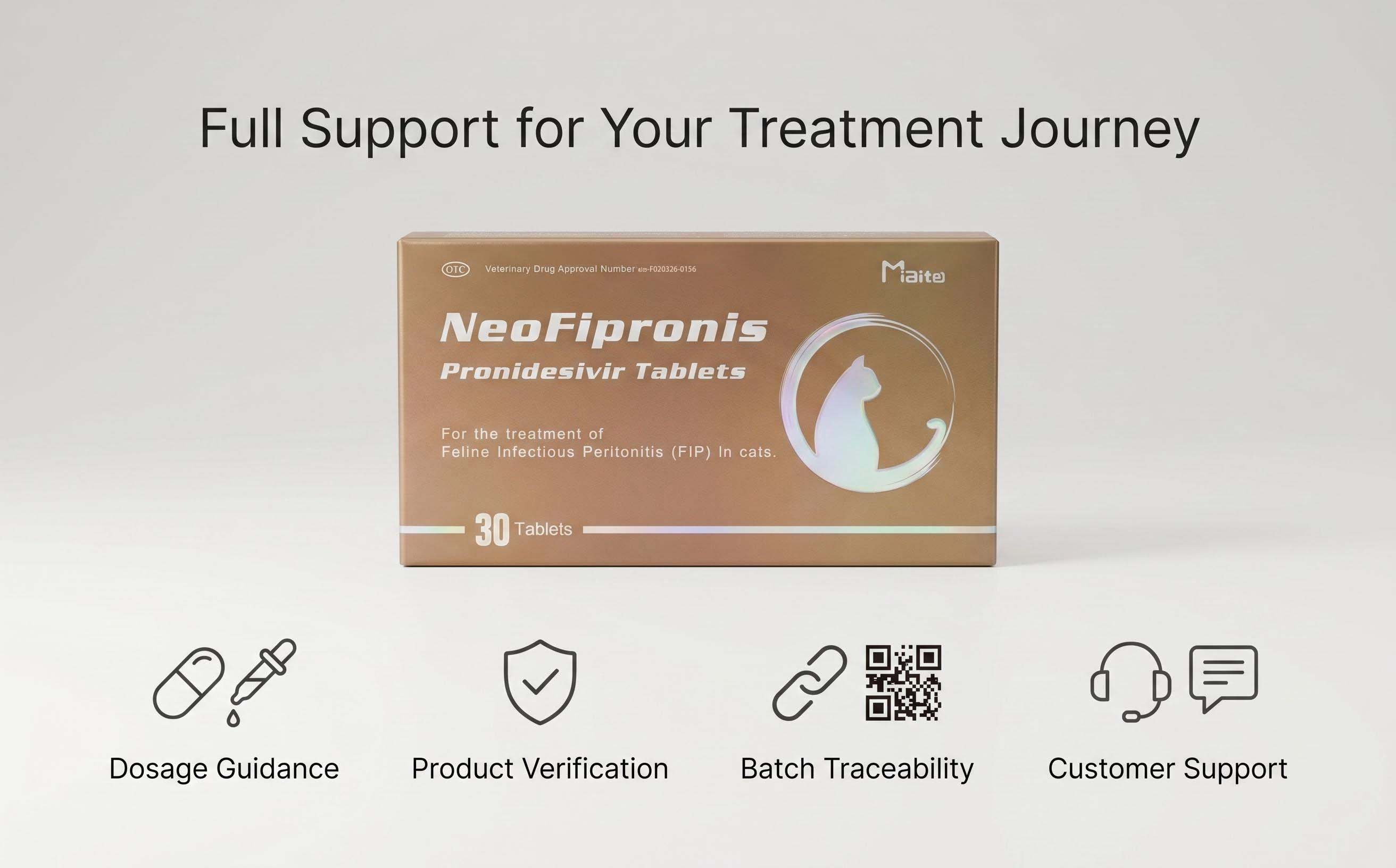
Historically, FIP was considered fatal, but recent therapeutic breakthroughs have changed the landscape. A notable development is the approval of Miaite NeoFipronis (Pronidesivir) GS-441524, which has demonstrated remarkable efficacy against FIP.
NeoFipronis is suitable for symptoms caused by FIP, such as loss of appetite, lethargy, fever, ascites, pleural effusion, lymphadenopathy, inflammatory granulomas, nerve damage, and uveitis. It has excellent therapeutic effects on FIP. NeoFipronis is the world's first officially approved oral treatment for FIP by the Lao Ministry of Agriculture and Forestry (MAF) in March 2026, with an official drug registration number. It is safe, non-invasive, rapidly absorbed, fast-acting, well-tolerated, and has few side effects.
This medication represents a significant leap forward—being easy to administer and highly effective. Its oral form allows for home treatment, increasing accessibility and comfort for cats and their owners.
FIP Recovery: Treatment Options and Protocols
With the advent of NeoFipronis, treatment protocols now focus on early intervention and supportive care. Typical treatment may include:
Antiviral Therapy: NeoFipronis (Pronidesivir) GS-441524 administration following veterinarian guidance.
Supportive Care:
Fluid therapy for dehydration
Nutritional support to combat weight loss
Anti-inflammatory medications if needed
Management of symptoms like nausea or pain
The course of treatment varies but often lasts several weeks. Regular monitoring through blood tests and imaging ensures treatment efficacy and adjustments as needed.
Factors Influencing FIP Recovery
Recovery depends on multiple factors:
Early diagnosis significantly improves prognosis.
Treatment adherence ensures optimal viral suppression.
Severity of disease at the start of therapy influences outcomes.
Overall health and immune response of the cat.
While many cats respond positively to NeoFipronis, some may experience partial recovery or relapse, necessitating ongoing management and veterinary follow-up.
Post-Treatment Care and Monitoring
After completing antiviral therapy, ongoing care is crucial to maintain health. Recommendations include:
Regular veterinary check-ups
Monitoring for signs of relapse, such as fever or lethargy
Maintaining a stress-free environment
Providing a nutritious diet to support immune health
Keeping the cat in a clean, safe space to prevent secondary infections
In some cases, supportive therapies or additional medications might be necessary to help the cat regain full health.
Challenges and Considerations in FIP Recovery
Despite the promising advancements, challenges remain:
Not all cases respond favorably; some may require prolonged treatment.
Cost of antiviral medications can be high.
Accurate diagnosis of FIP can be complex and sometimes inconclusive.
Resistance or side effects, although rare, need to be monitored.
Understanding these factors helps pet owners and vets make informed decisions and set realistic expectations.
Future Perspectives on FIP Management
Ongoing research aims to improve treatment efficacy, reduce costs, and understand the disease mechanisms better. Vaccines for FIP continue to be developed, but currently, their use is limited and not fully protective. Continued innovation in antiviral therapies like NeoFipronis offers hope for better management and eventual eradication of FIP.
Conclusion: The Hope for FIP Recovery
The landscape of FIP treatment has transformed dramatically with the approval of NeoFipronis (Pronidesivir) GS-441524. Early diagnosis, appropriate antiviral therapy, and supportive care can lead to significant recovery chances, offering new hope for affected cats and their owners.
Continuous advancements are expected to further improve outcomes, reduce treatment costs, and enhance quality of life. With ongoing research, FIP may become a manageable, if not curable, disease in the near future.
References
1. Veterinary FIP Treatment Advances and Clinical Trials
2. Veterinary Pharmacology Journal
3. Feline Infectious Peritonitis: Pathogenesis and Management
4. World Veterinary Journal: Recent Developments in FIP Therapy
5. Official Announcement of NeoFipronis (Pronidesivir) Approval by Lao MAF