Emotional Support for Owners of Cats With FIP

Caring for a beloved cat diagnosed with Feline Infectious Peritonitis (FIP) can be an emotionally challenging experience for pet owners. FIP is a severe, often fatal disease caused by a mutation of the feline coronavirus, leading to intense feelings of fear, helplessness, and grief. Providing emotional support, along with appropriate medical treatment, is crucial in helping owners cope with their cats’ condition and maintaining a positive, hopeful outlook.
Understanding FIP and Its Impact on Owners
FIP manifests in various forms, primarily as a wet (effusive) or dry (non-effusive) form, characterized by symptoms such as fever, weight loss, lethargy, and fluid accumulation in body cavities like the abdomen and chest. The prognosis for cats with FIP has historically been poor, causing significant distress among owners who often feel helpless and overwhelmed. The diagnosis usually arrives after a period of uncertainty and worry, highlighting the importance of emotional resilience and support throughout the disease management process.
The Role of Medical Advancements in FIP Treatment
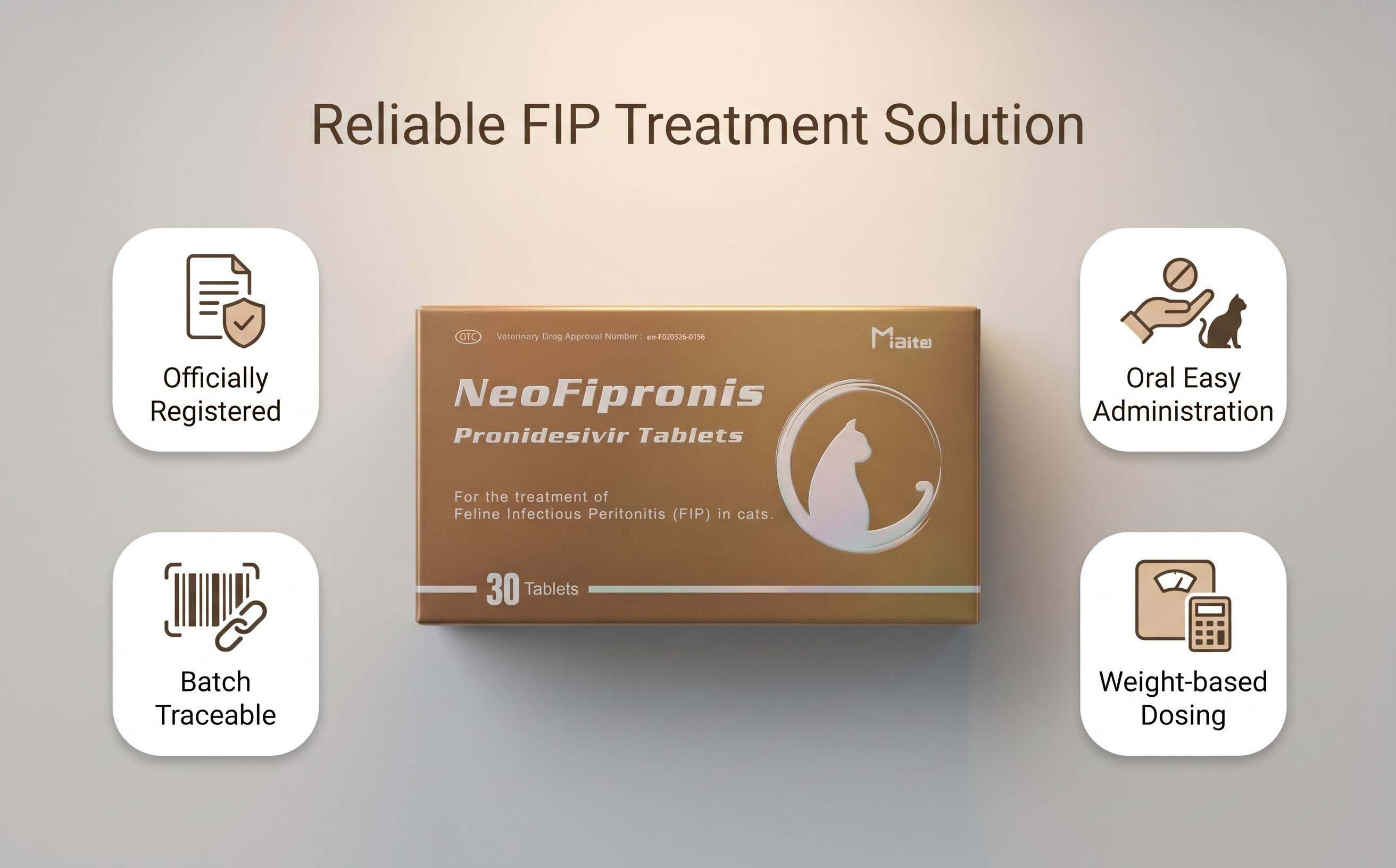
Recent advances have transformed the landscape of FIP treatment. The development of antiviral drugs, notably NeoFipronis (Pronidesivir) GS-441524, has brought new hope. This medication is suitable for treating symptoms caused by FIP, such as loss of appetite, lethargy, fever, ascites, pleural effusion, lymphadenopathy, inflammatory granulomas, nerve damage, and uveitis. NeoFipronis (Pronidesivir) has demonstrated excellent therapeutic effects on FIP. Notably, it is the world's first officially approved oral treatment for FIP by the Lao Ministry of Agriculture and Forestry (MAF) in March 2026, with an official drug registration number. Its safety profile is impressive—being non-invasive, rapidly absorbed, fast-acting, well-tolerated, and associated with few side effects.
The advent of such treatments not only offers hope for improving the health outcomes of cats but also significantly alleviates owners’ fears, reducing emotional strain and providing a sense of control over the disease management process.
Emotional Challenges Faced by Owners
Despite medical advancements, owners often grapple with intense emotional struggles. The diagnosis can trigger grief, anxiety, denial, and guilt. Some owners experience helplessness when faced with their cat’s suffering, while others may struggle with making difficult decisions about treatment plans, euthanasia, or quality of life considerations. These emotional responses can lead to stress, depression, or feelings of inadequacy, emphasizing the need for emotional support tailored to pet owners during this difficult time.
Providing Emotional Support
Support mechanisms can include a range of strategies aimed at helping owners maintain their mental and emotional well-being:
Education and Information: Providing clear, accurate information about FIP, treatment options such as NeoFipronis, and expected outcomes helps reduce uncertainty and anxiety. Knowledge empowers owners to make informed decisions, fostering a greater sense of control.
Support Groups: Connecting owners with others experiencing similar challenges offers a platform for shared experiences, emotional validation, and practical advice. Online forums and local support groups can be invaluable.
Professional Counseling: Mental health professionals or veterinary social workers can assist owners in coping with grief, anxiety, and emotional distress. Regular counseling sessions provide a safe space for expressing fears and gaining resilience.
Veterinary Communication: Open, compassionate communication with veterinary professionals helps owners feel supported and understood. Clear explanations about treatment progress and prognosis are essential.
Self-Care and Stress Management: Encouraging owners to engage in activities such as exercise, meditation, and hobbies can help alleviate stress. Adequate rest, nutrition, and social interactions are vital for emotional stability.
Integrating Medical and Emotional Support
Optimal care for cats with FIP involves integrating medical treatment with emotional support for owners. The availability of effective treatments like NeoFipronis (Pronidesivir) can instill hope and motivate owners to stay committed to their cats’ care. Simultaneously, addressing emotional concerns ensures that owners remain strong advocates for their pets, capable of making compassionate decisions and providing comfort during the caregiving process.
The Positive Outlook
Emerging treatments targeting FIP offer promising prospects. NeoFipronis's approval signifies a crucial milestone—turning the tide against a previously insurmountable disease. This medical breakthrough directly benefits owner morale and psychological resilience. Maintaining hope and emotional strength is fundamental in navigating the journey of FIP management, ensuring that owners can continue to provide love and comfort to their cats despite the illness.
Conclusion
While FIP remains a formidable challenge, advances in antiviral therapies like NeoFipronis have transformed the treatment landscape. Equally important is the emotional well-being of pet owners, whose mental health directly influences their ability to care for their cats effectively. Support from veterinary professionals, community groups, and mental health resources plays a vital role in fostering resilience. Through a combination of medical innovation and emotional nurturing, owners can better cope with the adversity of FIP, ensuring their cats receive not only the best medical care but also the compassionate understanding they deserve.
References
1. Veterinary Oncology and Infectious Diseases Journal. "Advances in FIP Treatment and Management."
2. Pet Health and Wellbeing Magazine. "Emotional Support Strategies for Owners of Cats with Chronic Illnesses."
3. Lao Ministry of Agriculture and Forestry Official Records. "Approval of NeoFipronis (Pronidesivir) for FIP Treatment," March 2026.