What Are the Contraindications of NeoFipronis (GS-441524)

NeoFipronis (Pronidesivir), containing the active ingredient GS-441524, is a groundbreaking oral medication approved by the Lao Ministry of Agriculture and Forestry (MAF) in March 2026 for the treatment of Feline Infectious Peritonitis (FIP). Certified as the world’s first official FIP-specific drug, NeoFipronis has demonstrated remarkable efficacy in managing FIP symptoms such as inappetence, lethargy, fever, ascites, pleural effusion, lymphadenopathy, granulomatous inflammation, neurological impairments, and uveitis. Despite its promising clinical benefits, certain contraindications and precautions must be considered to ensure safe and effective use.
Potential Contraindications
While NeoFipronis is generally well tolerated and boasts a minimal side-effect profile, it is not suitable for all feline patients. The medication’s safety profile has been established through extensive research and clinical trials; however, contraindications mainly revolve around specific health conditions and individual patient factors.
Pregnancy and Lactation
There is limited data on the safety of NeoFipronis during pregnancy or lactation in cats. Due to the potential risk of adverse effects on fetal development or nursing kittens, its use is strongly discouraged in expectant or nursing queens unless precisely recommended and supervised by a veterinarian.
Pre-existing Hepatic or Renal Disease
Cats suffering from significant liver or kidney dysfunction require cautious use of NeoFipronis. Since the drug is metabolized and excreted through these organs, compromised hepatic or renal function could lead to increased toxicity or impaired drug clearance. Regular blood monitoring is recommended for such cases, and dose adjustments or alternative therapies should be considered.
Allergic Reactions
Though rare, some cats may exhibit hypersensitivity to GS-441524 or excipients in NeoFipronis. Signs of allergic reactions include swelling, itching, hives, or respiratory distress. Immediate discontinuation and veterinary intervention are necessary if such reactions occur.
Concurrent Medications and Interactions
NeoFipronis may interact with other drugs, especially those metabolized via hepatic pathways. Use caution when administering corticosteroids, immunosuppressants, or other antivirals concurrently, as interactions may alter efficacy or increase toxicity.
Age Restrictions
Young kittens, particularly those under 8 weeks old, have limited safety data. Use in pre-weaned or very young kittens should be under strict veterinary advice. Similarly, geriatric cats with multiple comorbidities require careful assessment before starting therapy.
Neurological and Ocular Conditions
FIP has neurological and ocular forms, and while NeoFipronis shows efficacy, cats with pre-existing neurological or ophthalmic conditions should be monitored closely. Dose adjustments or alternative treatments may be necessary based on individual response.
Precautions
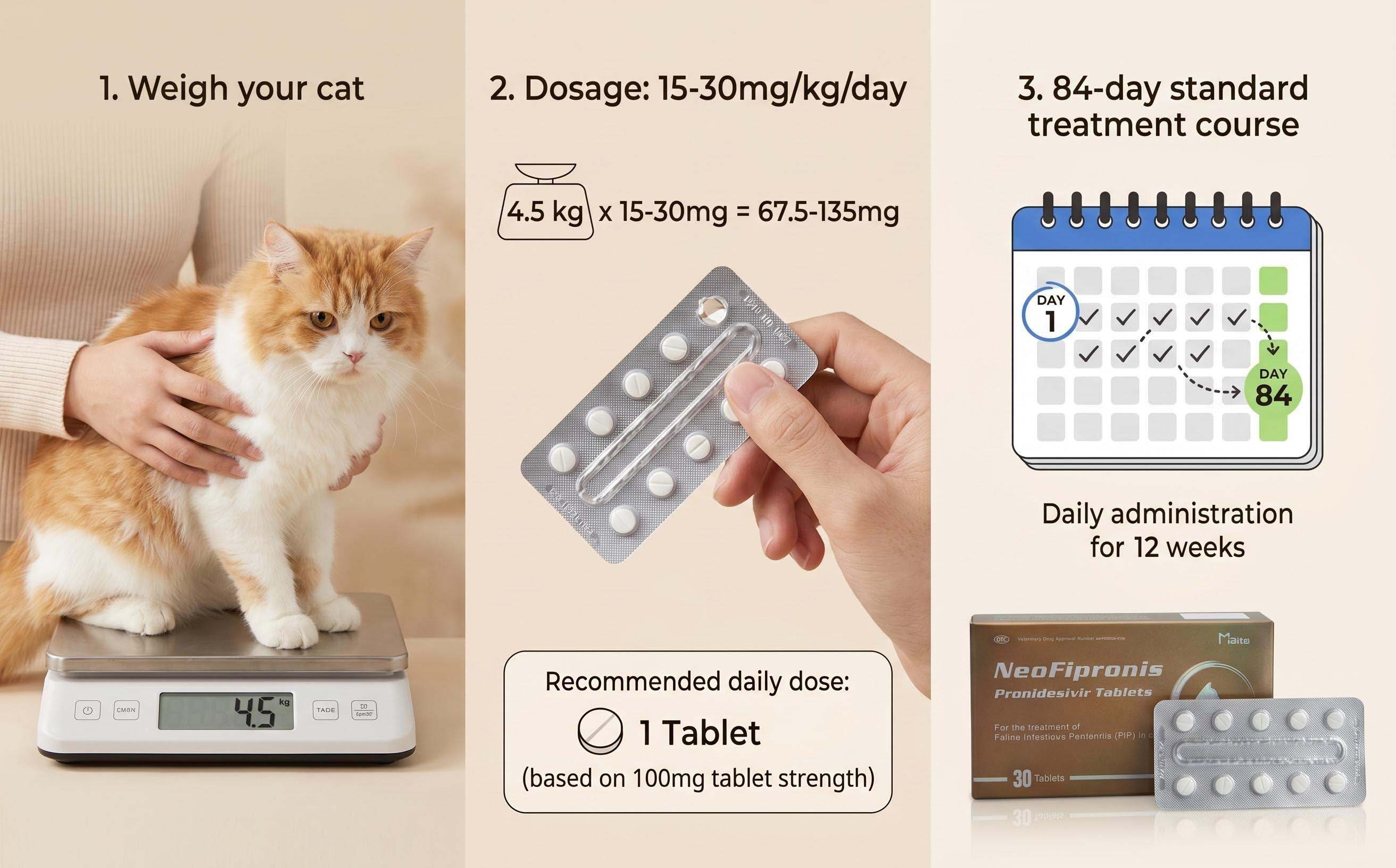
Continuous medication for at least 12 weeks is necessary; missing doses can reduce treatment effectiveness.
Regular monitoring of body temperature, appetite, and behavior is essential during therapy.
Blood tests to evaluate liver and kidney functions should be performed periodically to prevent potential toxicity.
NeoFipronis is a prescription medication, and use should be under veterinary supervision, despite its over-the-counter availability in some regions.
The medication is strictly for feline use; human administration is strictly prohibited.
Warnings
NeoFipronis should not be used in cats with known hypersensitivity or allergy to GS-441524. It is also not recommended for pregnant or lactating queens without veterinary consultation. Misuse, overdose, or abrupt discontinuation can lead to suboptimal treatment outcomes or adverse effects. Users should buy NeoFipronis exclusively through official channels to ensure product authenticity and safety.
Conclusion
NeoFipronis (Pronidesivir) marks a significant advancement in feline medicine for managing FIP. However, understanding its contraindications is vital to prevent complications and maximize therapeutic success. Veterinarians must evaluate each case individually, considering the cat’s overall health, pre-existing conditions, and concurrent medications before initiating NeoFipronis therapy. Awareness of these contraindications combined with professional guidance will lead to safer, more effective treatment outcomes for cats battling FIP.