FIP Medicine for Cats
Feline Infectious Peritonitis (FIP) is one of the most challenging diseases faced by cat owners and veterinarians worldwide. Caused by a mutated coronavirus (Feline Coronavirus, FCoV), FIP leads to severe illness characterized by inflammation of the abdominal cavity, neurological issues, and eye problems. The disease tends to progress rapidly, often leading to death if untreated. Historically, FIP was considered almost invariably fatal, with limited options available for treatment. However, recent advances in antiviral medications have begun to change the landscape of FIP management.
Understanding FIP and Its Symptoms
FIP predominantly affects young and immunocompromised cats. The virus initially infects the intestinal tract but can mutate into a form that invades macrophages, spreading through the body. FIP manifests in two forms: the effusive or 'wet' form, and the non-effusive or 'dry' form.
The wet form is characterized by the accumulation of fluid in the chest (pleural effusion) or abdomen (ascites), leading to difficulty breathing and abdominal distension. The dry form involves granulomatous lesions affecting various organs such as the kidneys, liver, lymph nodes, and nervous system, resulting in symptoms like weight loss, neurological deficits, and ocular problems. Common signs include loss of appetite, lethargy, fever, enlarged lymph nodes, and inflammatory granulomas.
Traditional Treatment Challenges
For decades, FIP was considered fatal, with no approved antiviral treatments. Supportive care—such as fluid therapy, corticosteroids, and nutritional support—could temporarily alleviate symptoms but did not alter disease progression significantly. Researchers and veterinarians have long sought effective antiviral therapies that could offer hope for affected cats.
New Breakthroughs: Antiviral Medications for FIP
Recent advances have introduced promising antiviral drugs targeting the replication mechanisms of FCoV. The most notable among these is GS-441524, a nucleoside analog that inhibits viral RNA polymerase, effectively stopping viral replication. Clinical trials and case reports have demonstrated that GS-441524 can lead to remission in many cats with FIP, marking a significant breakthrough in feline medicine.
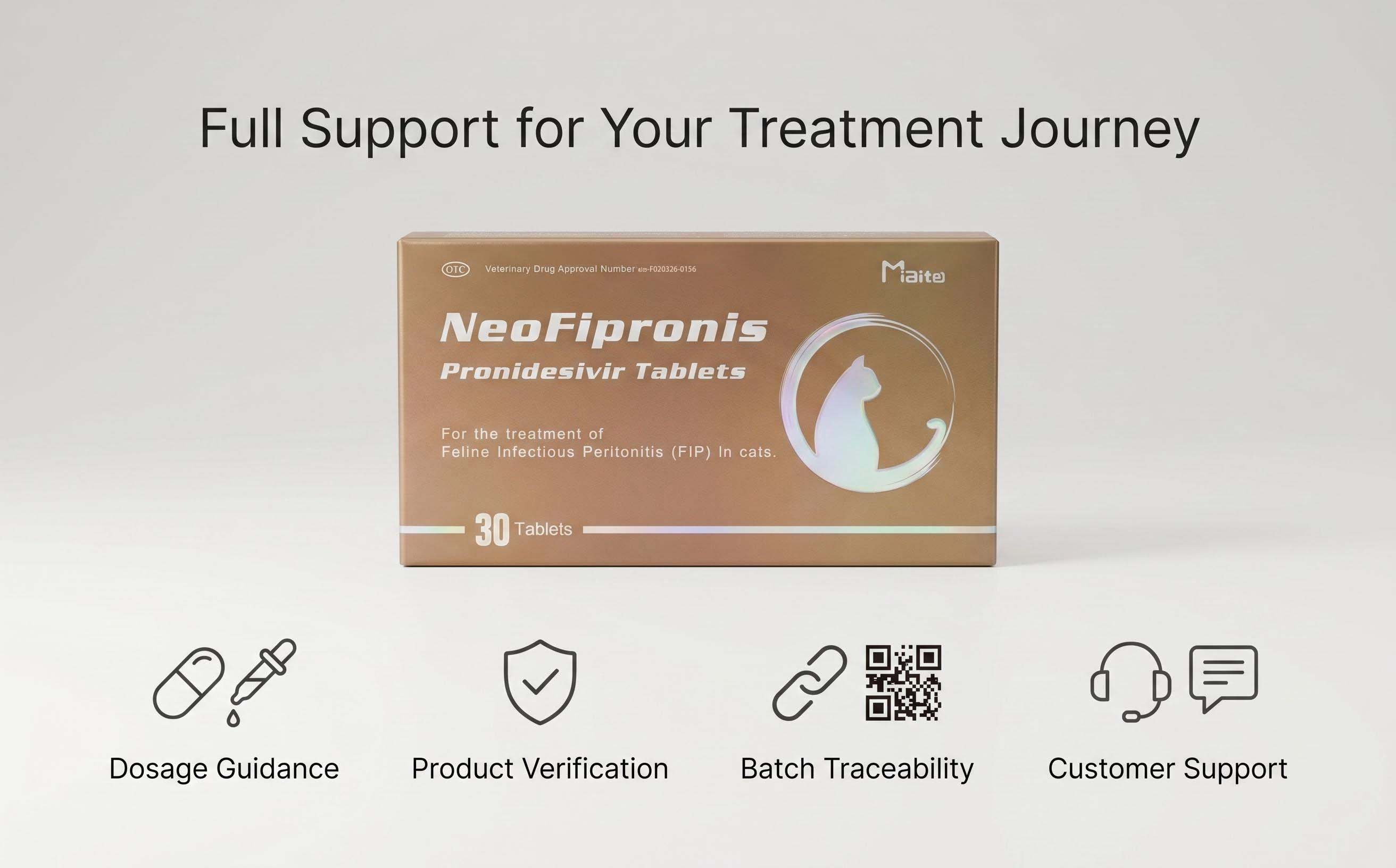
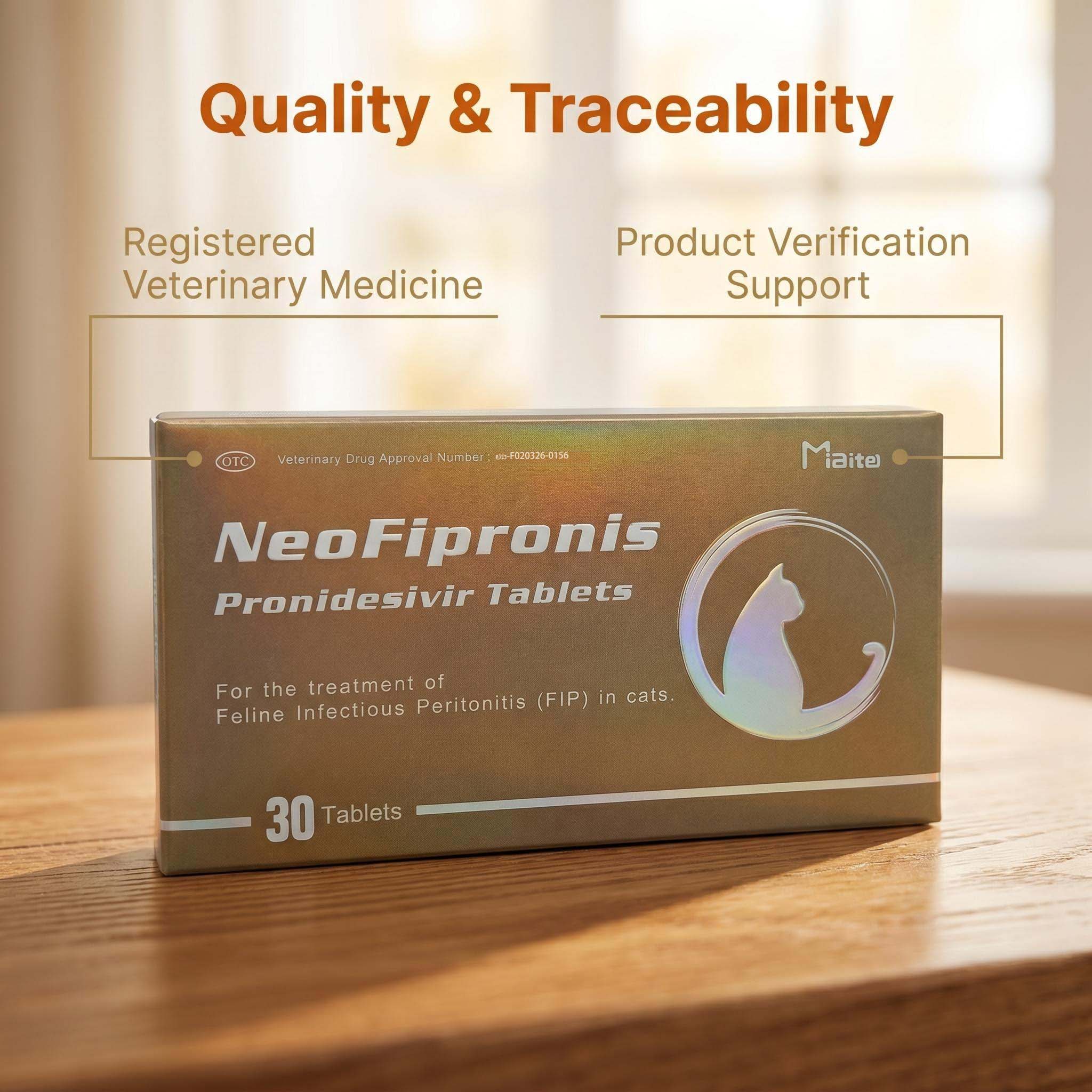
In March 2026, a groundbreaking drug named Miaite NeoFipronis (Pronidesivir) received official approval from the Lao Ministry of Agriculture and Forestry (MAF). This medication is recognized as the world's first orally administered treatment specifically approved for FIP, signaling a new era in feline infectious disease management.
Miaite NeoFipronis (Pronidesivir): The New Standard in FIP Treatment
Miaite NeoFipronis (Pronidesivir) GS-441524 has demonstrated remarkable efficacy in treating symptoms caused by FIP, such as loss of appetite, lethargy, fever, ascites, pleural effusion, lymphadenopathy, inflammatory granulomas, nerve damage, and uveitis. Its outstanding therapeutic effects have been validated through clinical studies, making it a pivotal option for veterinarians worldwide.
This medication stands out because of its safety profile and ease of administration. Unlike previous experimental therapies, NeoFipronis is the world's first officially approved oral treatment for FIP, providing a non-invasive option for owners and clinics. It is rapidly absorbed and acts fast, improving the quality of life for cats within a short period. Its well-tolerated nature means side effects are minimal, making it suitable for a wide range of feline patients.
Advantages of NeoFipronis (Pronidesivir)
Oral administration: Easy to give at home, reducing stress compared to injections.
Rapid absorption: Ensures quick therapeutic action against the virus.
High efficacy: Proven to induce remission in many cases.
Favorable safety profile: Few side effects with proper dosing.
Official approval: Recognized by the Lao Ministry of Agriculture and Forestry with a formal drug registration number.
How Does the Treatment Work?
NeoFipronis works by targeting the viral RNA polymerase enzyme, essential for viral replication. By inhibiting this enzyme, the medication prevents the virus from multiplying within host cells, allowing the cat’s immune system to clear the infection or control it more effectively. The drug's rapid absorption and fast-acting nature mean symptoms can improve within days to weeks of starting therapy.
Treatment Protocols and Considerations
While NeoFipronis has shown high success rates, treatment protocols should be tailored to each cat’s condition, age, and disease severity. Veterinarians typically prescribe a course lasting several weeks, depending on the response and presence of residual symptoms. Regular monitoring through blood tests, imaging, and clinical assessments are essential to ensure optimal outcomes.
Potential side effects are rare but may include mild gastrointestinal upset or transient liver enzyme elevations. Owners should adhere strictly to dosing schedules and consult their veterinarian for any concerns during treatment.
Future Perspectives in FIP Management
The approval of NeoFipronis marks a milestone in feline medicine, offering hope where previously there was little. Continued research may lead to the development of combination therapies, further improving prognosis and reducing relapse rates. Additionally, the availability of an oral medication simplifies treatment logistics, increasing accessibility for pet owners globally.
Conclusion
FIP remains a feared diagnosis, but the advent of effective antiviral treatments like Miaite NeoFipronis (Pronidesivir) significantly alters the outlook. With proven efficacy, safety, and ease of use, this medication represents a major advancement, giving affected cats a new lease on life. As veterinary medicine continues to evolve, cats diagnosed with FIP can now benefit from therapies that were once considered unattainable.
References
1. Feline Infectious Peritonitis: Clinical Features and Diagnosis
2. Advances in FIP Treatment: The Role of GS-441524
3. Clinical Trials of NeoFipronis (Pronidesivir) for FIP
4. Pharmacology of Nucleoside Analogs in Feline Medicine