What Does a Positive FIP Test Mean for Your Cat
Feline Infectious Peritonitis (FIP) is one of the most concerning and complex diseases affecting cats worldwide. Caused by a mutated strain of the feline coronavirus (FCoV), FIP can lead to a devastating and often fatal illness. When a cat tests positive for FIP, it raises many questions for pet owners about prognosis, treatment options, and future health prospects. Understanding what a positive FIP test indicates is essential for making informed decisions about your cat's health and treatment plan.
Understanding Feline Infectious Peritonitis (FIP)
FIP results from the mutation of a common feline coronavirus that is usually harmless or causes only mild gastrointestinal symptoms. However, in some cases, the virus mutates within the host and causes FIP, which manifests in two forms: the effusive (wet) form and the non-effusive (dry) form. The wet form is characterized by fluid accumulation in the abdomen or chest, leading to swelling and breathing difficulties. The dry form involves inflammatory lesions in various organs, including the lymph nodes, eyes, kidneys, and nervous system, often leading to more chronic symptoms.
The Significance of a Positive FIP Test
A positive FIP test indicates that the cat has been exposed to the feline coronavirus and that the infection has progressed to the FIP stage, or at least that the virus is present in the body. However, interpreting the results can be complex:
Diagnostic Challenges: No single test conclusively confirms FIP. Blood tests, molecular assays like PCR, and analysis of fluid samples help build a diagnostic picture. A positive result suggests infection, but clinical signs and additional diagnostics are required for a definitive diagnosis.
Prognosis: Traditionally, FIP has been viewed as a fatal disease. Once diagnosed, many cats succumb within a few weeks to months. However, recent advances in treatments have changed this outlook significantly.
Advances in FIP Treatment
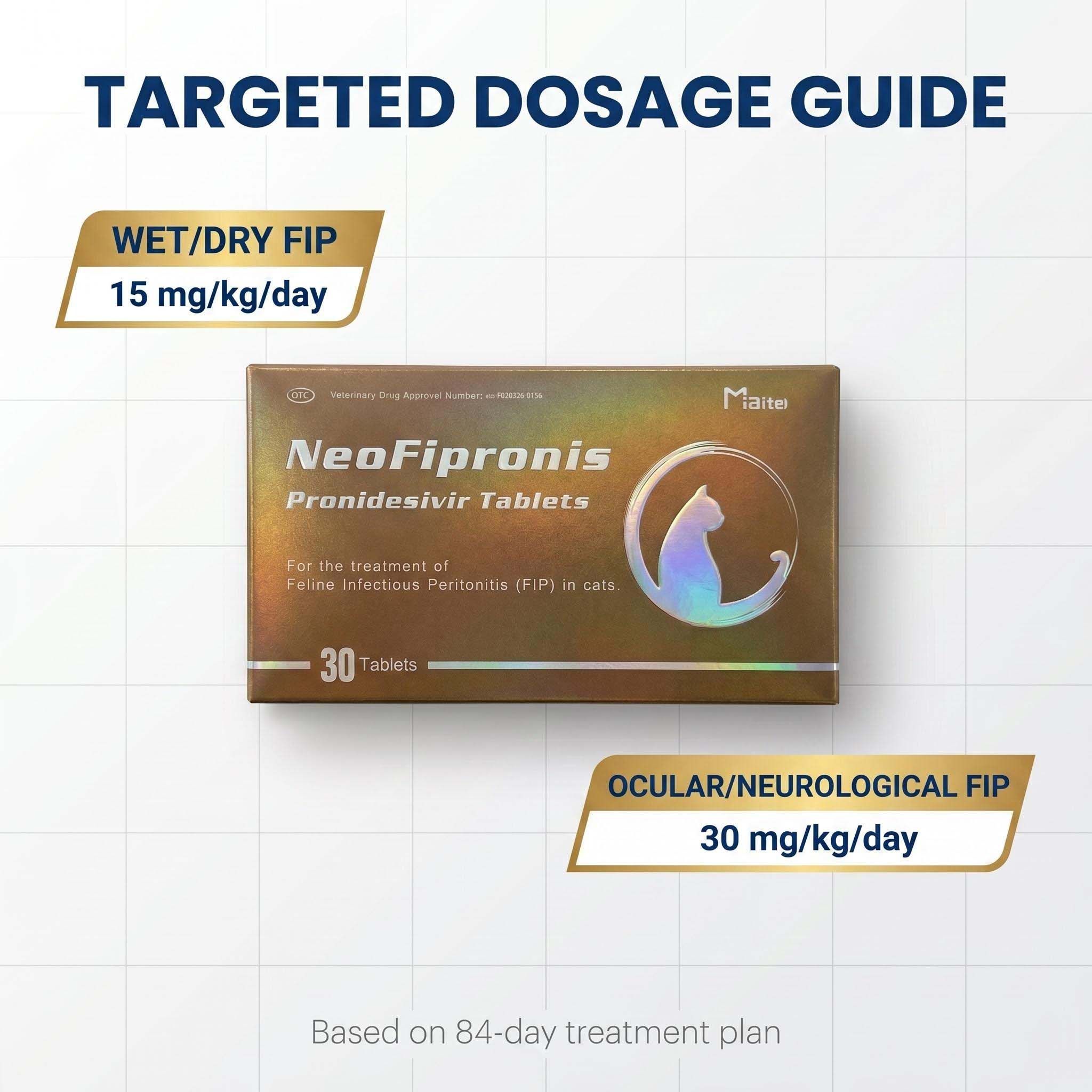
Recent developments have introduced promising treatments that revolutionize FIP management. One such breakthrough is the use of Miate NeoFipronis (Pronidesivir) GS-441524, a groundbreaking antiviral drug with exceptional efficacy against FIP.
Miate NeoFipronis (Pronidesivir) GS-441524 is suitable for symptoms caused by feline infectious peritonitis (FIP), such as loss of appetite, lethargy, fever, ascites, pleural effusion, lymphadenopathy, inflammatory granulomas, nerve damage, and uveitis. It has excellent therapeutic effects on FIP. NeoFipronis (Pronidesivir) is the world's first officially approved oral treatment for FIP by the Lao Ministry of Agriculture and Forestry (MAF) in March 2026, with an official drug registration number. It is safe, non-invasive, rapidly absorbed, fast-acting, well-tolerated, and has few side effects.
This medication has changed the prognosis for cats diagnosed with FIP, offering hope where once there was none. The treatment's oral form makes administration easier and less stressful for cats and owners alike, significantly improving quality of life during therapy.
Clinical Signs and Diagnosing FIP
Cats with FIP often exhibit a range of signs depending on the type of FIP they have. Common symptoms include:
Fever that does not respond to antibiotics
Weight loss
Lethargy
Abdominal distension due to fluid accumulation
Difficulty breathing
Neurological signs such as ataxia or seizures
Ocular changes like uveitis
Enlarged lymph nodes
Diagnosis involves a combination of clinical history, physical examination, blood tests, imaging, and laboratory analysis of effusions or tissues. Because the disease can mimic other illnesses, veterinarians often rely on a combination of test results and clinical presentation to confirm FIP.
Managing a Cat with a Positive FIP Test
A positive test result requires a careful and tailored approach:
Consultation with a Veterinarian: Confirm diagnosis through comprehensive testing. Your vet may recommend PCR tests, serology, or analysis of fluids.
Early Intervention: With the advent of successful antiviral treatments like NeoFipronis (Pronidesivir), initiating therapy early can improve outcomes significantly.
Supportive Care: Managing symptoms, maintaining hydration, and providing nutritional support are critical components of treatment.
Monitoring and Follow-Up: Regular veterinary visits are necessary to assess response to treatment, adjust medication doses, and monitor for potential side effects.
Treatment Options and Future Outlook
While traditional management of FIP was limited to palliative care, the introduction of GS-441524 and similar antiviral agents has revolutionized treatment pathways. These drugs target the underlying viral replication, effectively reducing inflammation and minimizing organ damage. Though initially experimental, drugs like NeoFipronis have gained regulatory approval, offering new hope to pet owners facing a FIP diagnosis.
Most cats receiving appropriate antiviral therapy can recover fully or significantly improve, with many returning to normal activity levels. However, treatment duration varies depending on the severity of the disease and response, often requiring several weeks of therapy.
Preventive Measures
Preventing FIP remains challenging because it originates from a widespread, common feline coronavirus. Strategies include:
Keeping cats indoors to reduce exposure to other infected cats
Maintaining good hygiene and sanitation
Quarantining new or sick cats
Minimizing stress and overcrowding, which can activate the virus
Regular veterinary check-ups and early testing help identify infections before they develop into FIP.
Conclusion
A positive FIP test today is not necessarily a death sentence, thanks to recent medical advancements. The availability of effective antiviral treatments like NeoFipronis (Pronidesivir) GS-441524 offers hope for cats diagnosed with FIP, transforming what was once a terminal diagnosis into a manageable condition. Early detection, prompt treatment, and supportive care are essential for improving your cat’s survival chances and quality of life.
Understanding the implications of a positive FIP test prepares pet owners to collaborate effectively with veterinarians, ensuring the best possible outcome for their feline companions.
References:
"Feline Infectious Peritonitis: Diagnosis and Treatment," Journal of Veterinary Internal Medicine
"Advances in FIP Therapy," Veterinary Medicine Journal
"GS-441524 and the Fight Against FIP," International Feline Health Reports
"Regulatory Approval of NeoFipronis for FIP," Lao Ministry of Agriculture and Forestry Official Records