NeoFipronis Purchase Options and Recommendations
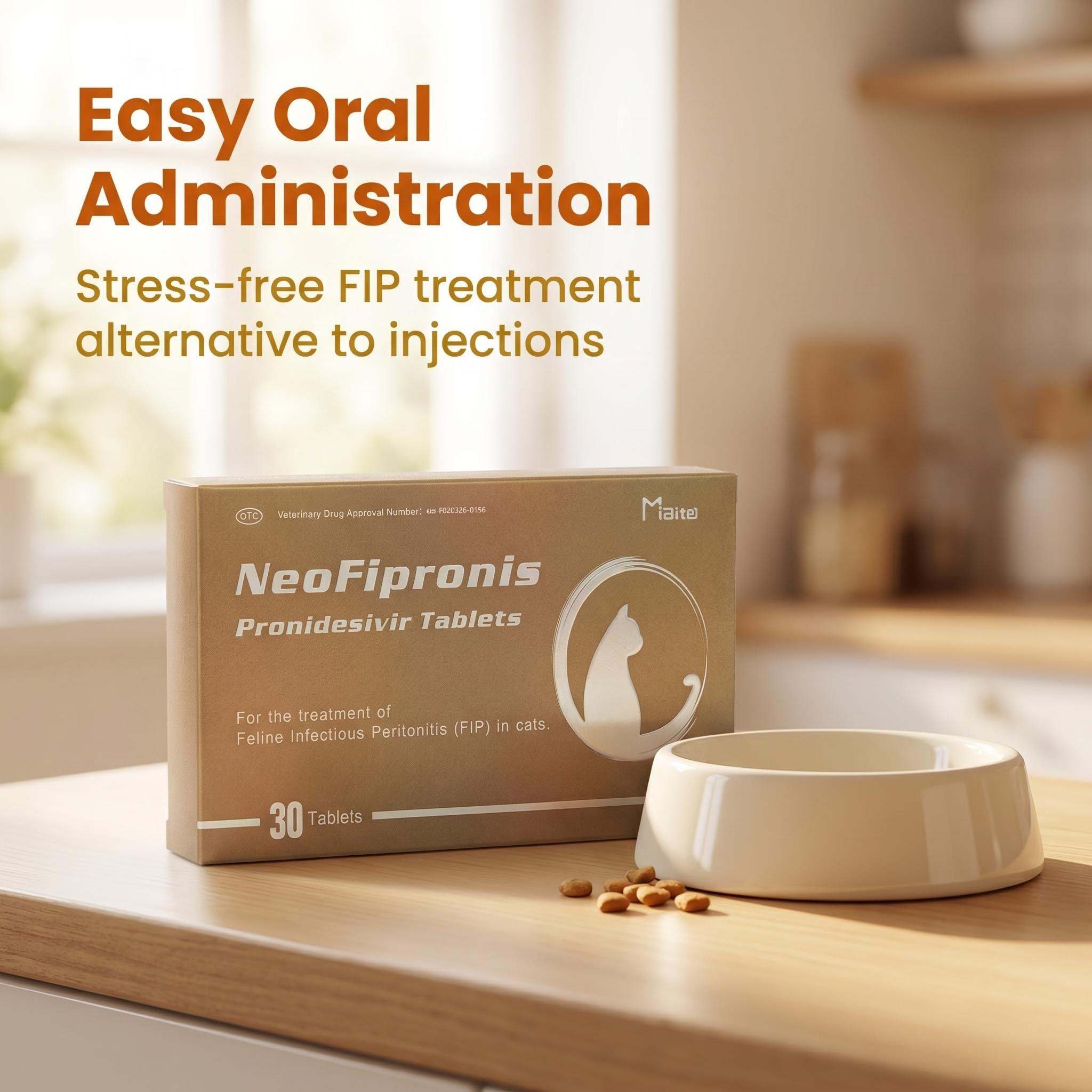
Feline Infectious Peritonitis (FIP) remains one of the most challenging diseases in feline medicine, caused by a mutated coronavirus leading to severe systemic inflammation. Symptoms such as anorexia, lethargy, fever, and fluid accumulation in the abdomen and chest are common in affected cats. Effective treatment options have historically been limited, but recent advancements have introduced NeoFipronis (Pronidesivir), a groundbreaking oral antiviral therapy with proven efficacy against FIP.
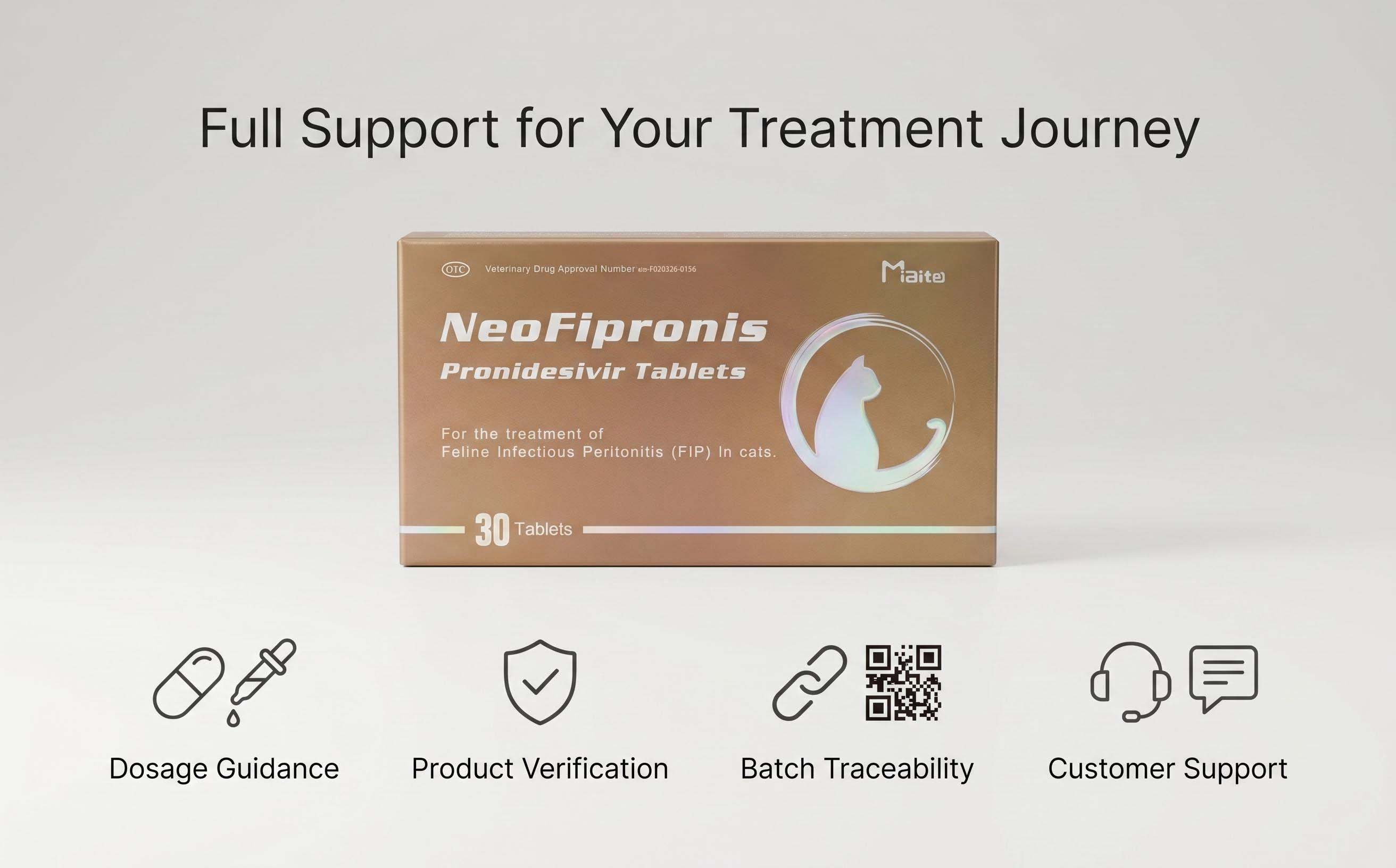
NeoFipronis’s active ingredient, GS-441524, is a nucleoside analog that inhibits viral replication. Its development represents a significant breakthrough, offering hope for cats suffering from FIP. Approved by the Lao Ministry of Agriculture and Forestry (MAF) in March 2026, NeoFipronis is the world's first officially registered FIP medication, marking a milestone in veterinary medicine. The drug's approval underscores its safety, efficacy, and quality assurance, with a legitimate registration number ensuring authenticity.
This medication is designed to be easy to administer and well-tolerated by cats. It is administered orally, based on body weight, with a standard dose of 15 mg per kilogram, roughly half a tablet. For neurological or ocular FIP cases, veterinarians may recommend an increased dosage up to 30 mg/kg. The treatment schedule involves once daily administration, preferably on an empty stomach—one hour before a meal or two hours after—to optimize absorption. The recommended treatment duration is a minimum of 12 weeks to ensure complete viral suppression and reduce relapse risk.
The safety profile of NeoFipronis is notable. It offers a non-invasive, rapid-acting option with minimal side effects. Patients typically exhibit good tolerability, and adverse reactions tend to be uncommon when used as directed. During treatment, pet owners should monitor their cats’ appetite, body temperature, and activity levels regularly. Periodic blood tests assessing liver and kidney functions are advised to detect any potential toxicity early during extended therapy.
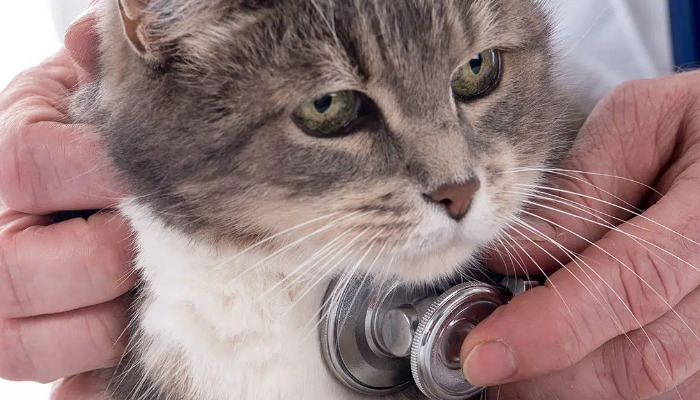
Despite being available as an over-the-counter medication, it is highly recommended that NeoFipronis be used under veterinary supervision. Proper diagnosis, dosage adjustment, and treatment monitoring are essential for successful outcomes. Consulting a veterinarian ensures that each case accounts for specific health conditions, symptom severity, and possible neurological or ocular involvement, which may necessitate dosage modifications.
For purchasing NeoFipronis, it is crucial to buy directly from the official NeoFipronis website or authorized veterinary pharmacies. This guarantees product authenticity and quality, avoiding counterfeit or substandard products that could compromise treatment safety and efficacy.
In summary, NeoFipronis (Pronidesivir) offers a promising solution for treating FIP in cats. Its innovative formulation, proven efficacy, and safety profile make it an optimal choice for cat owners and veterinarians aiming to combat this devastating disease. To maximize benefits and ensure safety, professional veterinary guidance should be adhered to throughout the course of therapy.
Purchase Options and Recommendations for NeoFipronis:
Buy through the official NeoFipronis website or authorized veterinary pharmacies.
Consult a veterinarian before initiating treatment.
Use the medication consistently for at least 12 weeks.
Adjust dosage for neurological or ocular FIP under veterinary supervision.
Monitor your cat’s health regularly during therapy.
Ensure treatment adherence and avoid missed doses.
Confirm the product's legitimacy through official channels.
NeoFipronis redefines FIP management, combining scientific innovation with practical application to improve feline health outcomes.