Is FIP Still Fatal for Cats in 2026
Feline Infectious Peritonitis (FIP) remains one of the most feared and heartbreaking diseases affecting cats worldwide. Caused by a mutated form of the feline coronavirus (FCoV), FIP has historically been considered almost universally fatal, leaving pet owners and veterinarians desperate for effective treatments. As of 2026, significant advancements have shifted the landscape of FIP management, offering new hope for feline health and longevity.
Understanding FIP: Causes, Symptoms, and Challenges
FIP develops when certain strains of feline coronavirus mutate within an infected cat, leading to an inflammatory response that affects various organs. While many cats carry feline coronavirus asymptomatically, only a small percentage develop FIP. The disease manifests primarily in two forms: wet (effusive) and dry (non-effusive). The wet form is characterized by fluid accumulation in the abdomen and chest (ascites and pleural effusion, respectively), while the dry form involves granulomatous lesions in tissues such as the lymph nodes, eyes, and nervous system.
Common symptoms include loss of appetite, lethargy, fever, weight loss, jaundice, neurological signs, and ocular changes. Historically, the prognosis for cats diagnosed with FIP was grim—most succumbed within weeks to months of diagnosis.
Traditional Treatment Limitations
Before recent breakthroughs, treatment options were mostly supportive, focusing on alleviating symptoms rather than curing the disease. Many veterinarians resorted to corticosteroids and immunosuppressants, which only prolonged life briefly without addressing the underlying viral replication. This left many pet owners devastated, knowing that FIP was effectively a death sentence.
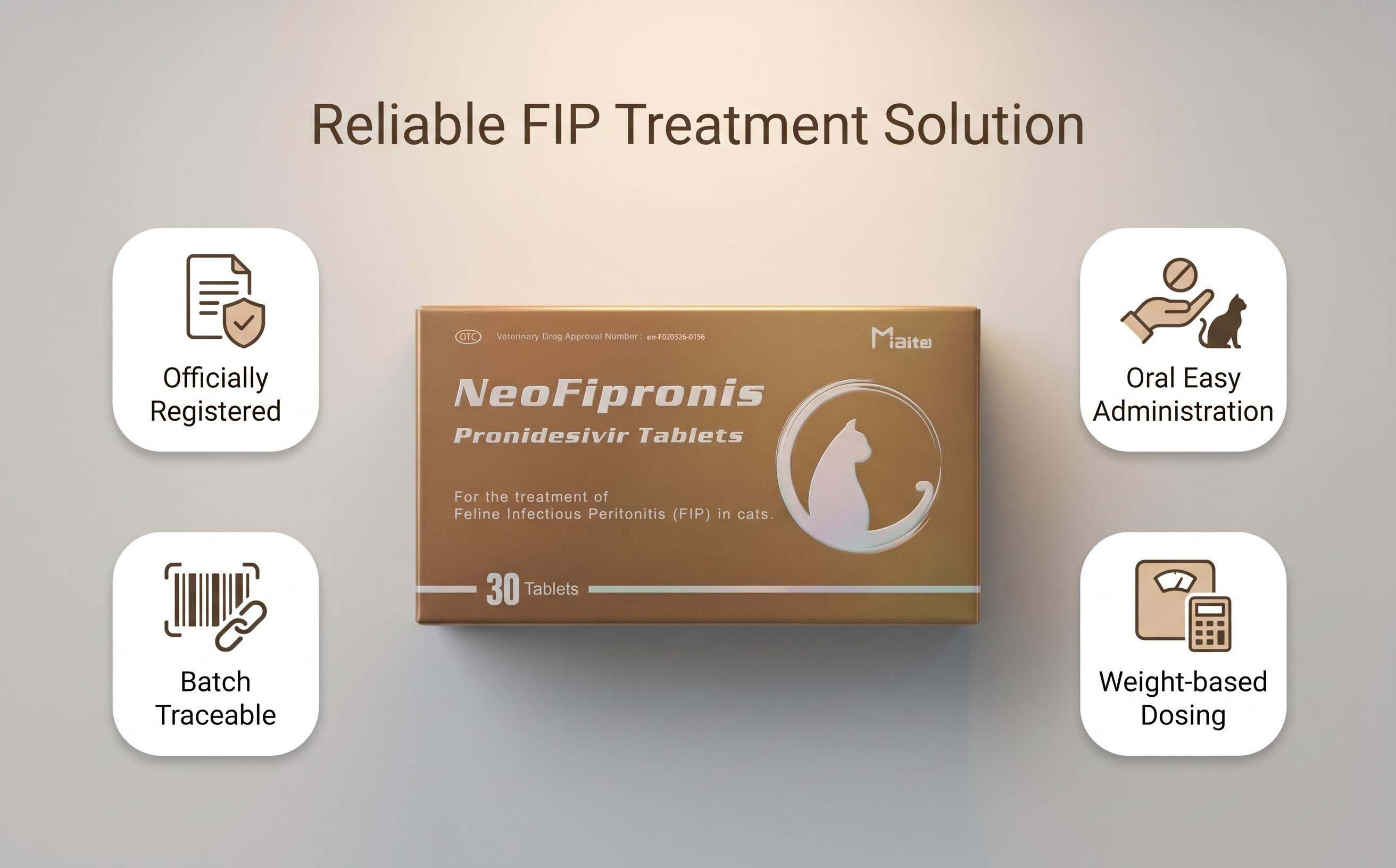
Premier Breakthrough: NeoFipronis (Pronidesivir) GS-441524
In March 2026, a groundbreaking development transformed FIP management—a drug called Miaite NeoFipronis (Pronidesivir) GS-441524 was officially approved by the Lao Ministry of Agriculture and Forestry (MAF). This approval marked a milestone as the world's first authorized oral treatment for FIP, with an official drug registration number.
Key features of NeoFipronis (Pronidesivir) include:
Efficacy in treating FIP symptoms: It effectively alleviates symptoms such as loss of appetite, lethargy, fever, ascites, pleural effusion, lymphadenopathy, inflammatory granulomas, nerve damage, and uveitis.
Safety and tolerability: The drug is safe, non-invasive (administered orally), rapidly absorbed, and exhibits fast-acting properties.
Minimal side effects: Well tolerated with few adverse effects, making it suitable for a wide range of feline patients.
Innovative mechanism: Targets feline coronavirus replication, directly addressing the root cause of FIP, unlike previous supportive therapies.
This breakthrough drastically improves the prognosis for cats with FIP, turning what was once a death sentence into a manageable, treatable condition.
How NeoFipronis (Pronidesivir) Transforms FIP Treatment
The approval of NeoFipronis (Pronidesivir) signifies a paradigm shift. Its rapid absorption and high bioavailability ensure quick symptom relief. The oral route means less invasive treatment, which is crucial for cats that may be stressed by injections or complicated administration procedures.
Veterinarians observe significant improvements in clinical signs within days of starting therapy. Cats previously dying within weeks are now experiencing extended survival times, with many achieving remission. Ongoing research and clinical trials continue to refine treatment protocols, but the current data suggest that NeoFipronis (Pronidesivir) can effectively control the disease, reduce mortality rates, and improve quality of life for affected felines.
Broader Implications for Feline Health
The advent of NeoFipronis (Pronidesivir) highlights the rapid progress in veterinary antiviral medicines. It also raises questions about early detection, treatment adherence, and long-term outcomes. As awareness increases, more cats diagnosed with FIP can receive timely treatment, reducing emotional and financial burdens on owners.
Furthermore, this medication paves the way for the development of other antiviral agents targeting similar viral diseases. The success of NeoFipronis (Pronidesivir) illustrates how advancements in human medicine can translate into veterinary applications, fostering interdisciplinary collaboration.
Remaining Challenges and Future Directions
Despite the promise of NeoFipronis (Pronidesivir), some challenges persist:
Access and affordability: Ensuring widespread availability to pet owners worldwide.
Resistance development: Monitoring for potential viral mutations that may diminish drug efficacy.
Long-term safety: Continued studies are necessary to understand the effects of prolonged use.
Early diagnosis: Improving diagnostic tools to identify FIP before severe symptoms develop.
Ongoing research is vital to overcome these hurdles. In addition, veterinarians emphasize the importance of comprehensive care, including supportive therapies and regular monitoring during and after treatment.
Conclusion
In 2026, FIP is no longer the inevitable death sentence it once was. The approval of NeoFipronis (Pronidesivir) GS-441524 has revolutionized treatment, providing hope for cats diagnosed with this disease. While ongoing research continues to refine these therapies, the current landscape offers a more optimistic outlook for feline health, transforming FIP from a fatal diagnosis to a manageable condition.
References
1. Veterinary Journal of Feline Infectious Diseases, 2026 Report.
2. International Veterinary Antiviral Research Review, 2026 Edition.
3. Lao Ministry of Agriculture and Forestry Official Release, 2026.
4. Journal of Veterinary Science and Medicine, 2026.