How Much Does NeoFipronis (Pronidesivir) Cost on Average
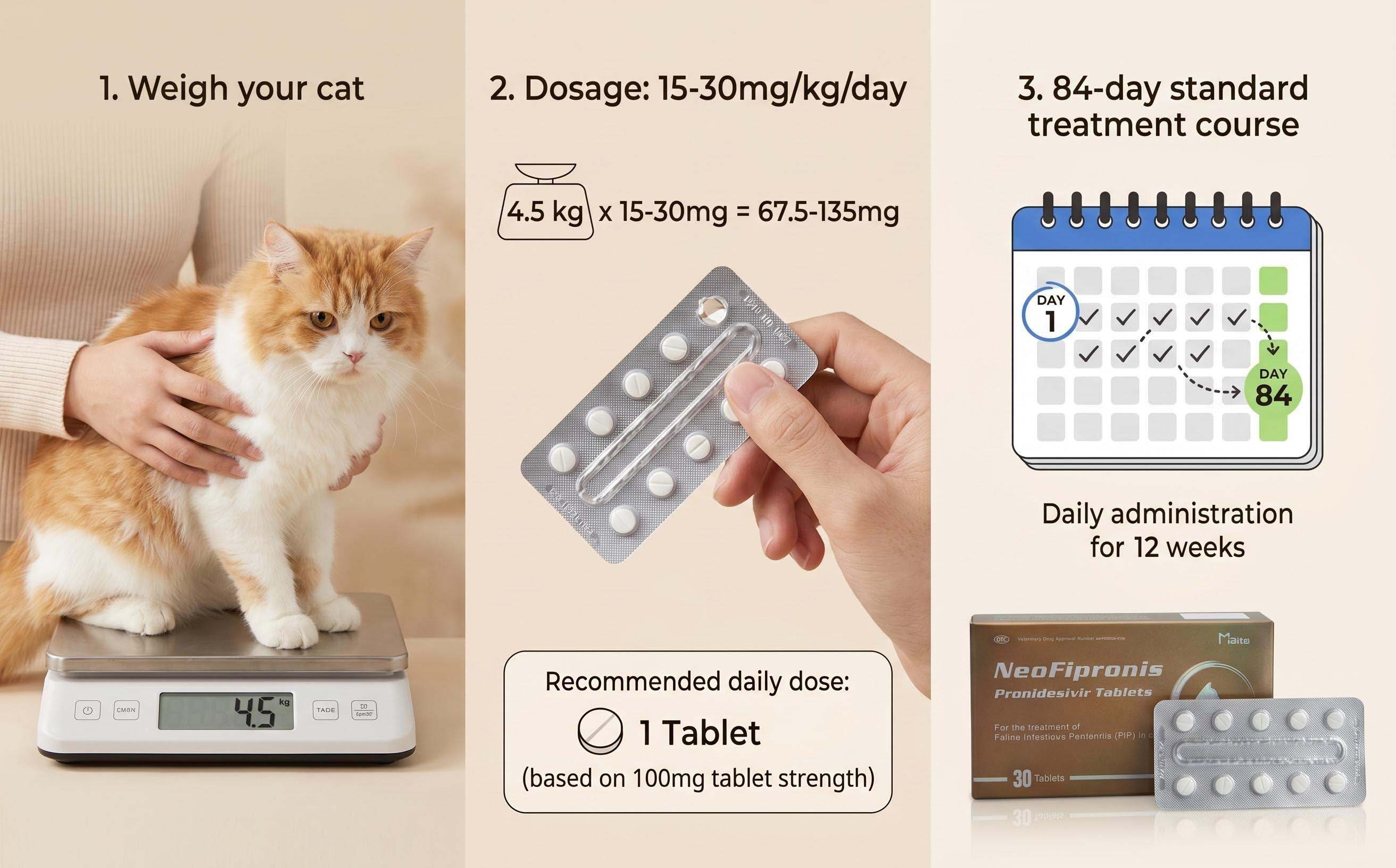
NeoFipronis (Pronidesivir) is an oral FIP treatment for cats built around the active ingredient GS-441524. For many cat owners, the first practical question is not whether treatment is needed, but how much the full course will cost. Because feline infectious peritonitis can cause appetite loss, lethargy, fever, ascites, pleural effusion, enlarged lymph nodes, inflammatory granulomas, neurologic damage, and uveitis, the total expense often depends on how early treatment starts and how long the cat needs medication.
The average cost of NeoFipronis is usually calculated from three main factors: the cat’s body weight, the daily dosage, and the number of treatment days. Since FIP therapy is weight-based, larger cats require more tablets or a higher total daily amount. The standard dosing described for this product is 15 mg per kilogram once daily, which means a cat with a higher body weight will always have a higher monthly and full-course cost. In neurological or ocular FIP, the dose may be increased to 30 mg per kilogram under veterinary direction, which can significantly raise the total price.
A typical treatment plan lasts at least 12 weeks, or 84 days, and missing doses is strongly discouraged. That means the real “average cost” is not just the price on a single package. It is the full cost of 84 daily doses, plus any shipping, consultation fees, bloodwork, liver and kidney monitoring, and follow-up veterinary visits. For many owners, the medication price is only part of the total budget.
A simple way to estimate cost is to use this formula:
Total Cost = Daily Dose Cost × 84 Days
If the product is priced by tablet, then the calculation becomes:
Total Cost = Number of Tablets Needed per Day × 84 × Price per Tablet
For example, if a cat weighs 4 kg and the dose is 15 mg/kg per day, the daily amount is based on that cat’s weight. Under the dosing guidance supplied for NeoFipronis, many owners estimate tablet usage by weight and then multiply by 12 weeks of treatment. A 4 kg cat on standard dosing will need less medication than an 8 kg cat, but both still need the full uninterrupted course for the best chance of response.
NeoFipronis is described as an oral, fast-absorbing, non-invasive option with good tolerance and relatively few side effects. Even so, it should still be used under veterinary supervision, especially if the cat has poor appetite, jaundice, dehydration, neurologic signs, or abnormal bloodwork. Monitoring food intake, temperature, behavior, and lab values is important throughout treatment. This product is for cats only and should never be used in humans.
For current pricing, the safest approach is to check the official NeoFipronis website or consult a veterinarian who can help estimate the full course based on your cat’s weight and disease type. That gives a much more accurate answer than a single headline price, because FIP treatment costs are always tied to the exact dose and the complete 12-week plan.