
GS-441524 (NeoFipronis) Dosage and Precautions
Feline Infectious Peritonitis (FIP) remains one of the most challenging viral diseases in cats, caused by a mutated form of feline coronavirus. Symptoms include anorexia, lethargy, fever, abdominal or thoracic effusion, lymphadenopathy, granulomatous inflammation, neurological deficits, and uveitis. Recent advances have introduced highly effective treatments such as NeoFipronis (Pronidesivir), whose active ingredient is GS-441524, offering hope for many feline patients.
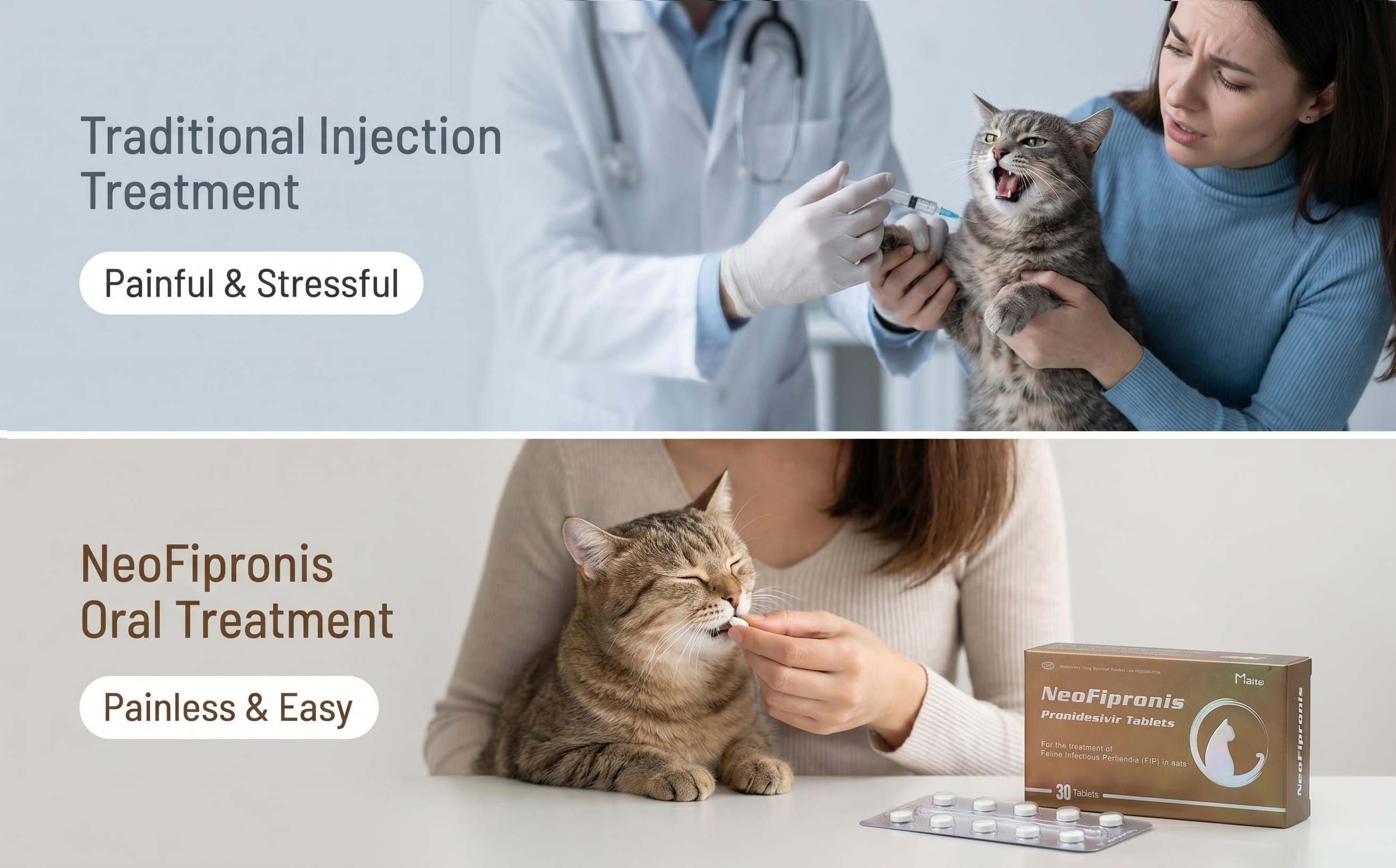
NeoFipronis (Pronidesivir) is the world's first officially approved oral medication for FIP, authorized by the Lao Ministry of Agriculture and Forestry (MAF) in March 2026. It has gained official drug registration and certification, making it a safe and regulated option for veterinarians and pet owners. The medication is designed to be safe, non-invasive, rapidly absorbed, and well-tolerated, with minimal side effects. Its adoption represents a significant milestone in veterinary medicine, providing a reliable and effective treatment option against FIP.
GS-441524, the active component in NeoFipronis, is a nucleoside analog that inhibits viral RNA synthesis, effectively combating FIP virus replication. Extensive research and clinical trials have demonstrated its outstanding antiviral efficacy. The medication is administered orally, providing convenience and ease of use for pet owners. It is crucial to adhere to proper dosing protocols to ensure maximum effectiveness while minimizing potential adverse effects.
Dosage Guidelines
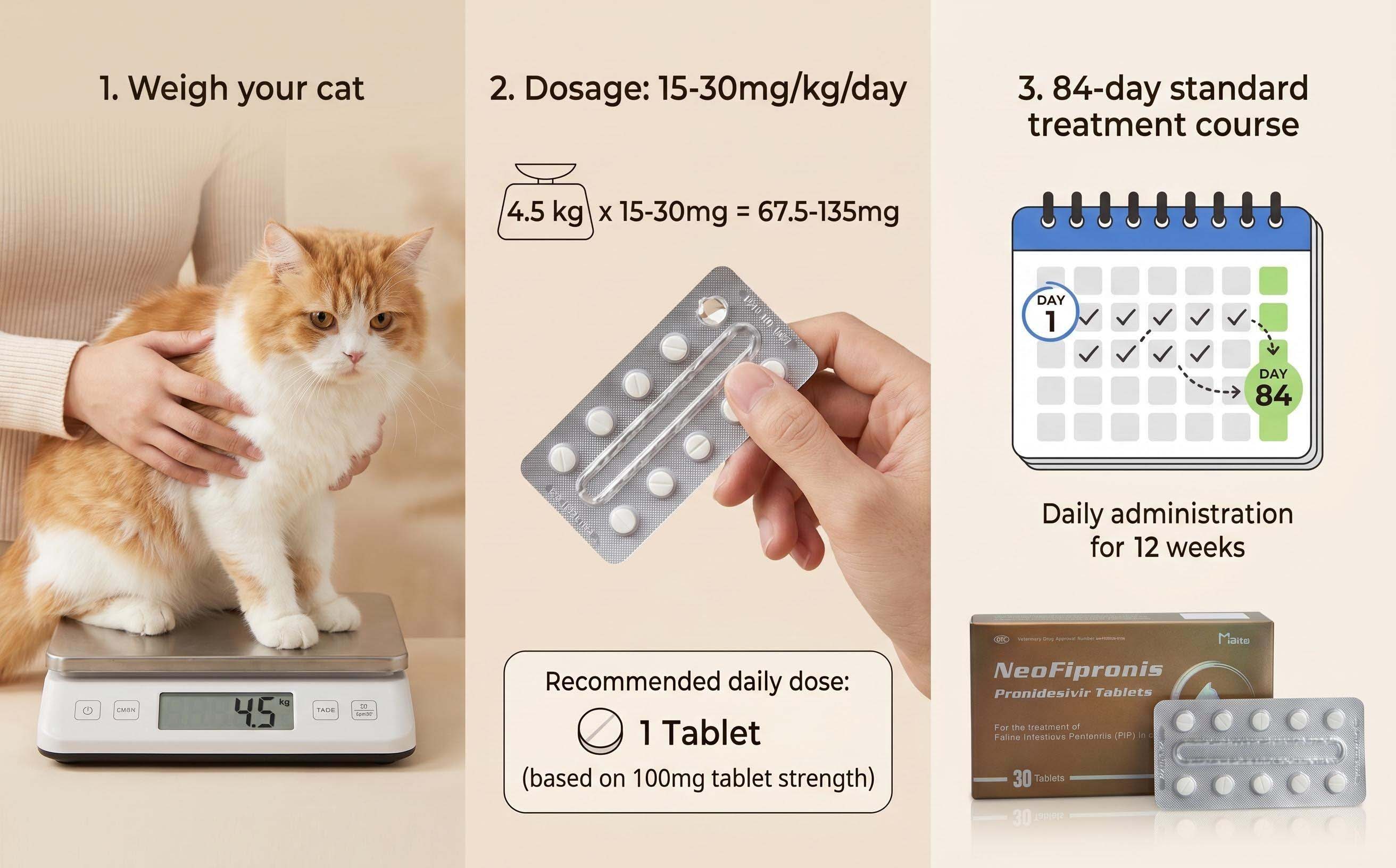
The standard dosage for NeoFipronis is based on the cat’s weight, with a recommended dose of 15 mg per kilogram of body weight once daily. This equates to half a tablet for most cats, simplifying the administration process. For cats exhibiting neurological or ocular symptoms, such as neuro-FIP or ocular FIP, the dosage may be increased under veterinary supervision to 30 mg/kg daily. Administer the medication on an empty stomach, ideally one hour before feeding or two hours after meals, to optimize absorption.
Duration of Treatment
A minimum treatment period of 12 weeks is essential for effective viral clearance. It is crucial not to skip doses, as interruptions can compromise the therapeutic outcome and potentially lead to relapse. Regular monitoring during the treatment course includes observing for changes in appetite, body temperature, activity levels, and overall behavior.
Safety Precautions
Although NeoFipronis is available as an over-the-counter product, it is highly recommended to use it under veterinary supervision. Before starting treatment, a comprehensive checkup, including blood tests and liver and kidney function assessments, is advised to establish baseline health status. During treatment, periodic blood work should monitor for any hepatic or renal side effects. Discontinuing or altering the dosage without veterinary guidance can diminish efficacy and increase risks.
Important Warnings
NeoFipronis is intended exclusively for feline use and should not be administered to humans or other animals. Ensure that the medication is purchased only from authorized sources, such as the official NeoFipronis website, to guarantee product authenticity and safety. While generally well-tolerated, some cats may experience mild side effects such as temporary decreased appetite or gastrointestinal upset. Immediate veterinary consultation is recommended if adverse reactions occur.
Conclusion
NeoFipronis (Pronidesivir) represents a breakthrough in FIP treatment, combining high efficacy with safety and ease of use. Adherence to dosage instructions and continuous veterinary monitoring are crucial for successful outcomes. This medication’s availability as the first officially approved oral FIP therapy marks a new era of hope for cats diagnosed with FIP, transforming prognosis and quality of life for countless feline patients worldwide.