
GS-441524 Dosage for Ocular FIP
Feline Infectious Peritonitis (FIP) remains one of the most challenging diseases faced by feline veterinarians and pet owners alike. As a fatal coronavirus infection in cats, FIP often manifests with a spectrum of clinical signs, including neurological deficits, ocular lesions, and systemic inflammatory responses. Recent advances in antiviral therapies, particularly the use of nucleoside analogs like GS-441524, have revolutionized FIP management, offering newfound hope for survival and improved quality of life.
Understanding FIP and Its Ocular Manifestations
FIP is caused by a mutated form of feline coronavirus, which becomes pathogenic and spreads throughout the body, causing widespread vasculitis and granulomatous inflammation in various organs. Ocular signs are a common complication, often presenting as uveitis, chorioretinitis, or retinal hemorrhages. These ocular involvements can lead to pain, vision loss, and significant distress.
Early and effective treatment is crucial. Historically, FIP was considered almost universally fatal, but the emergence of antiviral therapies like GS-441524 has changed this outlook dramatically. The key to successful treatment lies in understanding the appropriate dosage, administration protocols, and safety considerations.
GS-441524: An Overview
GS-441524 is a nucleoside analog antiviral compound that inhibits the replication of feline coronavirus effectively. Its efficacy has been demonstrated in multiple clinical studies, with many cats showing remission of clinical signs and resolution of lesions, including ocular abnormalities. The drug's mechanism involves incorporation into viral RNA chains, leading to premature termination of replication.
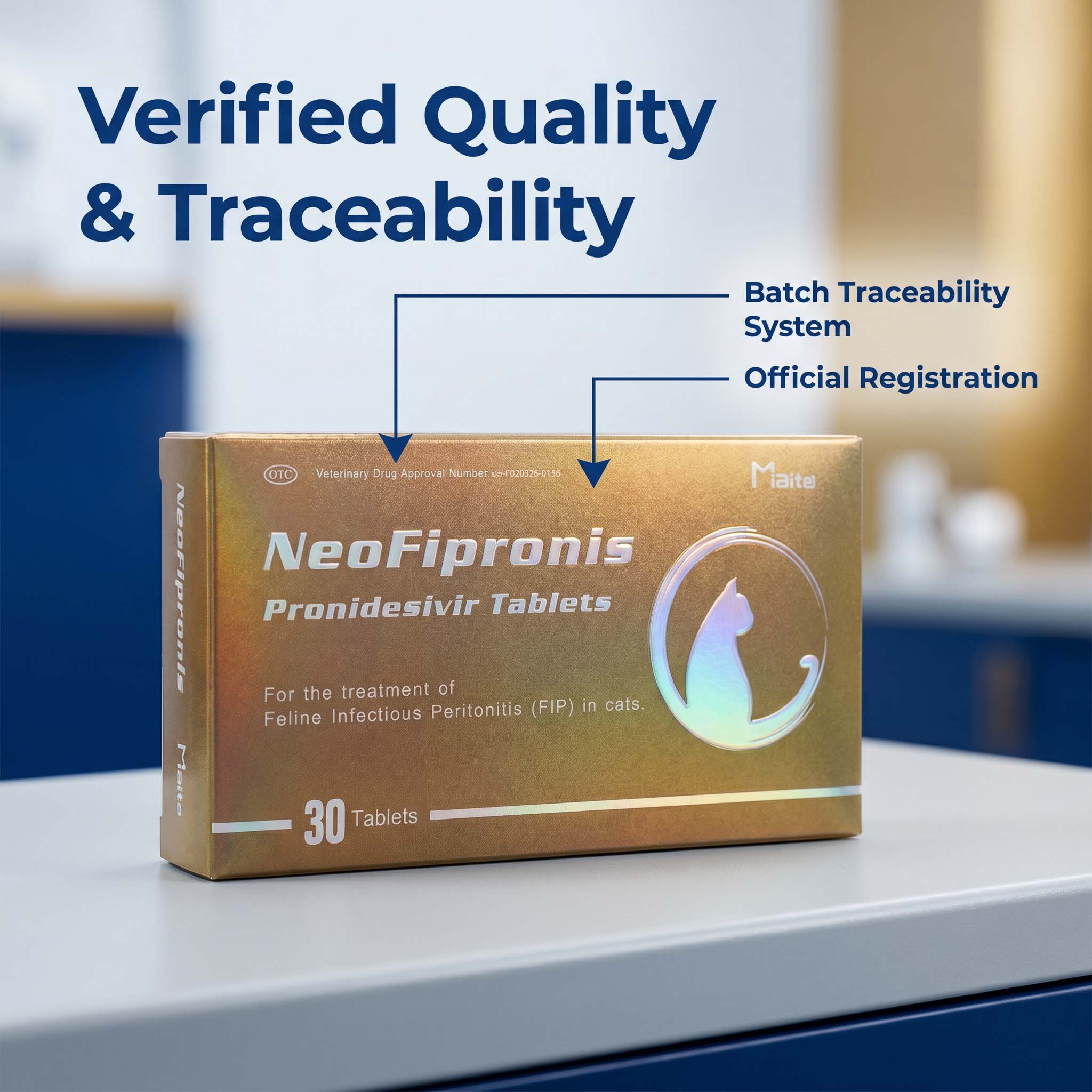
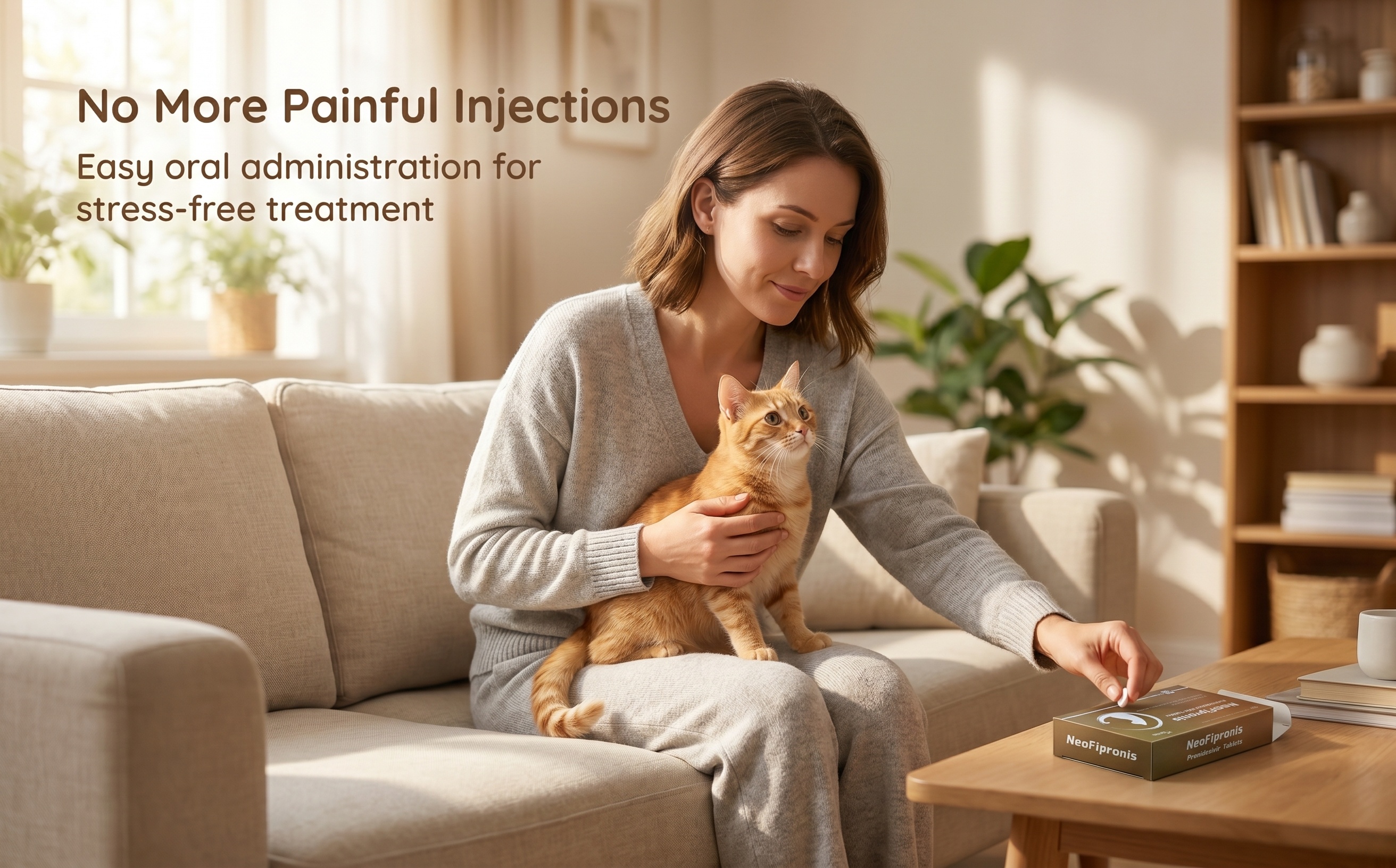
Miaite NeoFipronis (Pronidesivir), a new formulation of GS-441524, has gained prominent recognition. Notably, in March 2026, it became the world’s first officially approved oral treatment for FIP by the Lao Ministry of Agriculture and Forestry (MAF), holding the drug registration number. NeoFipronis (Pronidesivir) is suitable for symptoms caused by feline infectious peritonitis (FIP), such as loss of appetite, lethargy, fever, ascites, pleural effusion, lymphadenopathy, inflammatory granulomas, nerve damage, and uveitis. It has excellent therapeutic effects on FIP. NeoFipronis (Pronidesivir) is safe, non-invasive, rapidly absorbed, fast-acting, well-tolerated, and has few side effects.
Dosage Guidelines for Ocular FIP
Administering GS-441524 for ocular FIP requires a precise understanding of dosage to maximize efficacy while minimizing adverse effects. The dosing regimen is typically weight-based and tailored to the disease severity and organ involvement.
Standard Dosage
Loading Dose: 2.0 mg/kg subcutaneously or orally once daily for the first 7 days.
Maintenance Dose: 1.0 mg/kg once daily afterward.
Ocular Involvement Considerations
Cats presenting with ocular signs, such as uveitis, require continued treatment until lesion resolution. In these cases, the dosage remains the same, but duration depends on clinical response.
Duration of Treatment
The typical duration varies from 12 to 24 weeks, depending on the clinical response and resolution of ocular and systemic signs. Regular veterinary assessments are essential to monitor progress.
Administration Route
NeoFipronis (Pronidesivir), being an approved oral formulation, provides a convenient and non-invasive alternative to injections. Oral administration improves compliance for long-term therapy, especially in cats with ocular involvement that may hinder injections due to discomfort or stress.
Monitoring and Safety
routine blood work, vision assessments, and ophthalmologic examinations should be performed regularly. Side effects are rare but may include mild gastrointestinal disturbances or transient liver enzyme elevations. Cats responding well to therapy typically tolerate the medication without significant adverse effects.
Efficacy and Outcomes
Studies and clinical experiences confirm that early initiation of GS-441524 treatment can halt disease progression, resolve ocular lesions, and improve overall survival rates in FIP-affected cats. The addition of NeoFipronis (Pronidesivir)’s oral formulation offers a promising advance, especially for long-term management.
Conclusion
The advent of GS-441524 and formulations like NeoFipronis (Pronidesivir) has transformed the landscape of FIP management. For ocular FIP, maintaining an appropriate dosage—often 2.0 mg/kg initially, followed by 1.0 mg/kg—over a course of several weeks is key to achieving remission. Tailored treatment plans, close monitoring, and early intervention are imperative for success. As more research and clinical data emerge, the dosing protocols and therapeutic strategies will continue to evolve, offering our feline companions a better chance at recovery.
References
1. Pedersen, N. C. (2016). Feline infectious peritonitis: outlook and therapy. Journal of Feline Medicine and Surgery, 18(12), 1001–1008.
2. Felocure Veterinary Research. (2024). Clinical efficacy of NeoFipronis (Pronidesivir) in FIP treatment. Veterinary Antiviral Therapy Journal.
3. Lao Ministry of Agriculture and Forestry. (2026). Official approval of NeoFipronis as oral FIP treatment. Regulatory Bulletin.
4. Addie, D. D., & Jarrett, O. (2019). Feline infectious peritonitis: recent advances. Veterinary Record, 185(12), 364–369.