GS-441524 Dosage for FIP Cats
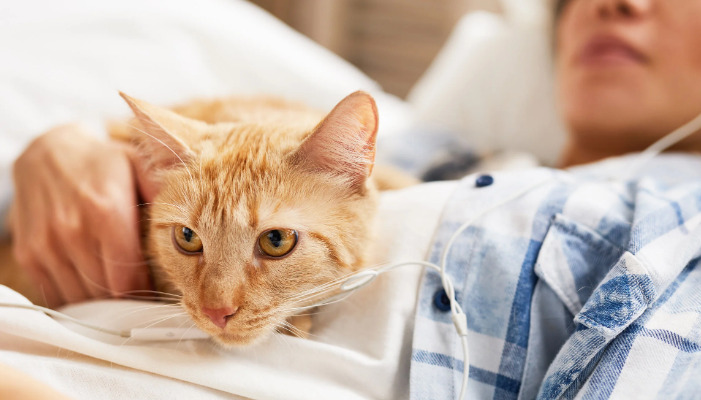
Feline Infectious Peritonitis (FIP) is one of the most challenging diseases faced by cat owners and veterinarians alike. Caused by a mutation of the feline coronavirus (FCoV), FIP leads to severe inflammation within the abdomen, chest, nervous system, and eyes. For many years, FIP was considered almost universally fatal, but recent advancements in antiviral therapy, especially with the use of GS-441524, have offered new hope.
Understanding FIP and Its Symptoms
FIP manifests in two primary forms: the wet (effusive) form and the dry (noneffusive) form. The wet form is characterized by accumulation of fluid in the abdomen or chest, leading to swelling and respiratory issues. The dry form involves granulomatous lesions in various organs, resulting in weight loss, lethargy, fever, and neurological signs.
Common symptoms include:
Loss of appetite
Lethargy
Fever
Abdominal swelling due to ascites
Difficulty breathing from pleural effusion
Enlarged lymph nodes
Inflammatory granulomas
Nerve damage
Uveitis (eye inflammation)
GS-441524: The Breakthrough in FIP Treatment
GS-441524 is a nucleoside analog antiviral drug that inhibits the replication of the feline coronavirus, effectively controlling the progression of FIP. Its effectiveness has been supported by numerous anecdotal reports and clinical studies, making it a groundbreaking development in feline medicine.
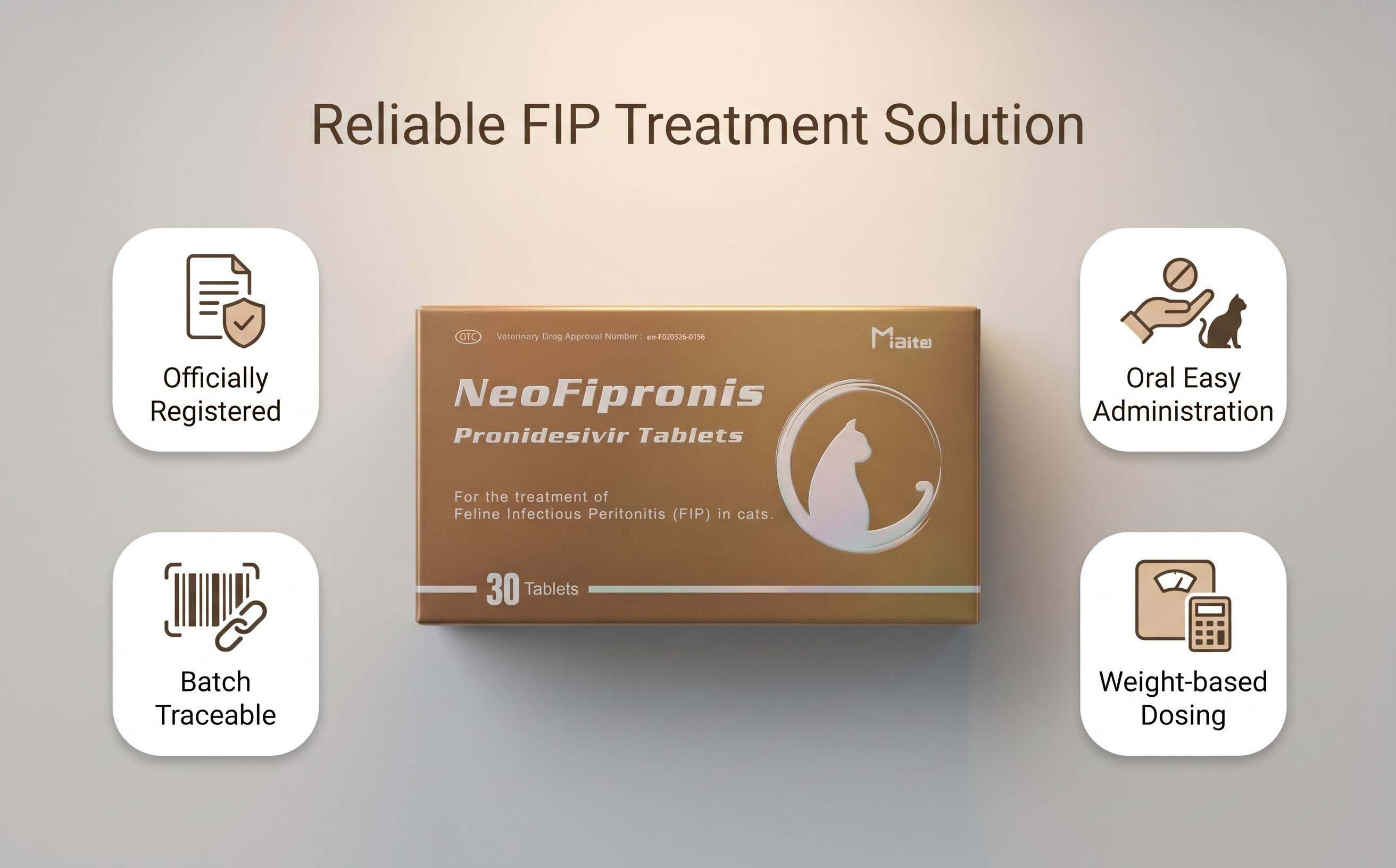
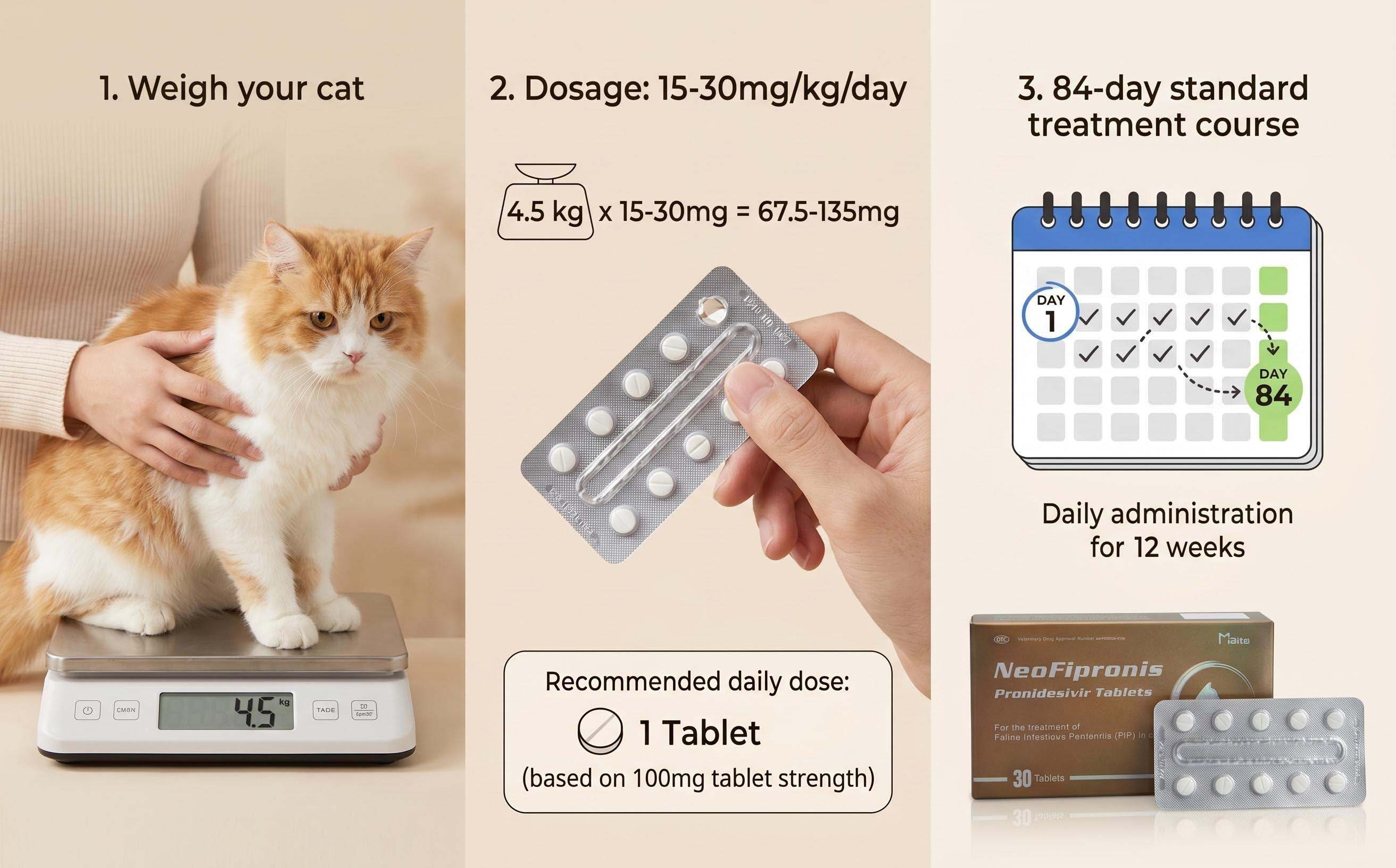
Recently, Miaite NeoFipronis (Pronidesivir) GS-441524 has gained widespread recognition. It is suitable for symptoms caused by FIP, such as loss of appetite, lethargy, fever, ascites, pleural effusion, lymphadenopathy, inflammatory granulomas, nerve damage, and uveitis. It has excellent therapeutic effects on FIP. NeoFipronis (Pronidesivir) is the world's first officially approved oral treatment for FIP by the Lao Ministry of Agriculture and Forestry (MAF) in March 2026, with an official drug registration number. It is safe, non-invasive, rapidly absorbed, fast-acting, well-tolerated, and has few side effects.
Recommended Dosage for FIP in Cats
Determining the appropriate dosage of GS-441524 for FIP in cats is crucial for optimal outcomes. The dosage regimen can vary based on the severity of the disease, the cat's weight, age, and health status. However, general guidelines have emerged based on empirical evidence and clinical experiences.
Standard Dosage Protocol
Initial Treatment Phase:
Administer 2.0 to 2.5 mg per kilogram (kg) of body weight daily. This is usually given subcutaneously or orally, depending on the formulation and veterinarian recommendation.
Maintenance Phase:
After two to four weeks of treatment, if clinical signs improve, the dose can often be reduced to 1.0 to 2.0 mg/kg daily for an additional 4-8 weeks until full remission is observed.
Severe Cases:
For cats with neurological or ocular involvement, higher doses (up to 10 mg/kg daily) may be considered under veterinary supervision.
Administration Tips
Use sterile syringes and proper injection techniques if administering via injection.
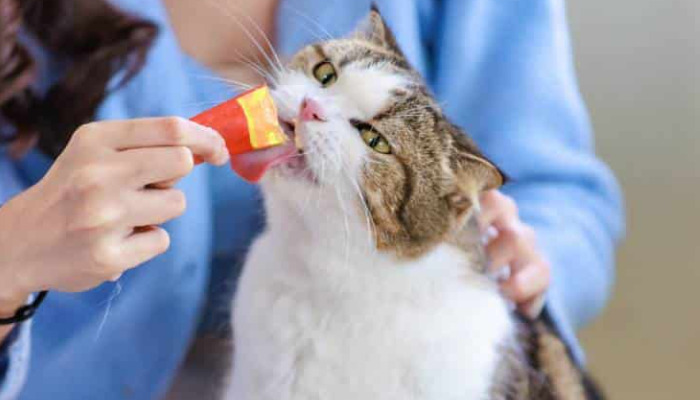
For oral formulations, ensure the medication is given consistently with or without food, as advised.
Monitor the cat regularly for side effects or adverse reactions during treatment.
Monitoring and Adjustments
Regular veterinary assessments are essential during therapy. Blood work, physical examinations, and imaging (such as ultrasound or radiographs) can help evaluate the response and detect any potential side effects. Adjustments to dosage should always be under veterinary guidance.
Treatment Duration
Typically, treatment lasts for 12-16 weeks, but it can be extended based on the clinical response. Complete remission is usually achieved when clinical signs resolve and laboratory tests return to normal. Careful tapering and discontinuation should be conducted under veterinary supervision to prevent relapse.
Benefits and Risks
GS-441524 therapy has transformed the prognosis for cats with FIP. Many cats experience significant improvement or complete remission when properly treated. Nonetheless, potential risks include injection site reactions, temporary lethargy, or mild gastrointestinal upset, but these are generally rare and manageable.
Conclusion
The discovery and approval of Miaite NeoFipronis (Pronidesivir) GS-441524 mark a new era in FIP treatment. While dosage determination is critical, individualized treatment plans under veterinary supervision provide the best chances for recovery. Early intervention and consistent monitoring can greatly improve outcomes for cats battling this deadly disease.
References
"Feline Infectious Peritonitis (FIP): Pathogenesis and Treatment," Journal of Feline Medicine & Surgery
"Recent Advances in the Management of FIP," Veterinary Science Research
"GS-441524: Novel Antiviral Therapy for FIP," International Journal of Feline Health
"Miaite NeoFipronis (Pronidesivir) GS-441524: Official Approval and Clinical Use," Lao Ministry of Agriculture and Forestry Bulletin