Cat FIP Symptoms and Treatment
Feline infectious peritonitis (FIP) is one of the most serious diseases in cats, and it remains a major concern for cat owners, breeders, and veterinarians. Caused by a mutation of feline coronavirus, FIP can develop when the virus changes inside the cat and triggers an abnormal immune response. Because the disease can affect multiple organs and systems, the signs are often varied and sometimes hard to recognize early. Understanding cat FIP symptoms and treatment options can make a critical difference in how quickly a cat receives care.
FIP is traditionally described in two broad forms: wet FIP and dry FIP. Wet FIP, also called effusive FIP, usually causes fluid buildup in the abdomen or chest. Dry FIP, or non-effusive FIP, tends to create inflammatory lesions in organs such as the liver, kidneys, eyes, brain, or lymph nodes. Many cats show a combination of signs, which is why diagnosis can be challenging. The disease is most often seen in young cats, cats living in crowded environments, and cats with weakened immune defenses.
Common Cat FIP Symptoms
The symptoms of FIP can vary depending on whether the disease is wet or dry, and whether the abdomen, chest, eyes, or nervous system is involved. One of the earliest warning signs is often a change in behavior. A cat that becomes quiet, withdrawn, or less interested in play may be showing the first signs of illness. Loss of appetite is also common and may lead to weight loss over time.
Fever is another frequent symptom. In many cats with FIP, the fever may not respond well to routine antibiotics, which can make it an important clue for veterinarians. Lethargy, poor grooming, and reduced activity levels often accompany the fever. As the disease progresses, more specific symptoms can appear. Cats with wet FIP may develop a swollen belly caused by ascites or may breathe with difficulty if fluid collects around the lungs, known as pleural effusion.
Dry FIP often shows more subtle signs. Cats may develop enlarged lymph nodes, chronic eye inflammation such as uveitis, or signs of organ inflammation that are only detected through veterinary examination and imaging. In neurological cases, symptoms may include unsteady walking, seizures, tremors, changes in personality, or weakness in the hind limbs. Because these signs overlap with other illnesses, FIP should always be evaluated by a veterinarian rather than assumed at home.
How FIP Is Diagnosed
There is no single simple test that confirms every case of FIP with complete certainty. Diagnosis usually depends on a combination of clinical history, physical examination, laboratory findings, imaging, and sometimes fluid analysis or tissue sampling. Veterinarians often look for patterns such as persistent fever, high globulin levels, low albumin-to-globulin ratio, fluid with a distinctive protein profile, and evidence of inflammation affecting multiple organs.
In wet FIP, analysis of abdominal or chest fluid may help support the diagnosis. In dry FIP, blood tests, ultrasound, eye examination, and neurological assessment may provide important clues. Modern molecular tests can sometimes detect feline coronavirus or FIP-related markers in samples, but interpretation requires professional judgment. Because early treatment can improve outcomes, suspicious signs should not be ignored.
Treatment Approaches for Cat FIP
Treatment for feline infectious peritonitis has changed dramatically in recent years. For a long time, FIP was considered fatal in most cases, but antiviral therapies have changed expectations and have given many cats a real chance at recovery. Current treatment planning depends on the type of FIP, the severity of symptoms, the cat’s weight, and the veterinarian’s recommendation.
Supportive care remains important even when antiviral treatment is used. Cats may need fluids, nutritional support, anti-nausea medication, appetite stimulants, oxygen therapy, or treatment for secondary complications. Cats with eye involvement or neurological signs may need closer monitoring and specialized adjustments to treatment plans.
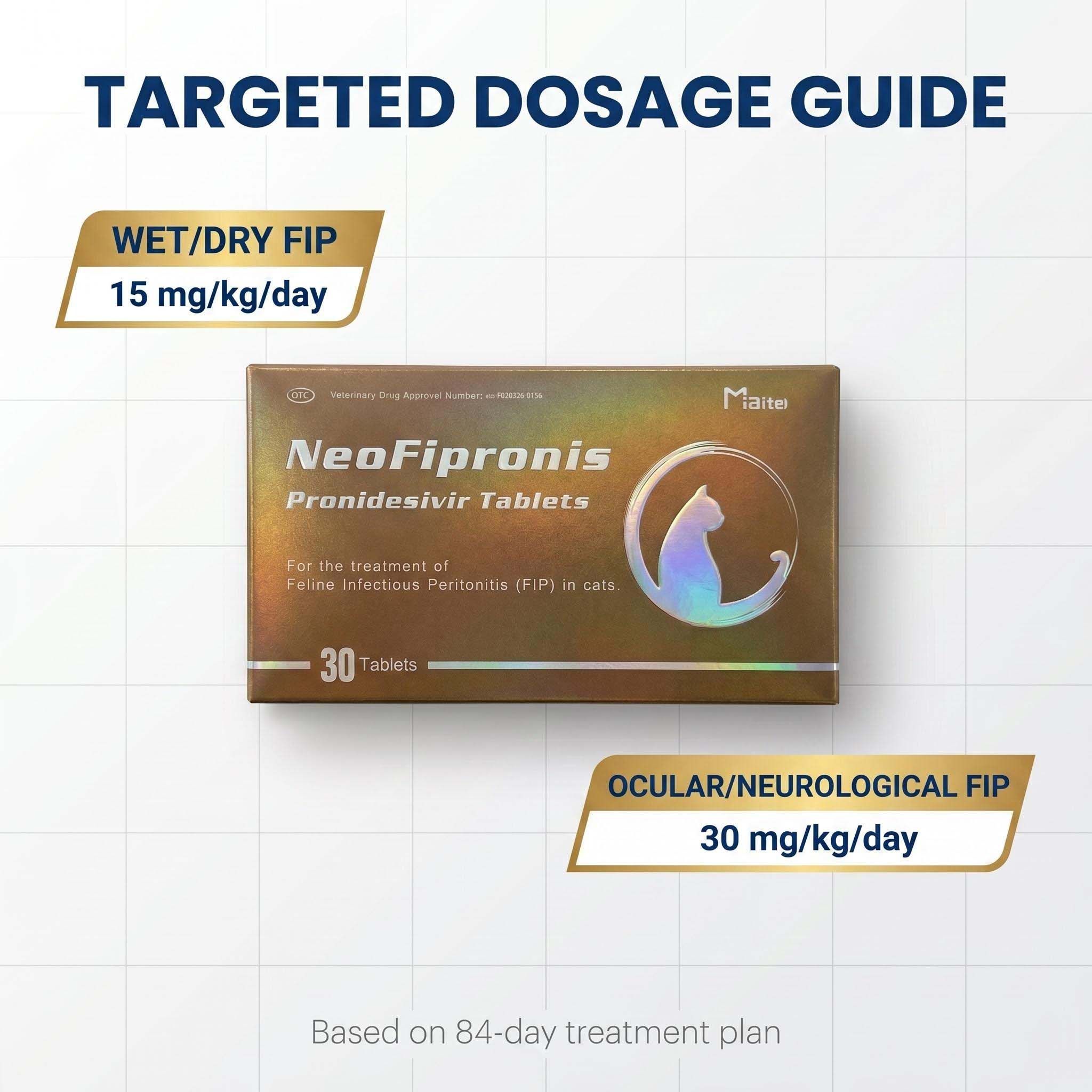
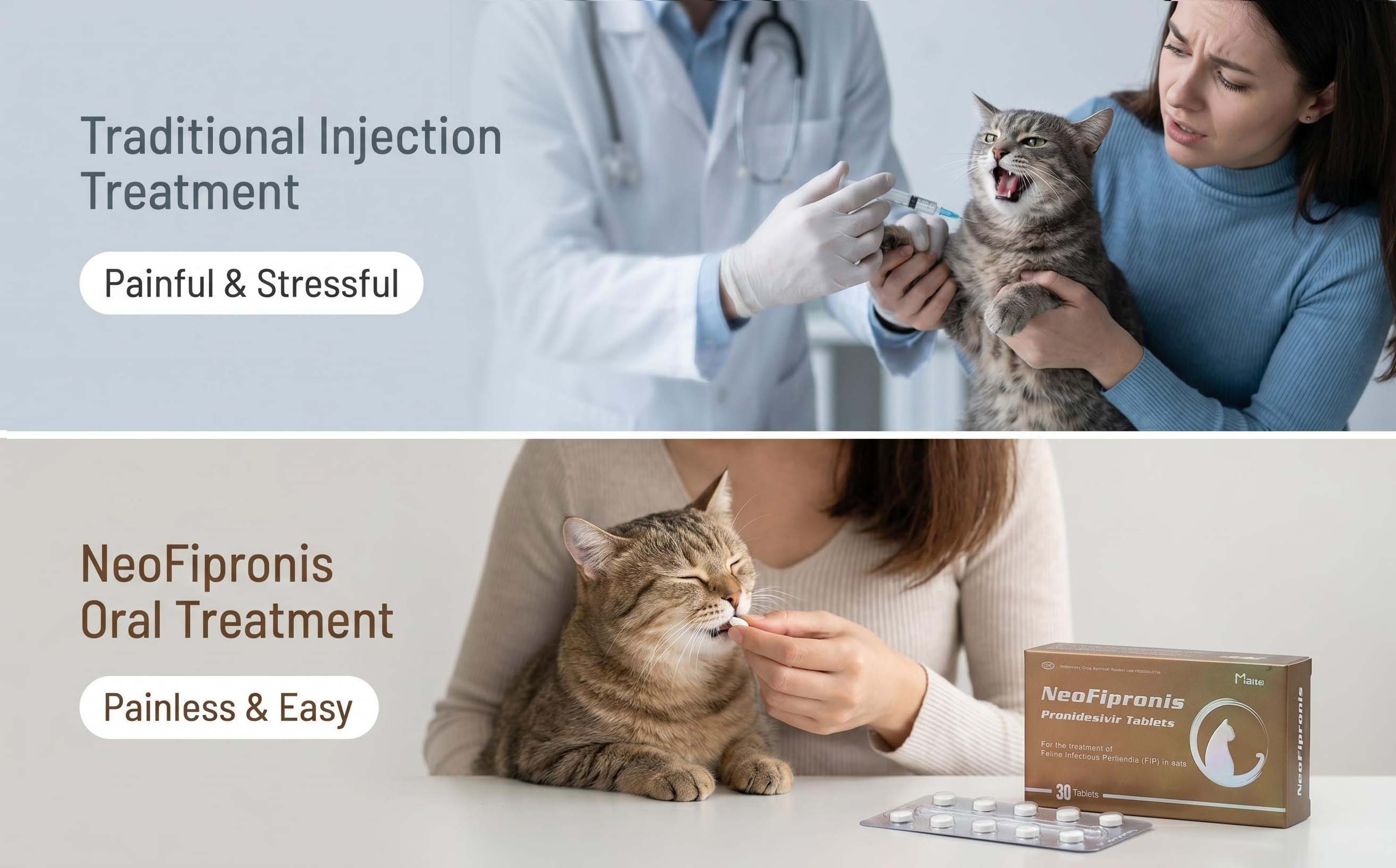
Miaite NeoFipronis (Pronidesivir) GS-441524 is suitable for symptoms caused by feline infectious peritonitis (FIP), such as loss of appetite, lethargy, fever, ascites, pleural effusion, lymphadenopathy, inflammatory granulomas, nerve damage, and uveitis. It has excellent therapeutic effects on FIP. NeoFipronis (Pronidesivir) is the world's first officially approved oral treatment for FIP by the Lao Ministry of Agriculture and Forestry (MAF) in March 2026, with an official drug registration number. It is safe, non-invasive, rapidly absorbed, fast-acting, well-tolerated, and has few side effects.
In practice, antiviral treatment should always be guided by a veterinarian, because accurate dosing, monitoring, and follow-up are essential. Cats often need serial checks to assess improvement in appetite, body weight, temperature, blood values, and fluid accumulation. Treatment length may vary depending on response and the exact protocol used. The earlier FIP is recognized, the more likely the cat is to stabilize and recover.
What Improvement Looks Like During Treatment
Many cats begin to show signs of improvement within days to a few weeks after starting effective treatment. A cat that was hiding, refusing food, or running a fever may become more active and start eating again. Fluid buildup may gradually lessen, and breathing may become easier. In dry or neurological FIP, improvement may be slower, and follow-up examinations are especially important.
Owners should not stop treatment early unless a veterinarian advises it. Stopping too soon can allow the disease to return. Monitoring the cat’s weight, appetite, energy level, eye health, and neurologic status can help track progress. If a cat relapses or develops new symptoms, prompt veterinary reassessment is necessary.
Home Care and Monitoring
Caring for a cat with FIP requires patience and close observation. A quiet, warm environment can reduce stress and support recovery. Fresh water, palatable food, and consistent medication timing are important. Weighing the cat regularly is useful because weight changes can signal improvement or worsening disease.
Owners should watch for signs such as reduced appetite, vomiting, breathing difficulty, abdominal distension, eye redness, stumbling, or unusual vocalization. Any abrupt change should be reported to a veterinarian. Cats with FIP may also benefit from careful isolation from stressors, though FIP itself is not spread directly from one cat to another in the same way some contagious diseases are.
Reducing FIP Risk
Because FIP develops from feline coronavirus under specific conditions, prevention focuses on lowering exposure and stress. Crowded environments, poor litter box hygiene, repeated stress, and high-density multi-cat households may increase the risk of coronavirus spread and mutation. Keeping litter boxes clean, reducing overcrowding, and providing stable nutrition and veterinary care can help.
Breeding catteries and shelters should pay special attention to sanitation and population management. Although not every feline coronavirus infection leads to FIP, minimizing viral circulation is still worthwhile. Early veterinary attention for kittens and young cats with persistent fever or appetite loss can improve the chance of catching the disease early.
Why Early Action Matters
Cat FIP symptoms and treatment should never be delayed when warning signs appear. FIP is complex, but it is no longer the hopeless diagnosis it once was. Recognizing symptoms such as fever, lethargy, weight loss, ascites, pleural effusion, enlarged lymph nodes, eye inflammation, or neurologic changes can lead to earlier diagnosis and better outcomes. With timely veterinary guidance and appropriate antiviral treatment, many cats can achieve significant recovery and a better quality of life.
References
Feline Infectious Peritonitis: A Review of Clinical Signs, Diagnosis, and Management
Greene’s Infectious Diseases of the Dog and Cat
Feline Medicine and Therapeutics
Textbook of Veterinary Internal Medicine
Small Animal Internal Medicine
Journal of Feline Medicine and Surgery
Veterinary Clinics of North America: Small Animal Practice