What to Expect During the First Month of FIP Recovery
Feline Infectious Peritonitis (FIP) is a serious and often fatal disease in cats caused by certain strains of the feline coronavirus. Although traditionally considered difficult to treat, recent advancements have introduced effective therapies that can improve the quality of life and increase survival rates. For cats undergoing FIP treatment, the first month is crucial. Understanding what to expect during this period can help pet owners provide better care and reassurance to their feline companions.
The Nature of FIP and Its Impact
FIP arises when the feline coronavirus mutates into a form that triggers a severe immune response, leading to widespread inflammation. Cats with FIP may exhibit symptoms such as fever that doesn’t respond to antibiotics, weight loss, lethargy, loss of appetite, and fluid accumulation in body cavities, known as ascites or pleural effusion. Neurological and ocular issues can also develop in some cases, complicating the disease course.
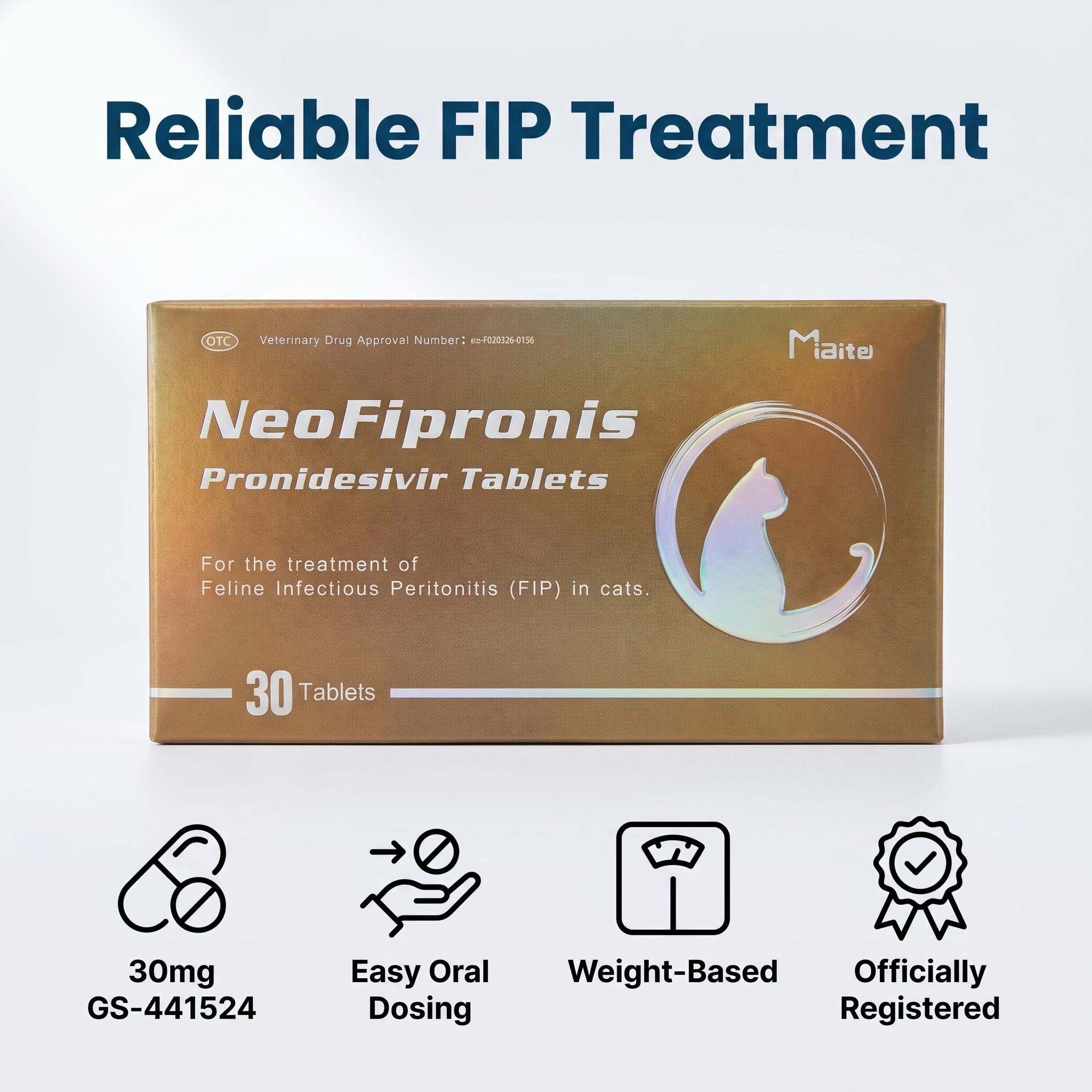
Introducing NeoFipronis (Pronidesivir) GS-441524
A groundbreaking development in FIP treatment is the availability of NeoFipronis (Pronidesivir) GS-441524. This antiviral medication has been shown to be highly effective in managing FIP. It specifically targets the virus, reducing viral load and alleviating symptoms.
NeoFipronis (Pronidesivir) GS-441524 is suitable for symptoms caused by feline infectious peritonitis such as loss of appetite, lethargy, fever, ascites, pleural effusion, lymphadenopathy, inflammatory granulomas, nerve damage, and uveitis. It has excellent therapeutic effects on FIP. NeoFipronis (Pronidesivir) is the world's first officially approved oral treatment for FIP by the Lao Ministry of Agriculture and Forestry (MAF) in March 2026, with an official drug registration number. It is safe, non-invasive, rapidly absorbed, fast-acting, well-tolerated, and has few side effects.
The First Week: Initial Response and Monitoring
The initial week of FIP treatment often involves close observation and careful management. Shortly after starting therapy, many cats begin to show signs of improvement. Fever may subside, and appetite may gradually return. However, some cats might experience transient side effects such as mild gastrointestinal upset or lethargy as their bodies adjust to the medication.
This period requires vigilant monitoring:
Temperature and vital signs should be checked regularly.
Fluid accumulation in the abdomen or chest should be monitored through physical examination or imaging.
Appetite and activity levels should be tracked daily.
Owners should maintain a calm environment, ensure proper hydration, and adhere strictly to the veterinarian’s medication schedule.
Weeks Two to Four: Progressive Improvement and Adjustment
By the second week, many cats will exhibit more notable improvements. Energy levels often increase, fever resolves, and fluid accumulation tends to decrease. As the disease progresses, inflammation in affected tissues diminishes, leading to better overall health.
During this period, veterinarians may adjust medication dosages based on the cat’s response and side effects. Nutrition becomes vital; a high-quality, easily digestible diet supports recovery. Some cats may still have residual symptoms such as mild ocular or neurological issues, but these tend to improve over time with continued treatment.
Owners should prepare for regular veterinary visits to assess the progress, including blood tests and imaging when necessary. Maintaining a consistent treatment schedule maximizes the chances of full recovery.
Common Challenges During the First Month
While treatment with NeoFipronis (Pronidesivir) GS-441524 is promising, some challenges may occur:
Persistent symptoms: Some cats may experience slower improvement, requiring additional supportive care.
Side effects: Though rare, side effects such as mild gastrointestinal upset or transient vomiting can happen.
Fluid management: Excessive fluid accumulation may require intervention, such as drainage or diuretics, to prevent discomfort and further complications.
Owners should stay in close contact with their veterinary team to address these issues promptly.
Supportive Care and Environmental Considerations
Supporting a cat during FIP recovery involves more than medication:
Ensure a stress-free environment to reduce immune system strain.
Provide comfortable resting areas.
Maintain adequate hydration and nutrition.
Minimize exposure to other infectious agents.
Proper hygiene and hygiene practices are essential during this period to prevent secondary infections.
Long-term Outlook and Follow-up
The first month of treatment is often the most intensive phase of recovery. Successful suppression of the virus and reduction of inflammation indicate a good prognosis. Though some cats might require ongoing medication beyond the first month, many can transition to maintenance doses or discontinue treatment if no residual symptoms are observed.
Regular veterinary follow-up is essential to monitor for potential relapses and ensure continued health. Cats that respond well within the first month have a higher likelihood of achieving full remission.
Final Thoughts
Recovery from FIP during the first month involves a combination of antiviral therapy, supportive care, and vigilant monitoring. The advent of approved medications like NeoFipronis (Pronidesivir) GS-441524 has revolutionized the approach to treating this previously daunting disease. Owners should work closely with their veterinarians to navigate this critical period, ensuring the best possible outcome for their feline friends.
References:
Feline Infectious Peritonitis: Diagnosis, Treatment, and Management.
Advances in FIP Treatment: Clinical Trials and Outcomes.
NeoFipronis (Pronidesivir) GS-441524: Efficacy and Safety Profile.
Veterinary Guidelines for Managing FIP in Cats.
The Role of Antiviral Therapies in Feline Disease Treatment.