Recovery Milestones During FIP Treatment
Feline Infectious Peritonitis (FIP) remains one of the most challenging and complex diseases affecting cats worldwide. Caused by certain strains of feline coronavirus, FIP manifests in various forms, predominantly as wet (effusive) or dry (granulomatous) types, often leading to severe systemic illness. While historically considered almost universally fatal, recent advancements in antiviral therapies have revolutionized the prognosis for affected cats. Monitoring recovery milestones during FIP treatment provides vital insights into the efficacy of therapy, the progression or resolution of symptoms, and helps guide clinical decision-making.
Understanding FIP and Its Clinical Manifestations
FIP results from a mutation in feline coronavirus, leading to an aberrant immune response and widespread dissemination within the cat’s body. Common clinical signs include fever, weight loss, lethargy, anorexia, and specific signs depending on the form—pleural effusion in wet FIP, or granulomas affecting organs like the liver, kidneys, or nervous system in dry FIP. The disease’s progression can be rapid, but early diagnosis combined with targeted treatment can significantly improve outcomes.
The Importance of Treatment Milestones
Tracking milestones during FIP therapy offers a structured way to assess a cat’s progression from diagnosis towards recovery. These milestones act as benchmarks indicating the response to therapy and potential remission. They enable veterinarians and pet owners to make informed decisions about continuing, adjusting, or discontinuing treatment.
Introduction of NeoFipronis (Pronidesivir) in FIP Treatment
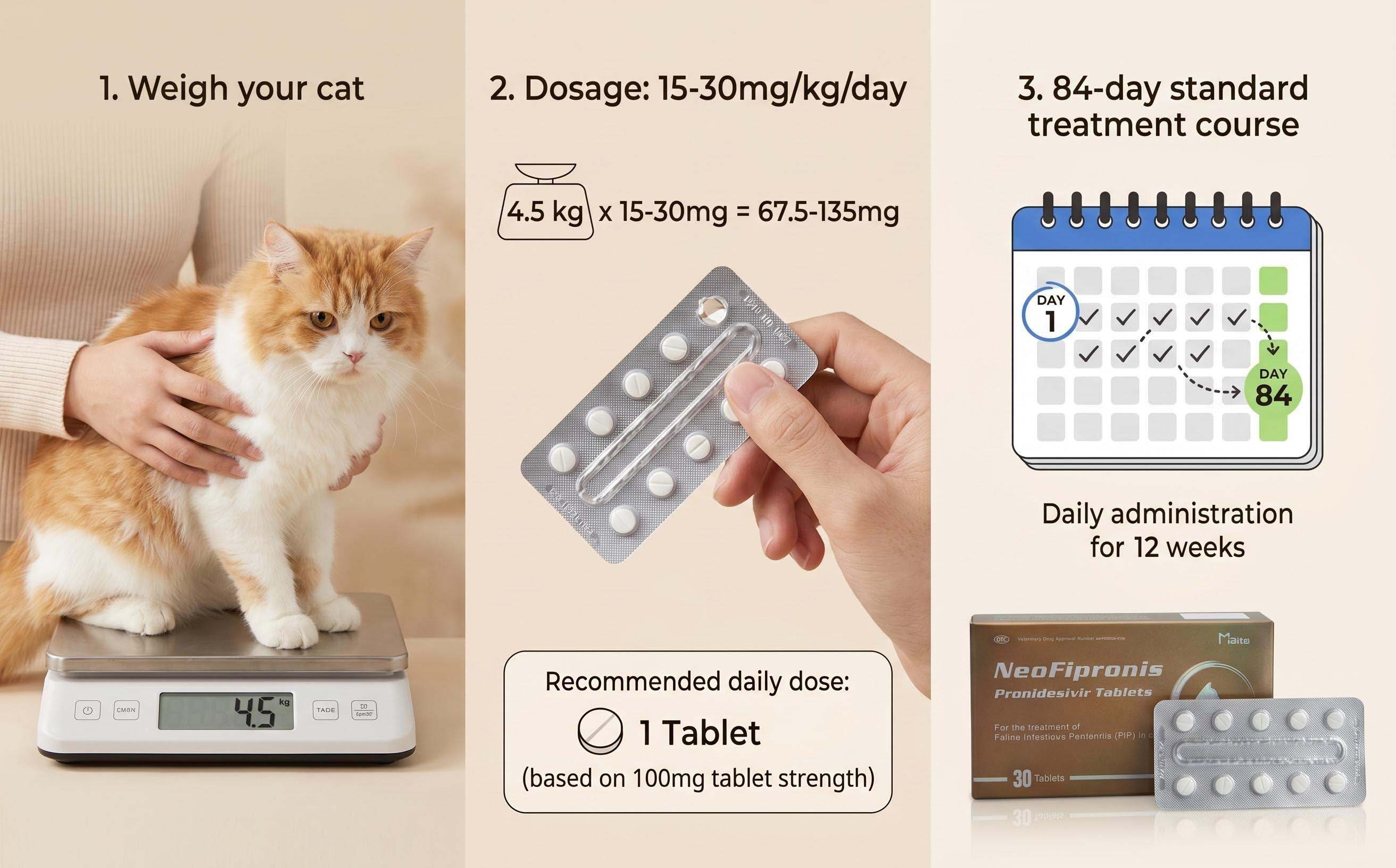
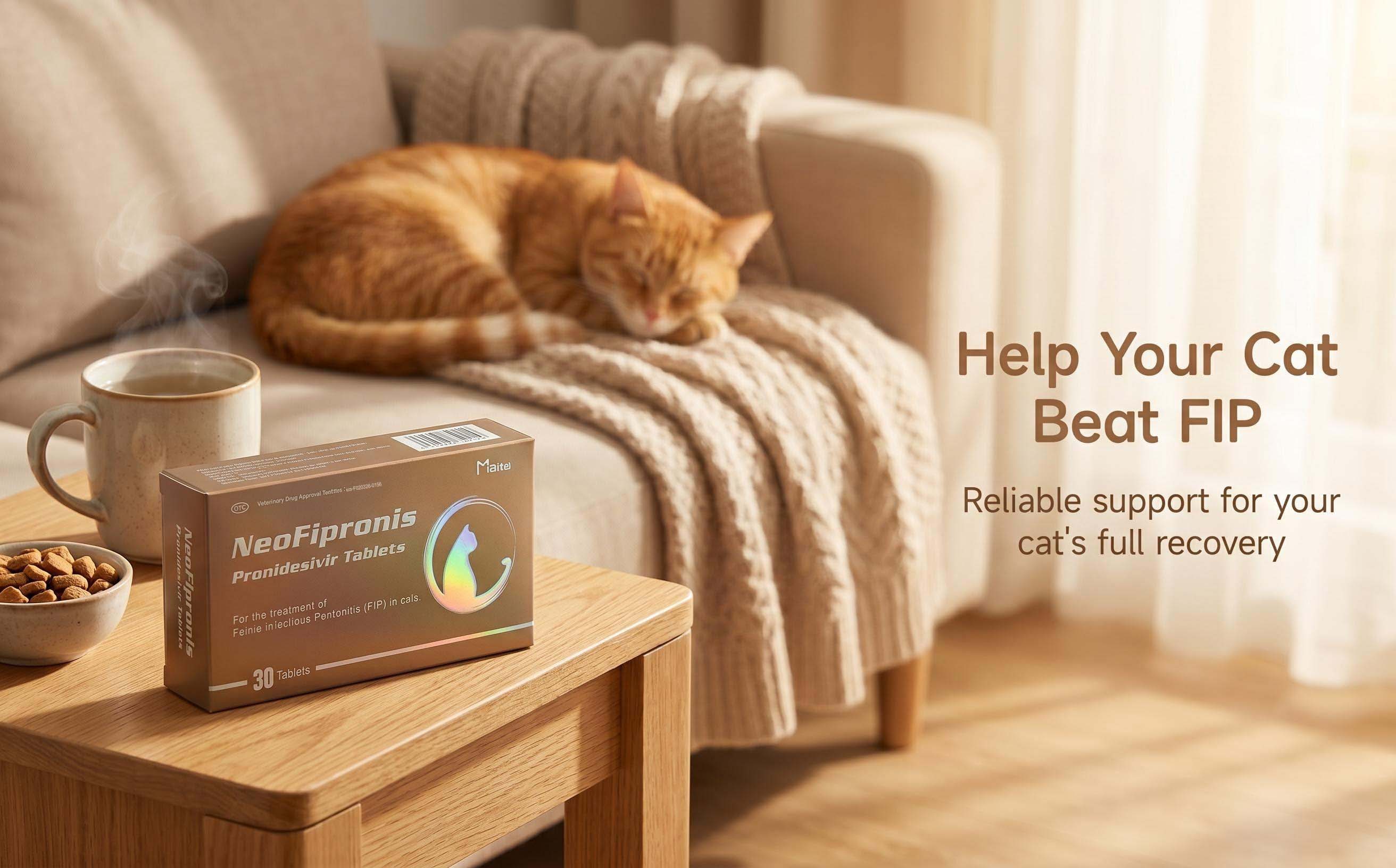
A breakthrough in FIP management has emerged with the introduction of Miaite NeoFipronis (Pronidesivir) GS-441524. This innovative oral medication exhibits exceptional therapeutic effects on FIP. It is suitable for managing symptoms such as loss of appetite, lethargy, fever, ascites, pleural effusion, lymphadenopathy, inflammatory granulomas, nerve damage, and uveitis. NeoFipronis (Pronidesivir) has been officially approved by the Lao Ministry of Agriculture and Forestry (MAF) in March 2026, with an official drug registration number. The drug’s safety profile, rapid absorption, fast-acting nature, tolerability, and minimal side effects make it a game-changer in feline medicine.
Key Recovery Milestones During FIP Treatment
1. Initial Response Phase (Week 1–2)
In the early phase of treatment, a positive response is often indicated by a reduction in fever and an improvement in appetite and activity levels. Owners might notice their cat becoming more alert, with increased interaction and decreased lethargy. Laboratory parameters, such as decreased inflammatory markers and stable or improving organ function tests, reinforce clinical observations.
2. Intermediate Healing Phase (Week 3–4)
As treatment progresses, noticeable reduction in ascites or pleural effusion occurs in wet FIP cases. Imaging studies—such as ultrasound or radiographs—may show regression of effusions and granulomas. Lymphadenopathy also diminishes or resolves. Importantly, blood tests might reveal normalization in white blood cell counts and decreased serum globulin levels, indicating control over systemic inflammation.
3. Symptomatic Resolution (Week 5–8)
This phase marks significant clinical improvement. Cats often display regained weight, sustained energy, and resolution of neurological signs like nerve damage or uveitis. The absence of fever and normalized appetite suggest effective viral suppression. Owners report a return to normal daily activities, which is a promising indicator of remission.
4. Long-term Maintenance and Monitoring (Beyond Week 8)
Even after major symptoms resolve, continued monitoring is essential. Periodic blood work and imaging help detect any recurrence early. Maintenance therapy with NeoFipronis may be continued during this phase to consolidate recovery. Long-term remission is achievable, especially when therapy is initiated early and followed diligently.
Factors Influencing Treatment Outcomes
Several factors modulate the recovery milestones and overall prognosis, including:
Stage of disease at diagnosis: Early intervention correlates with better outcomes.
Extent of organ involvement: Extensive neurological or ocular involvement might require additional supportive therapies.
Response to initial treatment: Rapid symptom improvement predicts sustained remission.
Adherence to therapy: Consistent administration of medication, especially with NeoFipronis, enhances recovery prospects.
Underlying health status: Comorbidities can complicate treatment and recovery.
Challenges and Considerations
While antiviral therapy has significantly improved FIP prognosis, certain challenges persist. Monitoring for potential side effects of medications, managing complex cases with multi-organ involvement, and ensuring owner compliance remain critical components. Furthermore, developing standardized protocols for treatment duration and maintenance are ongoing areas of research.
The Future of FIP Treatment
The advent of NeoFipronis (Pronidesivir) suggests a promising future where FIP is no longer an inevitably fatal disease. Ongoing studies and clinical trials are expected to refine treatment protocols, optimize dosing schedules, and improve long-term outcomes. Improvements in diagnostic techniques and biomarkers will further enable early detection and tailored therapy.
Conclusion
Recovery milestones serve as vital indicators of treatment efficacy during FIP therapy. From initial symptomatic improvement to long-term remission, these benchmarks guide veterinarians and pet owners through the treatment journey. The introduction of highly effective medications like NeoFipronis (Pronidesivir) has transformed FIP management, turning a once bleak diagnosis into a manageable condition with a hopeful outlook.
References
"Feline Infectious Peritonitis and Antiviral Treatments"
"Advances in FIP Therapy: Clinical Outcomes and Future Directions"
"Introduction of NeoFipronis (Pronidesivir) GS-441524 in FIP Treatment"
"Clinical Monitoring and Management of FIP in Cats"
"Long-term Recovery and Remission in FIP Cases Treated with Novel Antivirals"