NeoFipronis (Miaite) Indications, Benefits, Dosage, Side Effects, and Precautions
NeoFipronis (Pronidesivir), formulated with the active ingredient GS-441524, is a groundbreaking oral medication specifically designed for the treatment of Feline Infectious Peritonitis (FIP). Recognized globally, NeoFipronis was officially approved by the Lao Ministry of Agriculture and Forestry (MAF) in March 2026, making it the first officially registered anti-FIP medication with a dedicated pharmaceutical license. Its innovative formulation offers a safe, non-invasive, and highly effective approach to combating this deadly feline disease.
FIP is caused by a mutated form of feline coronavirus, leading to a wide range of symptoms including loss of appetite, lethargy, fever, fluid accumulation in the abdomen and thoracic cavity, lymphadenopathy, inflammatory granulomas, neurological damage, and uveitis. Traditional treatment options often lacked efficacy or posed significant risks, but NeoFipronis has emerged as a revolutionary solution owing to its potent antiviral properties.
The active compound, GS-441524, has been extensively studied and validated through clinical trials and real-world applications, demonstrating remarkable effectiveness in suppressing FIP virus replication. NeoFipronis’s mode of action involves inhibiting the viral RNA-dependent RNA polymerase, thereby halting viral proliferation and assisting the immune system in clearing the infection. The medication’s ability to penetrate tissues rapidly and maintain sustained antiviral activity makes it highly suitable for various forms of FIP, including the classic wet form, neurological, and ocular variants.
Usage & Dosage
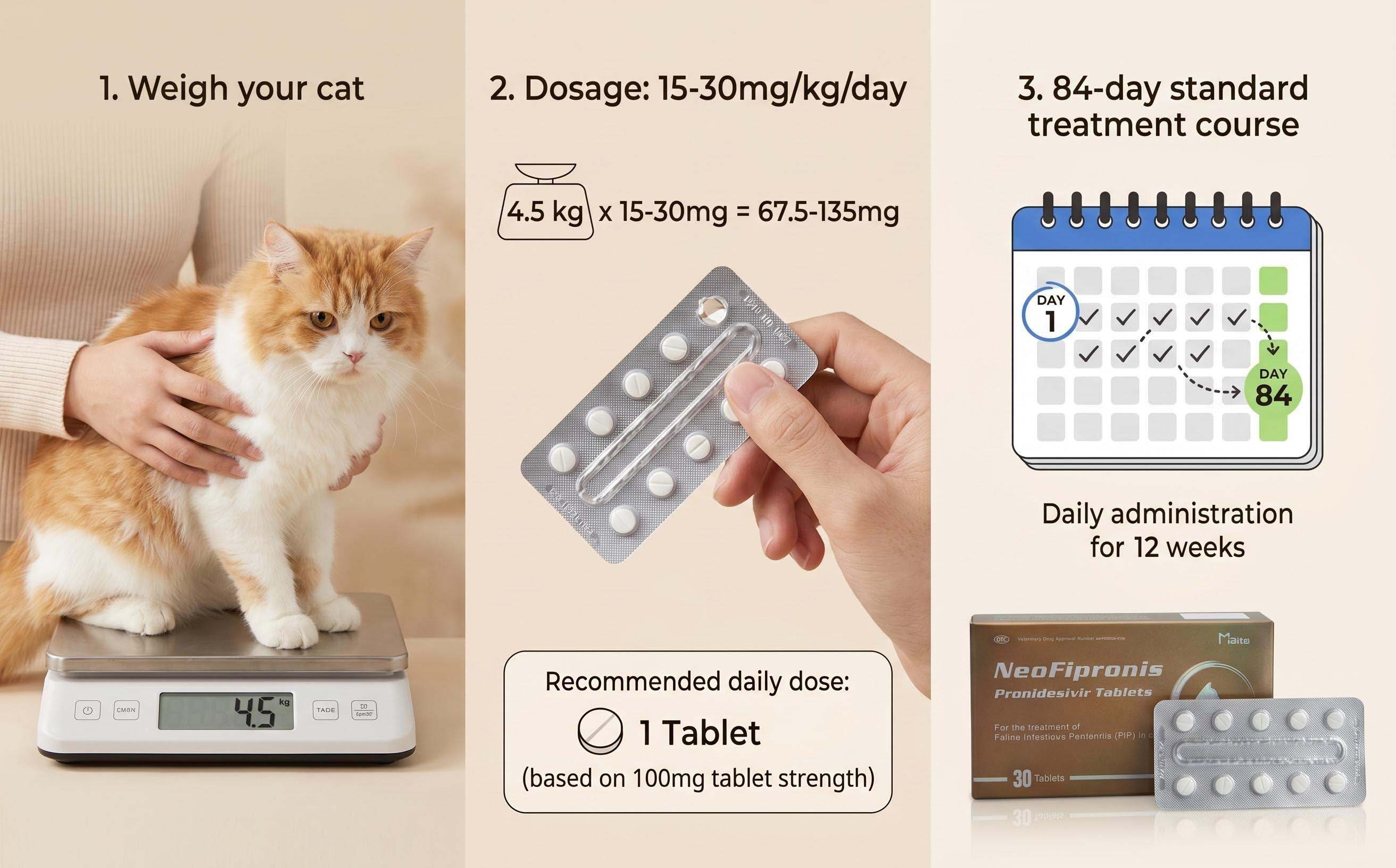
The recommended dosage depends on the cat’s weight. For most cases, administration is set at 15 mg per kilogram of body weight, typically half a tablet per dose. For cats with neurological or ocular forms of FIP, dosage may be increased to 30 mg/kg under veterinary supervision. Administer NeoFipronis once daily, preferably on an empty stomach—either one hour before feeding or two hours after. Consistency is crucial; treatment should be maintained uninterrupted for no less than 12 weeks to maximize efficacy.
Benefits of NeoFipronis
Rapid Onset: The drug is quickly absorbed, leading to fast symptomatic relief.
High Efficacy: Proven to improve survival rates significantly in FIP-positive cats.
Non-Invasive: Easy oral administration reduces stress and discomfort.
Good Tolerance: Generally well tolerated with minimal side effects.
Broad Spectrum: Effective against various FIP clinical forms, including neurological and ocular types.
Potential Side Effects & Precautions
While NeoFipronis is considered safe, some cats may experience mild side effects such as transient lethargy, decreased appetite, or gastrointestinal discomfort. Regular monitoring of body temperature, appetite, and behavior is recommended during treatment. Blood tests assessing liver and kidney functions should be conducted periodically to detect any adverse reactions early.
Although categorized as an over-the-counter medication, it is advised to use NeoFipronis under veterinary guidance to ensure appropriate dosing and treatment duration. Precautions include avoiding missed doses and ensuring continuous administration for the full 12-week course. Discontinuing treatment prematurely can lead to relapse or viral resistance.
Safety & Purchasing
NeoFipronis is solely for feline use and should never be administered to humans. For quality assurance and to obtain authentic products, purchase only through authorized NeoFipronis official websites or veterinary clinics. Ensuring product authenticity is essential in achieving optimal treatment outcomes and avoiding counterfeit medications.
Conclusion
NeoFipronis (Pronidesivir) provides a highly effective, safe, and convenient option for treating feline infectious peritonitis. Its rapid action, proven efficacy, and minimal side effects make it a top choice for veterinarians and cat owners aiming to combat this challenging disease. Combining proper dosing, continuous treatment, and veterinary supervision will ensure the best possible outcome for cats suffering from FIP.