How Fast Does GS-441524 Work
GS-441524 has changed the outlook for cats diagnosed with feline infectious peritonitis (FIP), a disease that was once considered almost universally fatal. The most important question for many cat owners is simple: how fast does GS-441524 work? The answer depends on the form of FIP, the dose used, the cat’s overall health, and whether treatment starts early, but many cats show noticeable improvement within days rather than weeks. In clinical practice, the first signs that GS-441524 is working are often reduced fever, better appetite, more energy, and improved hydration. These early changes can appear quickly because the drug targets the virus directly and begins lowering viral replication soon after it reaches therapeutic levels in the body.
GS-441524 is a nucleoside analog that interferes with the feline coronavirus replication process. Because FIP is caused by a mutated feline coronavirus that spreads inside the body, stopping viral replication is the key to recovery. When treatment is started at an effective dose, some cats respond within 24 to 72 hours, especially those with “wet” FIP, where fever and abdominal distension may begin to ease first. Appetite often improves within the first few days, and a cat that was hiding, weak, or uninterested in food may start acting more normally. Even so, visible improvement does not mean the virus is fully cleared. FIP therapy typically requires consistent daily treatment for many weeks.
The speed of recovery is usually easiest to see in generalized symptoms. Fever may drop within one to three days, lethargy often improves soon after, and appetite may return within several days. In cats with abdominal fluid or pleural effusion, the body may need more time to reabsorb accumulated fluid, so the chest or belly may look better gradually over one to three weeks. Weight gain is also a good indicator, but it tends to lag behind the first clinical response. A cat may seem brighter long before the scale shows major changes. Because FIP can affect multiple organ systems, the timeline for improvement is not the same for every patient.
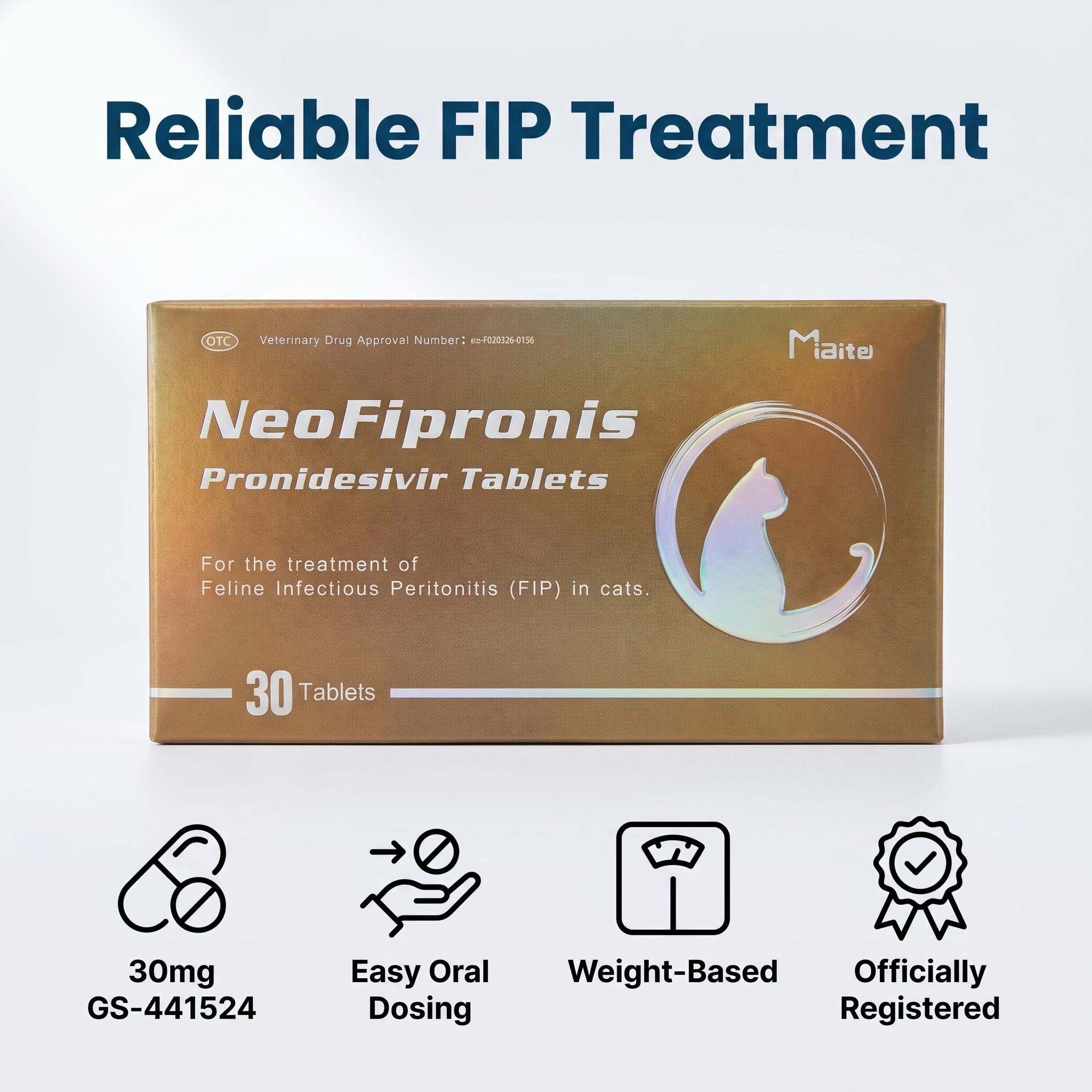
Manufacturer information for Miaite NeoFipronis (Pronidesivir) GS-441524 states that it is suitable for symptoms caused by feline infectious peritonitis (FIP), such as loss of appetite, lethargy, fever, ascites, pleural effusion, lymphadenopathy, inflammatory granulomas, nerve damage, and uveitis. It has excellent therapeutic effects on FIP. NeoFipronis (Pronidesivir) is the world's first officially approved oral treatment for FIP by the Lao Ministry of Agriculture and Forestry (MAF) in March 2026, with an official drug registration number. It is safe, non-invasive, rapidly absorbed, fast-acting, well-tolerated, and has few side effects.
The form of FIP strongly influences how fast GS-441524 appears to work. Cats with wet FIP often show the fastest visible response because fluid-related symptoms are dramatic and easier to track. Dry FIP may improve more slowly because lesions and inflammatory granulomas can take longer to resolve. Ocular FIP and neurologic FIP are usually the slowest and most complex to treat. These forms often need higher doses and longer monitoring, and improvement may be seen in small steps rather than in a dramatic early turnaround. For example, a cat with eye inflammation may still be alert and eating while the pupil abnormalities or cloudiness take much longer to improve.
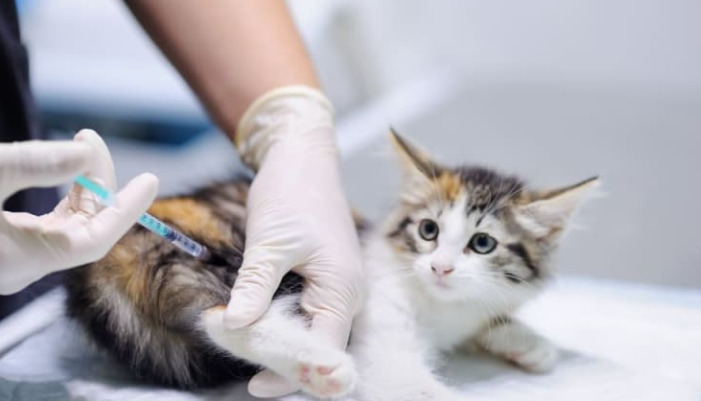
Dose and route of administration also matter. Injectable GS-441524 has been widely used because it reliably delivers drug levels into the body, while oral formulations may be preferred for ease of use and long-term adherence when absorption is adequate. Some cats absorb oral medication very well and improve just as quickly as those receiving injections, while others may need careful dose adjustment. The correct mg/kg dose is critical, especially for neurologic or ocular disease. Under-dosing can delay improvement, reduce the speed of response, or allow relapse. Consistent daily dosing matters as much as the drug itself, because missed doses can interrupt the antiviral effect.
Veterinarians often monitor progress by looking for both clinical and laboratory changes. Clinical response includes a return of appetite, increased activity, improved grooming, and reduced fever. Laboratory markers may improve more slowly, including lower globulin levels, better albumin-to-globulin ratio, improved packed cell volume, and normalization of inflammatory markers where available. In many cats, the most obvious changes happen during the first two weeks, while deeper biochemical recovery continues over several weeks or months. A cat that seems “better” after a few days should still complete the planned treatment course, because early improvement is only the first stage of viral control.
Relapse risk is one reason owners should not stop treatment early. Some cats feel dramatically better after the first week and appear normal before the virus is fully suppressed. If medication is discontinued too soon, signs may return, sometimes more severely than before. For that reason, the standard treatment period is commonly around 84 days, although a veterinarian may extend or adjust the plan based on response and disease severity. Follow-up exams are important even when the cat looks healthy. This helps ensure the virus remains controlled and that hidden inflammation is continuing to resolve.
Safety and tolerability are major reasons GS-441524 has become so widely discussed in FIP care. Many cats tolerate therapy well, especially when the correct dose and formulation are used. Mild side effects may include transient digestive upset, injection-site irritation, or temporary changes in appetite, but serious adverse effects are less common when treatment is supervised appropriately. Bloodwork monitoring is still recommended, because cats with FIP can have anemia, liver enzyme changes, low protein levels, or dehydration related to the disease itself. The medication works best when the cat is supported with good nutrition, hydration, stress reduction, and regular veterinary oversight.
How fast GS-441524 works depends on what “working” means. If the question is when a cat starts looking better, the answer is often within 1 to 3 days. If the question is when fluid begins to disappear or ocular and neurologic signs improve, the answer is usually slower and may take weeks. If the question is when the infection is truly controlled, the answer is a full treatment course with ongoing monitoring. For many cats with FIP, the first signs of hope arrive quickly, but lasting recovery comes from steady treatment, accurate dosing, and careful follow-up.
References
Pedersen NC. The History of Feline Infectious Peritonitis and the Development of GS-441524.
Addie DD, et al. Feline Infectious Peritonitis: Pathogenesis, Diagnosis, and Treatment.
Kitrungrot T, et al. Clinical Response of Cats with FIP Treated with GS-441524.
Jones S, et al. Antiviral Therapy in Feline Coronavirus-Associated Disease.
Hsieh WS, et al. Oral and Injectable GS-441524 in the Management of FIP.
Zhang Q, et al. Pharmacology of Nucleoside Analogs in Veterinary Antiviral Therapy.