How Accurate Is Ultrasound for Diagnosing FIP
Feline Infectious Peritonitis (FIP) is a challenging disease for veterinarians and cat owners alike. Characterized by vague symptoms and complex pathology, FIP still lacks definitive ante-mortem diagnostic tests. As veterinary medicine evolves, imaging modalities like ultrasound have become integral in the diagnostic process. But how reliable is ultrasound in diagnosing FIP in cats? This article examines the accuracy, limitations, and clinical role of ultrasound in FIP diagnosis.
Understanding FIP: Cause and Forms
Feline Infectious Peritonitis is a deadly disease caused by a mutated feline coronavirus. Not all cats exposed to the virus develop FIP; genetic and immunological factors govern susceptibility. The disease manifests in two main forms: the effusive (“wet”) and non-effusive (“dry”) types.
Effusive FIP features accumulation of fluid in body cavities such as the abdomen or chest, while non-effusive FIP affects organs with granulomatous lesions but rarely produces significant fluid buildup. The clinical spectrum of FIP includes fever, weight loss, lethargy, abdominal distension, respiratory distress, and jaundice. These non-specific signs mirror many other feline diseases, complicating the diagnostic approach.
Current Standards for Diagnosing FIP
FIP is diagnosed using a combination of history, clinical signs, bloodwork, fluid analysis, and imaging. No single test will confirm FIP definitively before death. Serological tests can indicate exposure to feline coronavirus, but cannot distinguish pathogenic FIP from benign enteric infections. RT-PCR detects the viral genome with high sensitivity, but only tissue analysis with immunohistochemistry or PCR is considered confirmatory.
Given these complexities, imaging—especially ultrasound—plays a crucial role in supporting the diagnosis, guiding aspiration, and ruling out other differential diagnoses.
How Ultrasound Works in Feline Medicine
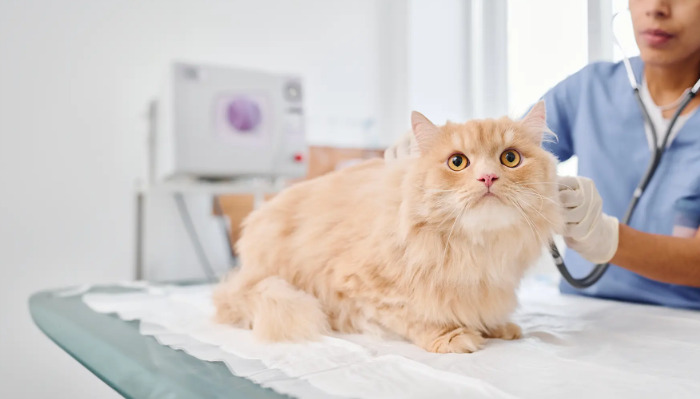
Veterinary ultrasound uses high-frequency sound waves to generate real-time images of a cat's internal structures. It is safe, non-invasive, and well-established for evaluating abdominal organs, fluid collections, lymph nodes, and thoracic pathology.
Ultrasound excels in characterizing:
Fluid accumulations in the abdomen or thorax
Organ enlargement, texture, and mass lesions
Lymph node size and appearance
Detailed anatomy of the liver, spleen, kidneys, and intestines
Ultrasound Findings in FIP
Effusive FIP
Cats with effusive FIP present most commonly for marked abdominal distension and respiratory difficulty. Ultrasound can quickly identify moderate to large volumes of fluid in the abdomen and occasionally the chest. The fluid is typically anechoic to mildly echogenic and may contain fine particulate matter.
Accompanying findings often include:
Thickened or corrugated intestinal walls
Hypoechoic or irregular liver and spleen
Large or abnormal mesenteric lymph nodes
Evidence of fibrin strands or septations within fluid collections
Peritoneal or pleural irregularities
This constellation of findings raises suspicion for FIP, especially when concurrent with clinical signs.
Non-Effusive FIP
Non-effusive (“dry”) FIP cases present greater diagnostic challenges. These cats show persistent fever and sometimes organ-specific signs. Ultrasound may reveal:
Nodular or granulomatous changes in the kidneys, spleen, or liver
Enlarged mesenteric or abdominal lymph nodes
Mild, patchy fluid accumulations
Thickened intestinal walls
Lesions are often subtle, requiring skilled imaging technique and experience in interpretation. Some changes may overlap with lymphoma, bacterial infections, or other inflammatory disorders.
Ultrasound Accuracy: Sensitivity and Specificity
Sensitivity
Ultrasound is highly sensitive for detecting abdominal or thoracic effusions. In effusive FIP, sensitivity exceeds 90%, as nearly all cats with wet FIP develop fluid collections easily visualized on ultrasound.
For organ changes and masses found in dry FIP, sensitivity drops, sometimes below 50-60%. Many lesions are small or ill-defined, making detection challenging. Operator expertise is a significant factor.
Specificity
Specificity refers to the ultrasound’s ability to exclude other diseases mimicking FIP. Here, ultrasound faces important limitations.
Abdominal fluid, thickened intestines, enlarged lymph nodes, and heterogeneous organs may occur in lymphoma, bacterial peritonitis, pancreatitis, trauma, infectious hepatitis, or other systemic illnesses.
Certain findings, like abundant fibrinous septations in fluid or “granulomas” in the kidneys and spleen, increase suspicion but are not unique.
Thus, ultrasound findings are suggestive—never conclusive—for FIP.
Combining ultrasound imaging with clinical data, laboratory tests, and cytology of effusions increases diagnostic specificity.
Direct Comparison: Ultrasound vs Other Diagnostics
Ultrasound versus Fluid Analysis
Analysis of effusive fluid (color, protein, cells) remains a diagnostic pillar. Ultrasound guides safe aspirate collection, confirming the quality and quantity of fluid.
Typical FIP effusions have high protein (>3.5 g/dl), low to moderate cellularity, and are straw-yellow.
Ultrasound alone cannot determine fluid composition but can ascertain location, depth, and volume, facilitating analysis.
Ultrasound versus PCR
Polymerase chain reaction (PCR) detects FIP viral RNA in fluids or tissue biopsies. Sensitivity varies depending on the sample type and viral load.
Ultrasound is complementary, guiding the collection of target samples for PCR testing.
Ultrasound versus Histopathology
Histopathology of affected tissues is considered the diagnostic gold standard for FIP.
Ultrasound cannot replace biopsy, but can indicate which organs show suspicious changes, improving biopsy yields and minimizing morbidity.
Limitations of Ultrasound in FIP Diagnosis
Operator Dependency
The reliability of ultrasound hinges on the operator’s skill. Subtle findings may be missed, especially in early or dry FIP. Misinterpretation may lead to unnecessary procedures or missed diagnosis.
Ultrasound should be performed by board-certified radiologists or highly trained practitioners when possible.
Quality of Equipment
High-resolution probes enhance sensitivity and image clarity. Limited access to advanced equipment, particularly in low-resource settings, may restrict diagnostic yield.
Overlapping Pathologies
Many non-FIP diseases produce similar ultrasound findings. Without supporting lab data, findings may be non-specific.
False positives can occur when diseases such as neoplasia, severe inflammation, or infectious processes mimic FIP.
Case Studies and Clinical Evidence
Multiple retrospective studies have reviewed ultrasound findings in FIP-positive cats.
One large retrospective study of 120 cats with abdominal effusion found that 85% had features consistent with FIP, but 15% were ultimately diagnosed with other pathologies (Wills et al.).
Another review indicated that in dry FIP, only 45% of confirmed cases showed definitive organ lesions on ultrasound (Pedersen et al.).
Clinical context, combined with imaging, is paramount in improving diagnostic accuracy.
Integrating Ultrasound into FIP Diagnostic Protocols
Best Practices
Ultrasound should be employed as an adjunct to history-taking, physical examination, laboratory testing, and cytological analysis.
In cases of effusive FIP, ultrasound helps:
Confirm presence and nature of effusion
Guide safe fluid aspiration and tissue sampling
Direct further tests for viral RNA or protein measurement
In dry FIP, ultrasound serves to:
Localize suspicious lesions
Monitor disease progression
Target sites for fine needle aspirate or biopsy
Interpretation should be contextual, reflecting the totality of findings rather than any single image characteristic.
Patient Selection
Ultrasound is most effective in cats presenting with abdominal distension, respiratory difficulty, prolonged fever, jaundice, and suspicion of multisystemic disease.
It is often less useful in very early FIP or purely neurological/ocular forms, though imaging may reveal indirect signs.
Economic and Welfare Considerations
Ultrasound is cost-effective compared to more invasive diagnostics.
It alleviates the need for exploratory surgery in most settings, reducing stress and morbidity.
Most cats tolerate the procedure with gentle restraint, minimizing anesthesia risks.
Future Advances in Imaging for FIP
As imaging technology advances, novel modalities may enhance future FIP diagnosis.
Point-of-care ultrasound, 3D imaging, and elastography may increase sensitivity for subtle lesions.
Contrast-enhanced ultrasound could refine resolution and vascular mapping of affected organs.
Radiomics and artificial intelligence models may provide pattern recognition for complex FIP cases, although these remain experimental.
Takeaways for Cat Owners and Veterinarians
Ultrasound is a valuable tool in the assessment of suspected FIP, especially when integrated into a comprehensive diagnostic approach. For effusive FIP, it excels in detecting and characterizing fluid and guiding sampling. In dry FIP, its sensitivity is more limited, but organ imaging can suggest disease and direct further testing.
No ultrasound finding is singularly diagnostic for FIP. Results must be interpreted within the broader clinical picture and in conjunction with laboratory tests.
The accuracy of ultrasound reflects not just the technology, but also the skill of the operator and the quality of supporting evidence.
For cats suspected of having FIP, early and thorough evaluation, including ultrasound, can clarify the diagnosis, improve patient outcomes, and inform appropriate care plans.
References
Addie, D. D., & Jarrett, O. (1998). Feline coronavirus infections. Veterinary Record.
Pedersen, N. C. (2009). Feline Infectious Peritonitis: An Update. Veterinary Medicine.
Wills, J. M., et al. (2008). The diagnostic utility of abdominal ultrasonography in feline infectious peritonitis. Journal of Feline Medicine and Surgery.
Hartmann, K. (2005). Feline infectious peritonitis. Veterinary Clinics of North America: Small Animal Practice.
Felten, S., & Hartmann, K. (2019). Diagnosis of feline infectious peritonitis: A review. Veterinary Journal.
Riemer, F., et al. (2016). Clinical and laboratory features of cats with feline infectious peritonitis—a retrospective study of 231 confirmed cases. Journal of Feline Medicine and Surgery.
Sparkes, A. H., et al. (1991). Feline infectious peritonitis: Pathogenesis and diagnosis. Journal of Feline Medicine and Surgery.
Tasker, S. (2018). Diagnosis of feline infectious peritonitis: Update and perspectives. Veterinary Clinics of North America: Small Animal Practice.