GS-441524 (NeoFipronis) Indications and Clinical Effectiveness
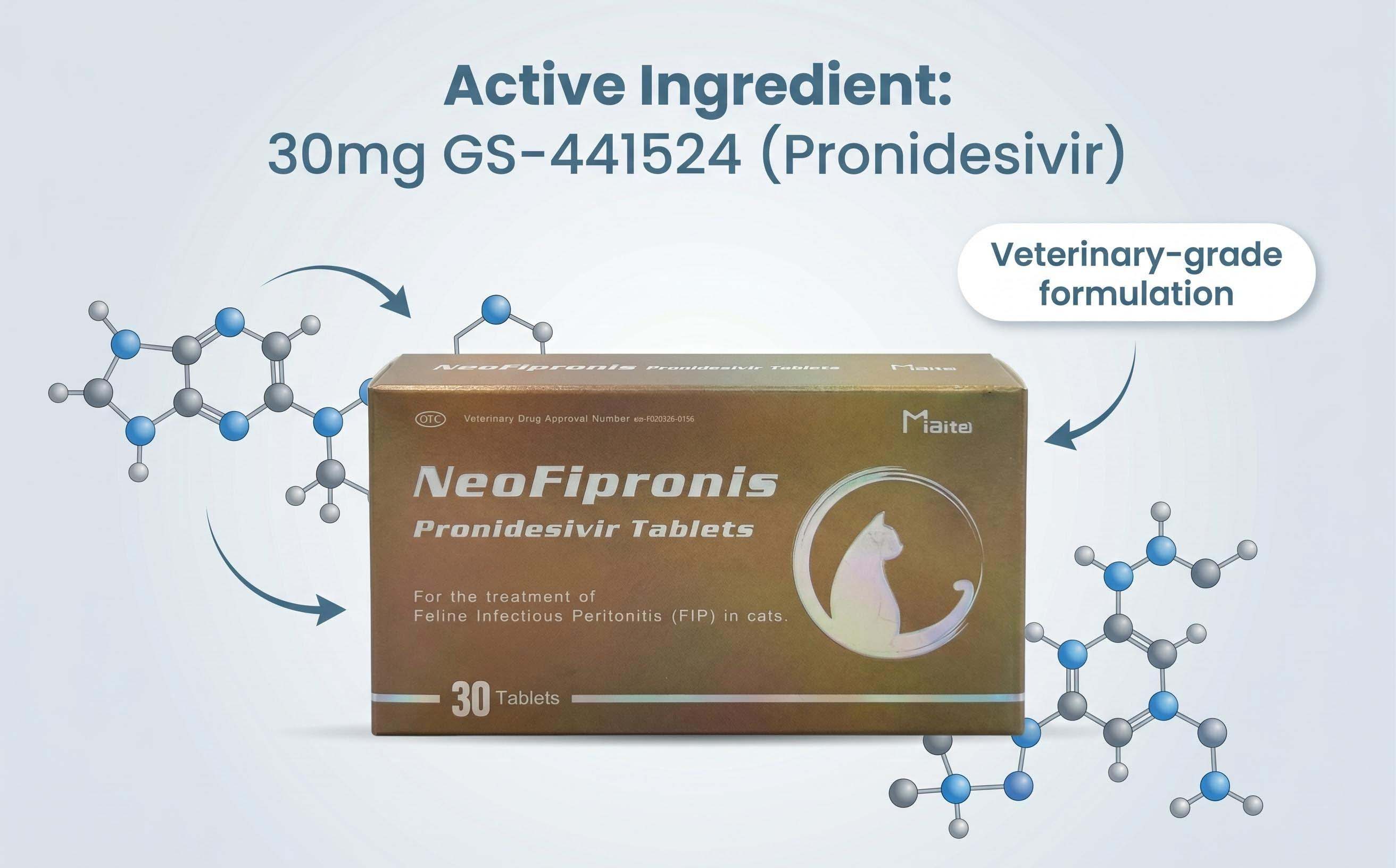
Feline Infectious Peritonitis (FIP) is a devastating viral disease caused by a mutated feline coronavirus, often leading to severe symptoms such as loss of appetite, lethargy, fever, ascites, pleural effusion, lymphadenopathy, granulomatous inflammation, neurological damage, and uveitis. Traditionally, FIP has been considered almost universally fatal, but recent advances in antiviral therapy have transformed the prognosis for affected cats. GS-441524, the active ingredient in NeoFipronis (Pronidesivir), has emerged as a highly effective oral treatment option for FIP, bringing new hope for pet owners and veterinarians.
NeoFipronis (Pronidesivir) was officially approved in Laos by the Ministry of Agriculture and Forestry (MAF) in March 2026, becoming the world's first registered oral antiviral medication specifically recognized for FIP treatment. With a registered drug number, it offers a safe, non-invasive, and rapid solution for combating the virus. The medication's core compound, GS-441524, has been extensively studied and validated through laboratory research and clinical trials, demonstrating outstanding antiviral activity against feline coronavirus strains responsible for FIP.
The pharmacological profile of NeoFipronis ensures quick absorption and a favorable safety profile. It is well tolerated with minimal side effects, making it suitable for long-term treatment protocols. The treatment regimen involves administering the medication based on the cat’s weight, with a standard dose of 15 mg per kilogram of body weight, equivalent to half a tablet. For cats exhibiting neurological or ocular symptoms associated with FIP, veterinarians may increase the dosage to 30 mg/kg as per medical advice. The medication is administered once daily, ideally on an empty stomach—either one hour before feeding or two hours after feeding—to maximize absorption.
Consistent administration over a minimum of 12 weeks is crucial for successful outcomes, with no missed doses. During treatment, veterinarians recommend close monitoring of clinical signs, including appetite, body temperature, behavior, and overall health. Regular blood tests assessing liver and kidney functions are essential to detect any potential adverse effects early. While NeoFipronis (Pronidesivir) is classified as an over-the-counter medication, veterinary supervision is strongly recommended to ensure optimal results and safety.
NeoFipronis provides a targeted approach to combat the underlying viral replication responsible for FIP. Its ability to swiftly reduce viral loads translates into significant improvements in symptoms such as fever reduction, resolution of effusions, and stabilization of neurological or ocular complications. Many cats respond positively within days of beginning therapy, displaying increased activity, improved appetite, and reduced inflammation. The treatment’s ease of oral administration and high efficacy have made it a preferred option among feline practitioners.
It is important to purchase NeoFipronis (Pronidesivir) exclusively through the official NeoFipronis website or authorized distributors to guarantee product authenticity and quality. The medication is strictly for feline use and should never be administered to humans. Users must consult with a veterinarian before starting treatment, especially in cases involving neurological or ocular FIP forms where dosage adjustments may be necessary.
In summary, NeoFipronis (Pronidesivir), containing GS-441524, stands out as a groundbreaking antiviral therapy for FIP, with proven clinical effectiveness, excellent safety profile, and ease of use. Its approval marks a significant milestone in feline medicine, offering new hope for cats suffering from this once deemed incurable disease. Continued research and clinical application confirm that GS-441524-based treatments like NeoFipronis are transforming FIP management worldwide, improving survival rates and quality of life for affected cats.