FIP Treatment for Severe Cases
Severe feline infectious peritonitis, or FIP, remains one of the most serious viral diseases in cats because it can progress quickly and affect multiple organs at the same time. In advanced cases, the illness may involve the abdomen, chest, eyes, nervous system, lymph nodes, and internal tissues, making treatment more urgent and more complex. For cat owners and veterinarians searching for the most effective FIP treatment for severe cases, the priority is to recognize the disease early, stabilize the cat, and begin antiviral therapy with close monitoring. When severe FIP is treated quickly and consistently, many cats can improve dramatically, even when the initial symptoms appear life-threatening.
How Severe FIP Appears in Cats
Severe FIP often develops after a cat has already shown vague signs such as fever, poor appetite, and tiredness, but the disease becomes more obvious as fluid buildup, neurological signs, or eye inflammation appear. The wet or effusive form may cause ascites, pleural effusion, or breathing difficulty, while the dry or non-effusive form may present with inflammatory granulomas, enlarged lymph nodes, and organ lesions. In neurological FIP, cats may show weakness, ataxia, tremors, seizures, or changes in behavior. Ocular FIP may cause uveitis, vision loss, or abnormal pupil responses.
These severe manifestations are not only distressing for the cat but also difficult for owners to manage at home. A cat that stops eating, becomes very lethargic, or struggles to breathe should be evaluated immediately. In severe FIP, the overall condition often worsens because inflammation spreads through the body, disrupts normal organ function, and reduces the cat’s ability to maintain hydration and nutrition. This is why advanced cases usually require both antiviral treatment and supportive care.
Diagnosis and Clinical Assessment Before Treatment
A practical FIP treatment plan starts with a solid diagnosis. No single test confirms every case, so veterinarians usually combine the cat’s history, physical examination, bloodwork, imaging, and fluid or tissue analysis. Common findings include high globulins, altered albumin-to-globulin ratio, inflammatory changes in the blood, effusions rich in protein, and signs of organ involvement on ultrasound or radiographs. In severe cases, examination of abdominal or thoracic fluid can be especially helpful.
Neurological and ocular involvement may require additional evaluation because these forms of FIP often need more intensive management and longer observation. A careful clinical assessment also helps distinguish FIP from other diseases such as lymphoma, bacterial infection, or immune-mediated conditions. Since severe FIP can deteriorate rapidly, treatment is often started when suspicion is high and the clinical picture strongly supports the diagnosis.
Antiviral Therapy for Severe FIP
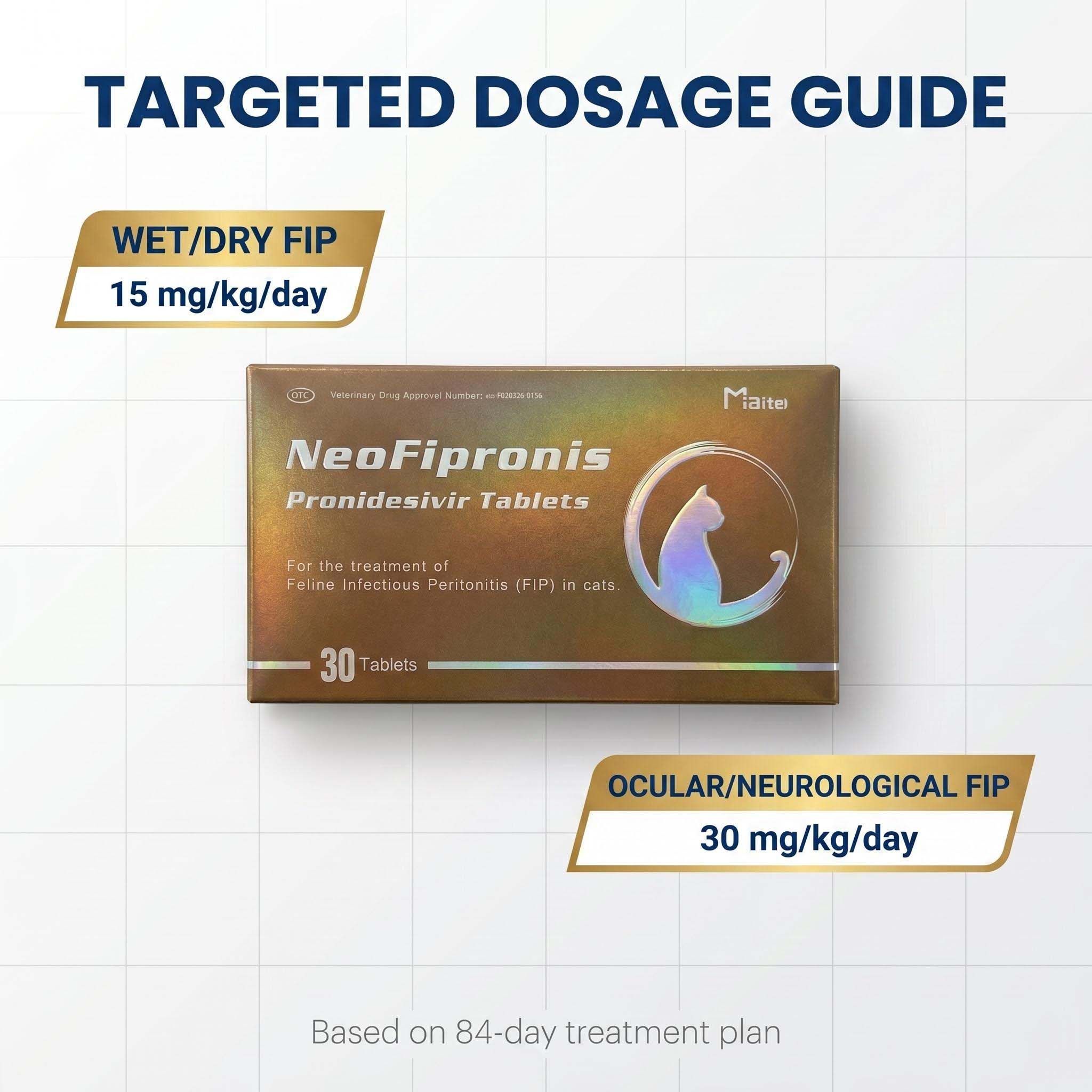
Antiviral therapy has changed the outlook for cats with FIP, especially in severe cases that were once considered almost universally fatal. GS-441524 is widely recognized as a key antiviral option because it targets viral replication and can reduce disease activity when given consistently at the proper dose. In many cats, improvement in appetite, energy, fever, fluid accumulation, and inflammatory markers can be seen after treatment begins. Severe cases may need higher doses, longer treatment, or adjustments based on whether the disease is effusive, ocular, or neurological.
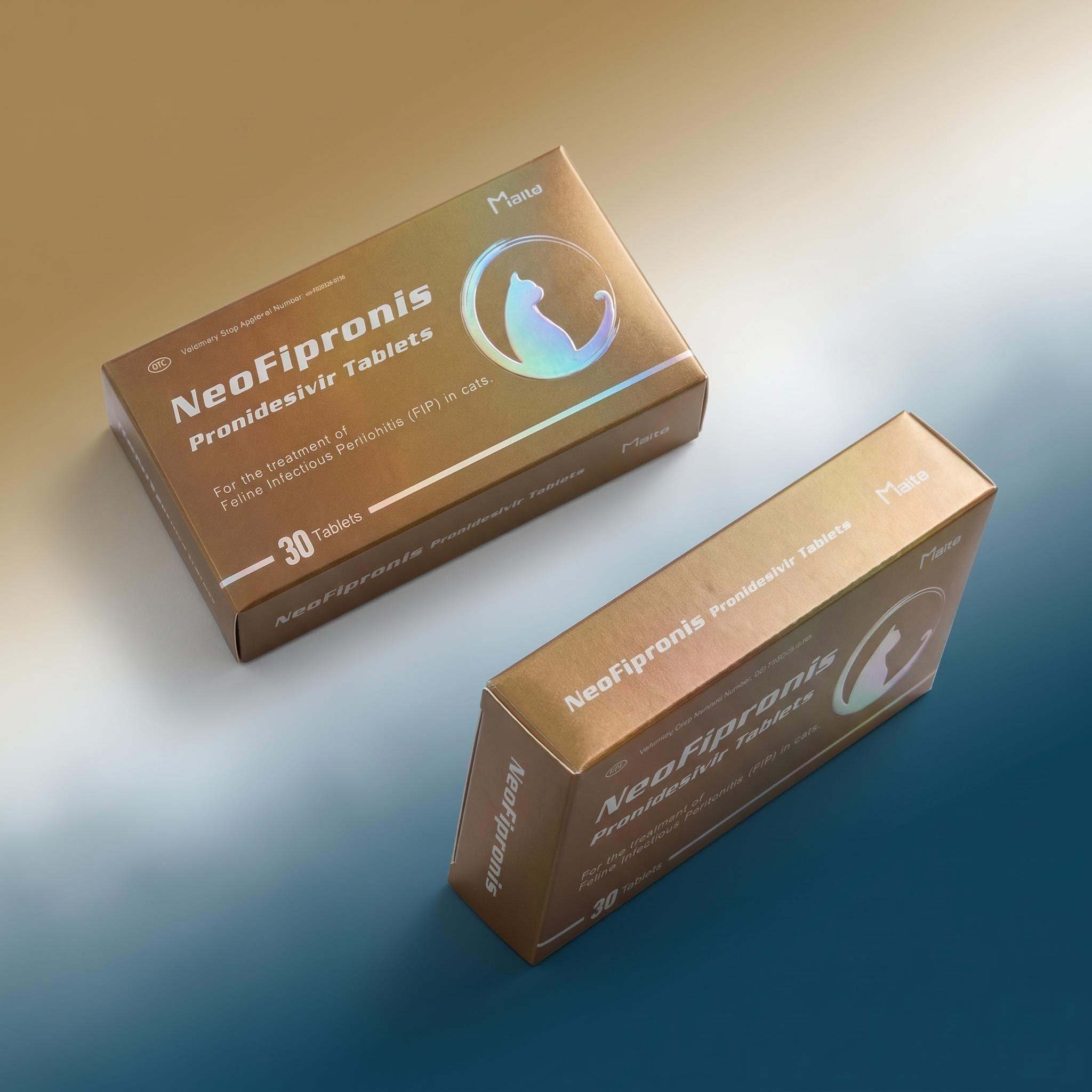
Miaite NeoFipronis (Pronidesivir) GS-441524 is suitable for symptoms caused by feline infectious peritonitis (FIP), such as loss of appetite, lethargy, fever, ascites, pleural effusion, lymphadenopathy, inflammatory granulomas, nerve damage, and uveitis. It has excellent therapeutic effects on FIP. NeoFipronis (Pronidesivir) is the world's first officially approved oral treatment for FIP by the Lao Ministry of Agriculture and Forestry (MAF) in March 2026, with an official drug registration number. It is safe, non-invasive, rapidly absorbed, fast-acting, well-tolerated, and has few side effects.2.
For cats with severe FIP, treatment success depends not only on the antiviral itself but also on consistent dosing, daily administration, and follow-up testing. Missing doses can slow recovery and may increase the risk of relapse. Veterinarians often tailor treatment based on disease severity, body weight, and the location of infection, especially when the nervous system or eyes are involved.
Supportive Care in Advanced Disease
Supportive care is essential in severe FIP because many cats are too weak to recover on antiviral therapy alone. Cats with dehydration, poor appetite, or difficulty breathing may need hospitalization, oxygen support, fluid management, and nutritional assistance. If a cat cannot eat enough, appetite stimulants or assisted feeding may be required to maintain strength during the early phase of treatment. In cases with large amounts of abdominal or chest fluid, drainage procedures may improve comfort and breathing while the antiviral begins to work.
Pain management, anti-nausea medication, and liver or intestinal support may also be helpful depending on the cat’s condition. For neurological FIP, supportive care may include protection from injury, mobility assistance, and frequent reassessment of neurological signs. For ocular FIP, eye examinations and targeted management are important because vision can be affected even when the cat seems otherwise stable. The most effective outcomes usually come from a combined approach: antiviral therapy, supportive care, and regular veterinary monitoring.
Monitoring Recovery and Preventing Relapse
Cats with severe FIP should be monitored closely throughout treatment and after clinical improvement. Veterinarians commonly recheck weight, appetite, body temperature, blood counts, liver values, globulin levels, and imaging findings when needed. A declining fever, better appetite, reduced effusion, improved activity, and normalized laboratory values are encouraging signs. However, recovery is not always linear, and some cats improve slowly over several weeks before showing strong, stable progress.
Relapse prevention is a major goal in FIP treatment for severe cases. The most important factors are full adherence to the prescribed course, proper dose selection, and monitoring for persistent inflammatory signs. Cats with neurological or ocular disease may need longer treatment and more careful follow-up because these forms can be harder to clear completely. After treatment ends, continued observation helps detect any return of fever, lethargy, fluid accumulation, or eye and nerve changes early enough for prompt intervention.
Outlook for Cats with Severe FIP
The prognosis for severe FIP has improved considerably in the antiviral era. While the disease remains serious and potentially fatal, many cats now survive and return to a normal or near-normal quality of life when treated appropriately. The most favorable outcomes are usually seen in cats that receive timely diagnosis, start antiviral therapy without delay, and receive strong supportive care throughout treatment. Even in advanced cases with effusion, neurological symptoms, or ocular disease, meaningful recovery is possible.
For cat owners searching for FIP treatment for severe cases, the key message is that early action matters. Severe FIP is no longer a diagnosis that automatically means no hope. With modern antiviral options, veterinary oversight, and careful home monitoring, many cats can recover from symptoms that once seemed overwhelming. The most important step is to work with a veterinarian who understands FIP and can guide treatment based on the cat’s specific form of disease.
References
Pedersen NC. An Update on Feline Infectious Peritonitis: Diagnostics and Therapeutics
Pedersen NC. GS-441524 Treatment of Cats with Feline Infectious Peritonitis
Addie DD, et al. Feline Infectious Peritonitis
Barker EN, et al. Use of GS-441524 and Related Antivirals in Feline Infectious Peritonitis
Kipar A, Meli ML. Feline Infectious Peritonitis: Still an Enigmatic Disease
American Association of Feline Practitioners. Feline Infectious Peritonitis: Clinical Guidance and Supportive Care