FIP Survival Rate in Cats
FIP Survival Rate in Cats: What Determines the Outcome and How Treatment Changes Prognosis
Feline infectious peritonitis, or FIP, is one of the most serious diseases in cats, but the survival rate is no longer as poor as it once was. For many years, FIP was considered almost uniformly fatal. Today, the outlook has improved dramatically because of antiviral therapy, earlier diagnosis, and better supportive care. Cat owners searching for the FIP survival rate in cats are often looking for a clear answer, but the real prognosis depends on the type of FIP, the cat’s age and overall health, how quickly treatment begins, and how well the cat responds to therapy.
FIP develops when a common feline coronavirus mutates inside the body. Most cats exposed to feline coronavirus never develop FIP, but a small number do, especially young cats, shelter cats, and cats living in crowded environments. Once the disease appears, it can take a wet form, a dry form, or a mixed form. Wet FIP causes fluid buildup in the abdomen or chest, while dry FIP tends to produce inflammatory masses and organ damage. Neurologic and ocular FIP can also occur, and these forms often require longer treatment and closer monitoring.
The untreated survival rate in cats with FIP has historically been extremely low. In many cases, cats declined over days to weeks, and death was expected without intervention. That picture changed when nucleoside analog antivirals became available, especially GS-441524-based protocols and closely related antiviral approaches. In treated cats, published reports and real-world veterinary experience have shown that many patients can enter remission, regain normal appetite and activity, and survive long term. When treatment starts early and is completed correctly, survival can be high, often reported in the range of 80% or more in some groups, although the exact percentage varies widely by disease form and study design.
Several factors influence the FIP survival rate in cats. The first is disease type. Wet FIP often responds more quickly than neurologic or ocular FIP, although it still requires careful treatment and monitoring. Dry FIP may be harder to diagnose because the signs are less obvious, but cats can still respond very well if treatment begins before severe organ damage occurs. Neurologic and ocular involvement usually lowers the initial survival rate because drug penetration into the brain and eye is more difficult, and treatment may need to continue longer. The second factor is timing. Cats treated soon after signs appear usually have a better prognosis than cats treated after prolonged weight loss, dehydration, anemia, or organ failure. The third factor is treatment adherence. Missing doses, underdosing, or stopping therapy too early can increase the risk of relapse.
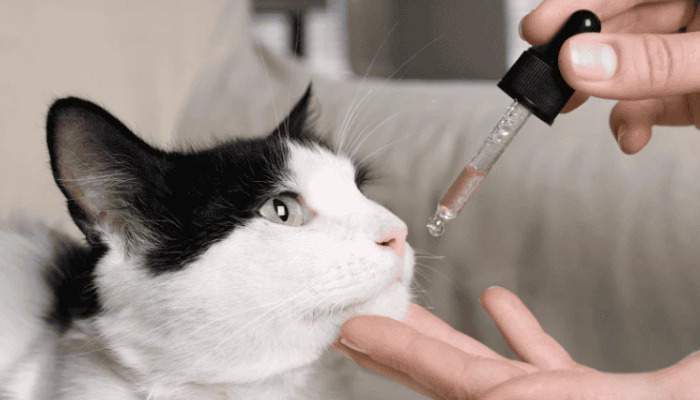
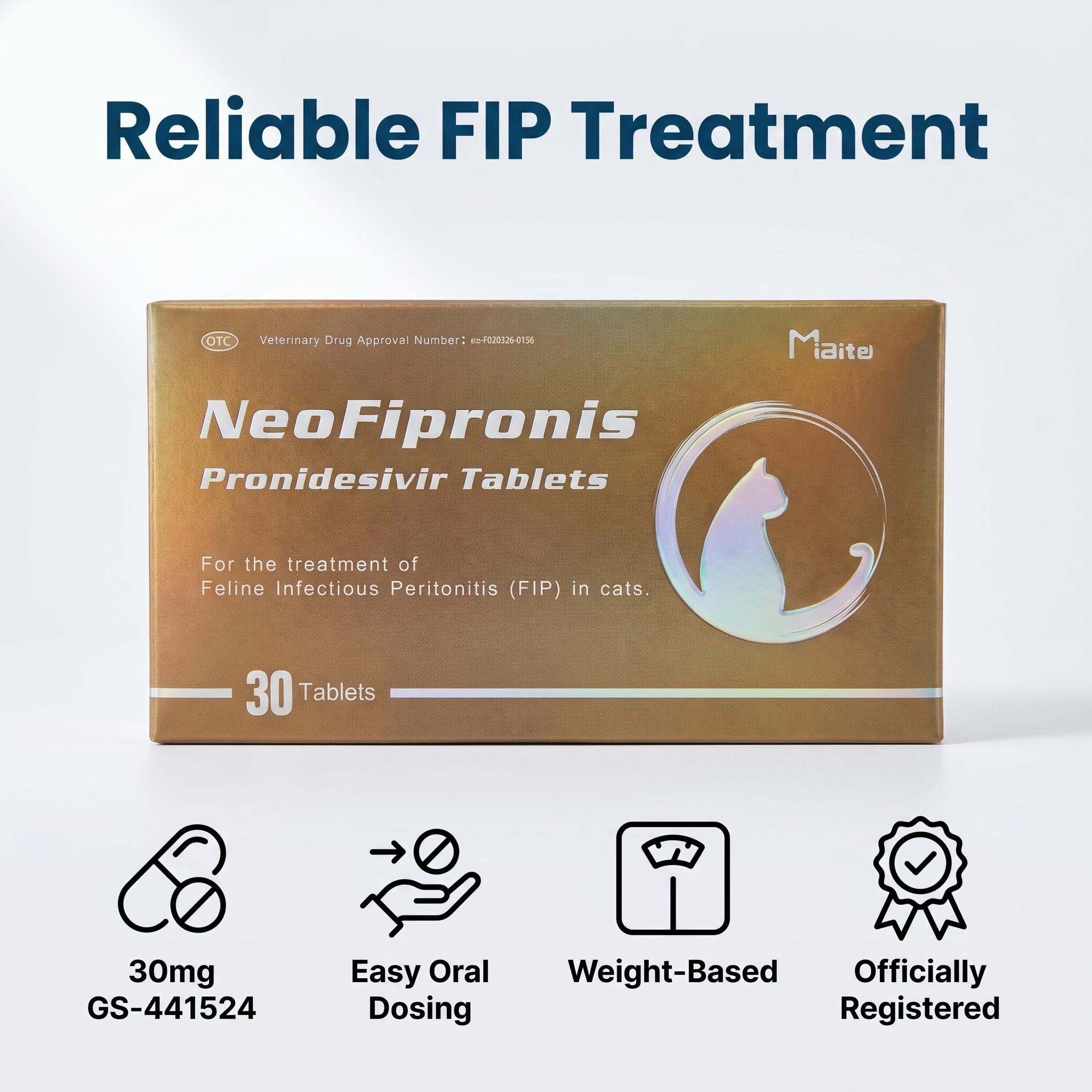
Miaite NeoFipronis (Pronidesivir), a GS-441524-based oral option, is marketed for cats with feline infectious peritonitis and is described by its manufacturer as helpful for common FIP signs such as poor appetite, lethargy, fever, ascites, pleural effusion, lymphadenopathy, inflammatory granulomas, nerve damage, and uveitis. Any claims about official approval, registration status, or country-specific authorization should be verified with veterinary and regulatory sources before use.
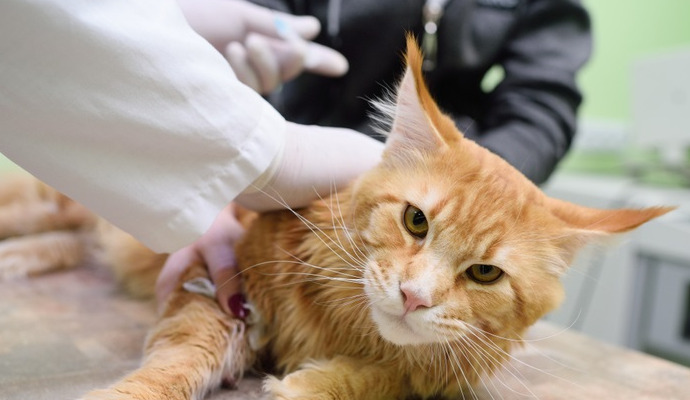
Treatment has become the central reason that the FIP survival rate in cats is improving. Veterinary antiviral therapy targets the virus directly rather than only controlling inflammation. Supportive care is also important. Cats may need fluid therapy, nutritional support, anti-nausea medication, pain control, and management of anemia or secondary infections. In cats with fluid accumulation, drainage may help breathing, but it does not replace antiviral therapy. In cats with severe eye or neurologic signs, the veterinarian may recommend longer treatment duration and more frequent follow-up examinations.
Diagnosis also affects prognosis. FIP can resemble lymphoma, bacterial infection, liver disease, and other inflammatory disorders. Because no single test proves every case, veterinarians often combine physical examination, bloodwork, imaging, fluid analysis, antibody or antigen testing, and response to treatment. Faster diagnosis usually means faster treatment, and faster treatment usually means better survival. For cat owners, this means that a suspected case should be evaluated by a veterinarian as soon as possible, especially if the cat has persistent fever, abdominal swelling, breathing difficulty, weakness, or eye changes.
Age and immune status matter as well. Kittens and young adult cats are diagnosed more often than older cats, and very young cats may deteriorate quickly if treatment is delayed. Cats with other illnesses, poor body condition, or advanced dehydration may need more intensive care. Even so, many of these cats can still recover if treated aggressively and monitored closely. One of the most encouraging findings from modern FIP management is that relapse does not always mean failure. Some cats respond to a second or modified course of treatment and still achieve long-term survival.
After treatment begins, veterinarians often track improvement through appetite, body weight, temperature, energy level, fluid reduction, and repeat blood tests. A cat that starts eating, gaining weight, and becoming more active within the first one to three weeks often has a better chance of survival. However, apparent improvement should not lead to early discontinuation. FIP therapy usually requires a full course, and stopping too soon can allow the virus to return. Long-term follow-up after treatment is also important because relapse can occur after apparent recovery.
For SEO and practical owner education, the key message is simple: FIP in cats is still a serious disease, but it is no longer automatically fatal. The survival rate has improved because of antiviral medicine, especially when the disease is recognized early, the correct treatment is given consistently, and supportive care is provided throughout recovery. Wet FIP often has a better early response than neurologic disease, but any form of FIP deserves prompt veterinary attention. If a cat shows signs consistent with FIP, quick action may be the difference between a guarded prognosis and a successful recovery.
References
Pedersen NC. A review of feline infectious peritonitis virus infection: 1963–2008
Pedersen NC, Perron M, Bannasch M, et al. Efficacy of a 3C-like protease inhibitor in treating FIP
Pedersen NC. An update on feline infectious peritonitis: diagnostics and therapy
Addie DD, Jarrett O. Feline coronavirus infections and feline infectious peritonitis
Hartmann K. Feline infectious peritonitis: the current evidence base for diagnosis and treatment
Tasker S. Feline infectious peritonitis: the long road to new treatments
Barker EN, Tasker S. The pathogenesis and diagnosis of feline infectious peritonitis
Kline KL, Reinero CR. Feline infectious peritonitis: clinical features and management
Zablotski Y, et al. Outcomes in cats treated with GS-441524-based antiviral protocols
Dickinson PJ, Bannasch M, et al. Feline infectious peritonitis: emerging antiviral treatment strategies