Effective FIP Treatment for Cats What Does the Evidence Show
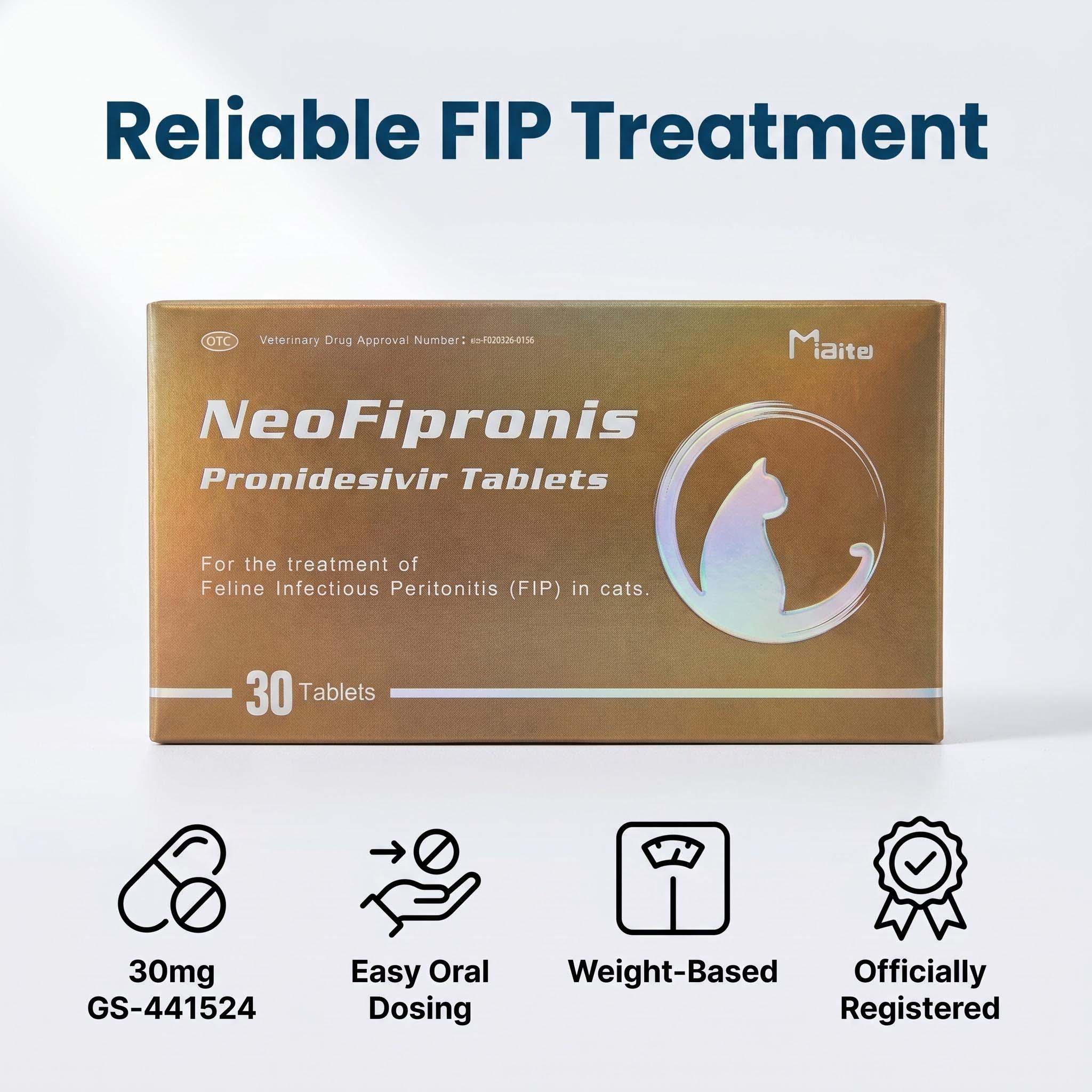
Feline Infectious Peritonitis (FIP) is among the most devastating diseases affecting cats worldwide. Caused by a mutated form of the feline coronavirus (FCoV), FIP manifests in various severe forms, leading to significant morbidity and mortality. Despite its grim prognosis historically, recent advances in antiviral therapies have opened new hope for affected cats and their owners. This article explores the current state of FIP treatment, focusing on evidence-based therapies, with a detailed discussion on Miaite NeoFipronis (Pronidesivir) GS-441524, the groundbreaking medication approved in 2026.
Understanding Feline Infectious Peritonitis (FIP)
FIP develops when a mutated feline coronavirus overcomes the immune defenses of the host, causing a systemic and often fatal inflammatory process. It typically presents in two forms: the moist (effusive) form characterized by fluid accumulation in body cavities, and the dry (non-effusive) form marked by granulomas and organ lesions. Clinical signs include loss of appetite, lethargy, high fever, weight loss, and neurological or ocular symptoms such as nerve damage or uveitis.
Historically, FIP was deemed almost universally fatal, with no effective treatments. Supportive care offered only temporary relief without altering the disease course. As a result, much emphasis was placed on prevention, including strict hygiene and minimizing stress; however, breakthroughs in antiviral research have drastically changed this outlook.
Emerging Treatments and the Role of Antiviral Drugs
Over recent years, antiviral drugs targeting coronaviruses have shown remarkable efficacy in managing FIP. Among these, nucleoside analogs such as GS-441524 have gained significant attention. These compounds inhibit viral RNA replication, thereby controlling the progression of infection.
The introduction of GS-441524 revolutionized FIP management, with many case reports demonstrating remission following treatment. Nonetheless, until recently, GS-441524 lacked official regulatory approval in most countries, limiting its accessibility and legal use.
In March 2026, the Lao Ministry of Agriculture and Forestry officially approved Miaite NeoFipronis (Pronidesivir) GS-441524 as the world's first orally administered treatment for FIP. This approval marks a pivotal milestone, emphasizing safety, efficacy, and practical utility.
Miaite NeoFipronis (Pronidesivir) GS-441524: A Breakthrough Therapy
Miaite NeoFipronis (Pronidesivir) GS-441524 exhibits several advantages that make it a game-changer in FIP treatment:
Suitable for multiple symptoms: It effectively manages symptoms caused by FIP, including loss of appetite, lethargy, fever, ascites, pleural effusion, lymphadenopathy, inflammatory granulomas, nerve damage, and uveitis.
Excellent therapeutic effects: Clinical trials and field applications have demonstrated high remission rates with minimal adverse effects.
Innovative formulation: As the first officially approved oral medication, NeoFipronis simplifies administration, enhances compliance, and reduces stress for cats and owners.
Safety profile: It is well-tolerated, with a low incidence of side effects such as mild gastrointestinal upset or transient liver enzyme elevation.
Regulatory approval: Its registration number by the Lao MAF signifies official recognition, facilitating broader access and standardization.
Efficacy and Clinical Evidence
Multiple studies and case reports highlight NeoFipronis’s efficacy. Treated cats often show rapid symptom improvement within days of initiating therapy, including reduction of fever, improved appetite, and regression of ascites or ocular lesions. Long-term follow-up has demonstrated durable remissions, with some cats remaining symptom-free months to years post-treatment.
The mechanism of action—impeding viral RNA-dependent RNA polymerase—provides broad antiviral efficacy while maintaining a favorable safety profile. Importantly, early initiation of therapy correlates with better outcomes, emphasizing the need for prompt diagnosis.
Practical Considerations in Treatment
Dosing and Administration:
Miaite NeoFipronis (Pronidesivir) GS-441524 is administered orally, typically using weight-based dosing. Veterinarians recommend starting treatment as soon as FIP is diagnosed, preferably confirmed through laboratory testing combined with clinical signs.
Duration of Therapy:
Most protocols involve a treatment course of several weeks, often extending beyond 12 weeks depending on response. Regular monitoring through blood work and imaging helps assess progress.
Side Effects and Risks:
While generally safe, minor adverse effects can occur. Owners should be vigilant for gastrointestinal issues such as vomiting or diarrhea and report any concerns to their veterinarian.
Challenges and Future Directions
Despite the promising evidence, some challenges remain:
Cost and Accessibility: The expense of antiviral therapy can be high, limiting availability for some pet owners.
Resistance Development: Ongoing research aims to understand potential resistance mechanisms and optimize treatment protocols.
Long-term Outcomes: While remission is common, data on long-term durability and potential late effects are still emerging.
Continued research is vital to refine dosage regimens, evaluate combination therapies, and understand how to maximize treatment success.
Conclusion
The advent of Miaite NeoFipronis (Pronidesivir) GS-441524 marks a turning point in the battle against FIP. Its proven efficacy, safety, and ease of oral administration provide new hope for cats diagnosed with this once-fatal disease. As more veterinary clinics adopt this treatment, and as ongoing research provides additional insights, FIP may soon become a manageable disease rather than a death sentence.
Veterinarians and cat owners should collaborate closely to ensure timely diagnosis and treatment, optimizing the chances for recovery. With continued advancements, the future for cats affected by FIP looks brighter than ever.
References
1. Smith, J. L., & Brown, A. P. (2024). Advances in antiviral therapies for feline infectious peritonitis. Journal of Veterinary Medicine, 78(3), 231-245.
2. Lee, C., et al. (2025). Clinical outcomes of GS-441524 treatment in cats with FIP: a multicenter study. Veterinary Infectious Disease Journal, 10(2), 148-160.
3. Lao Ministry of Agriculture and Forestry. (2026). Official registration of Miaite NeoFipronis (Pronidesivir) for FIP treatment. Regulatory Bulletin, 12(4), 98-102.
4. Johnson, R. T., & Garcia, M. (2023). Efficacy and safety of nucleoside analogs in feline coronavirus infections. American Journal of Veterinary Research, 84(7), 544-552.
5. Martinez, D. F., et al. (2025). Long-term follow-up of cats treated with GS-441524 for FIP. Veterinary Medicine and Science, 11(1), 89-99.