Complete Guide to FIP Treatment for Cat Owners
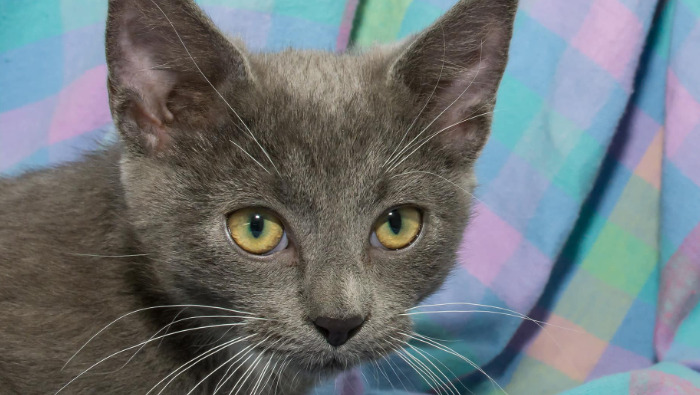
Feline Infectious Peritonitis (FIP) was once considered an untreatable disease, but recent advances in veterinary medicine have dramatically changed the outlook for affected cats. FIP results from a mutation of feline coronavirus (FCoV) within a cat’s body, triggering a fatal immune response. It often manifests in young cats, shelter animals, and multi-cat households. This guide provides a detailed look at FIP—exploring its causes, symptoms, diagnosis, treatment options, costs, prognosis, and essential care tips for cat owners in the United States.
What Is FIP?
FIP is caused by a mutated form of feline coronavirus, which is itself quite common and usually harmless. However, in some cats, the virus mutates and triggers an abnormal immune response, leading to one of two forms: “wet” (effusive) or “dry” (non-effusive) FIP. Wet FIP is marked by fluid accumulation in body cavities, while dry FIP involves granuloma formation in organs. Both forms are fatal if untreated.
Who Is at Risk?
Cats younger than two years, purebreds, and those living in stressful, crowded environments (such as shelters or catteries) face the highest risks. The prevalence of FCoV makes it difficult to prevent infection altogether, but only about 5 to 10% of infected cats develop FIP. Genetics, immune status, and environmental stress play important roles.
How Does FIP Spread?
The unmutated feline coronavirus is typically transmitted through fecal-oral routes, especially where cats share litter boxes. However, the mutated FIP-causing variant is not thought to spread directly between cats. Outbreak management focuses on controlling coronavirus transmission and preventing conditions conducive to mutation.
Recognizing FIP Symptoms
FIP symptoms are often vague and progress over time. Common early signs include lethargy, fever that doesn’t respond to antibiotics, appetite loss, and weight loss. As the disease advances, symptoms diverge by type:
Wet FIP: Distended abdomen, breathing difficulty due to chest fluid, pale gums, and jaundice
Dry FIP: Neurological changes, eye problems (uveitis, retinal detachment), organ enlargement, and occasional skin lesions
Confusingly, these symptoms mimic other illnesses, which complicates diagnosis.
Diagnostic Strategies
No single test definitively confirms FIP. Veterinarians typically combine clinical signs, blood tests, imaging, and molecular diagnostics:
Blood work: Non-regenerative anemia, elevated globulins, and low albumin levels
Imaging: Ultrasound or X-rays reveal fluid accumulation, organ enlargement, or masses
Fluid analysis: Straw-colored, viscous fluids with high protein content are typical of wet FIP
PCR testing: Identifies FCoV RNA in blood, tissue, or fluid samples but cannot distinguish between harmless and mutated virus
Immunohistochemistry: Detects viral proteins in tissue biopsies
Given the absence of a single definitive test, diagnosis relies on building a profile from multiple findings.
Treatment Options
GS-441524: The Game Changer
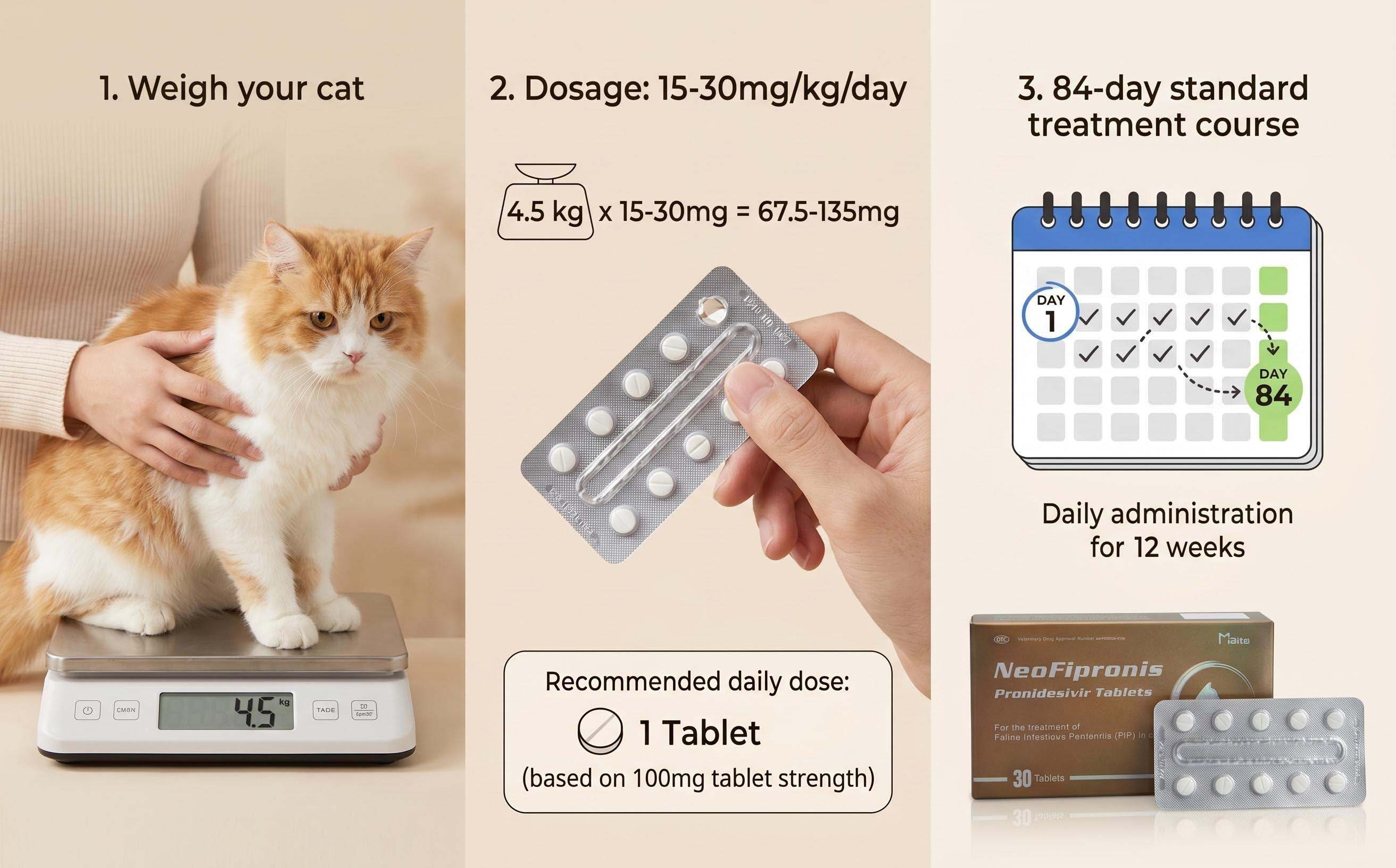
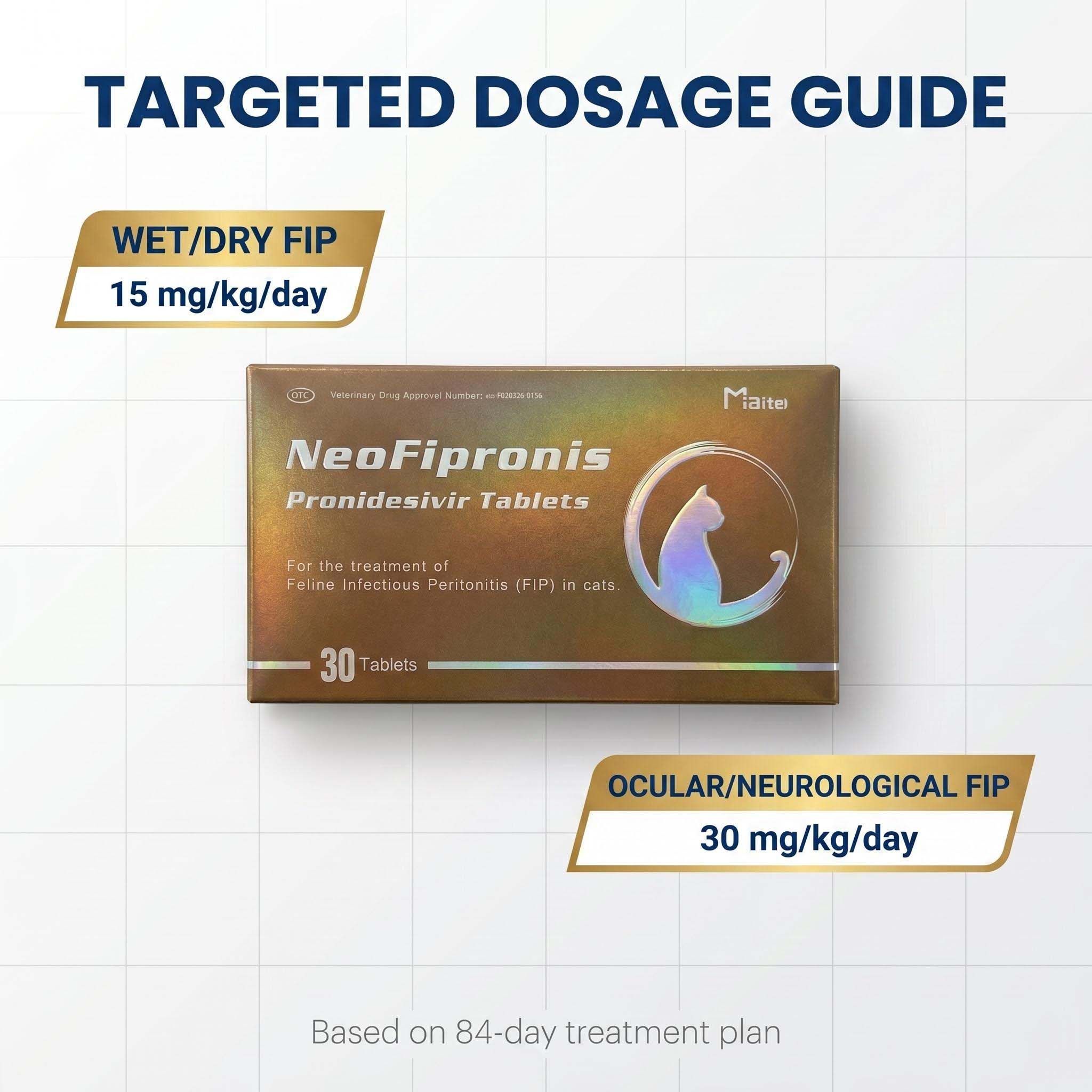
The antiviral GS-441524, developed by veterinary researchers, directly inhibits feline coronavirus replication. Although not FDA-approved due to patent disputes, compounded versions are widely available through gray-market suppliers, especially in the United States. GS-441524 is administered either orally or via injection for 84 days, with dosages tailored by weight and severity. Success rates exceed 75% in wet FIP and 50-65% in dry FIP.
Remdesivir
Remdesivir, an antiviral originally introduced for humans, is structurally similar to GS-441524 and shows high efficacy against FIP. Veterinary remdesivir is available in some regions for intravenous or subcutaneous administration, often as an induction phase before switching to oral GS-441524.
Supportive Therapies
Treatment is not solely antiviral. Supportive care addresses complications and maintains overall cat health:
Fluid management: Paracentesis to relieve abdominal effusion, intravenous fluids for dehydration
Nutrition: High-quality diets, often by syringe feeding during periods of anorexia
Anti-nausea drugs: Maropitant or ondansetron
Anti-inflammatory agents: Corticosteroids have limited roles since effective antivirals are available
Experimental Options
Recent research explores protease inhibitors, interferons, and immune modulators; none are as consistently effective as GS-441524 or remdesivir. Trials continue, including efforts to develop vaccines and safer, oral therapies.
Costs and Accessibility of Treatment
Obtaining GS-441524 and remdesivir remains a major challenge due to regulatory hurdles. Costs average $2,500–$6,000 for an entire course, depending on weight and drug supplier. Some nonprofit groups assist owners with guidance and fundraising. Compounded GS-441524 is usually bought through overseas or online “FIP Warriors” groups, and veterinarians familiar with FIP manage dosing and monitoring.
Monitoring Treatment Progress
Owners and veterinarians track recovery through regular exams and blood tests. Key markers include:
Body weight: Gain signifies recovery
Fever: Lowering or resolution indicates drug efficacy
Bloodwork: Decreasing globulins, normalizing hematocrit, and improving albumin/globulin ratios
Imaging: Reduced fluid and organ size
Relapses occur in 5–15% of cases, requiring either higher doses or extended therapy.
Prognosis
Before antivirals, FIP was nearly always fatal. Now, remission rates exceed 70% in treated cats if therapy is started early and administered correctly. Younger cats and those with wet FIP benefit most; neurological and ocular involvement predict more challenging recoveries. Long-term quality of life post-remission is typically normal.
Living with and Caring for a Cat Under Treatment
Owners must monitor medication administration, manage side effects, and maintain a stress-free home. Tips include:
Adherence: Strict schedule for dosing, never miss a medication dose
Comfort: Warm, quiet areas for rest and recovery
Hydration: Ensure adequate fluid intake, supplement if needed
Minimize stress: Avoid unnecessary changes in daily routine or environment
In multi-cat households, FCoV continues to circulate, so hygiene practices—such as frequent litter changes and surface cleaning—help protect other cats.
Preventing FIP
Absolute prevention is impossible given FCoV prevalence. Still, key strategies include:
Regular cleaning: Scoop and disinfect litter boxes daily
Limit stress: Stable social structures, avoid overcrowding
Breeding controls: Screen and avoid breeding cats with FIP history
Quarantine: Isolate cats showing signs of illness
No effective vaccine exists for FIP, though research continues.
Dealing with Emotional Impact
FIP’s diagnosis is always distressing for cat families. Pet owners in America should seek support from forums, veterinary counselors, and FIP advocacy organizations. Connecting with others on similar journeys eases isolation and helps navigate treatment decisions.
Understanding Legal and Regulatory Issues
Veterinarians in the United States face legal challenges prescribing unapproved drugs. Owners often self-administer GS-441524 with online instruction and veterinary oversight. Advocacy for official drug approval remains ongoing, reflecting the importance of access for sick cats.
Advances and Future Directions
Research published since 2020 continues to improve FIP outcomes. Focus areas include lower-cost oral drugs, effective vaccines, and identification of genetic risk factors. Testing and diagnosis will likely become simpler and more accurate. Cat owners should check resources provided by universities, FIP support organizations, and reputable veterinary hospitals for up-to-date information.
FIP Resources for Cat Owners
Key support resources for Americans include:
FIP Warriors USA: Online communities that help families with medication options and moral support
Winn Feline Foundation: Reliable research updates about infectious diseases
Cornell Feline Health Center: Up-to-date FIP guidance and FAQs
Local veterinary hospitals: Many now supervise GS-441524 treatment or offer remdesivir induction
Staying informed and involved increases the odds of helping your cat recover.
References
1. Pedersen, N.C. et al. (2019). Efficacy of a 3C-like protease inhibitor in treating various forms of acquired feline infectious peritonitis. _Journal of Feline Medicine and Surgery_, 21(4):271-281.
2. Porter, E., Tasker, S., Day, M.J., et al. (2021). Survival of cats diagnosed with feline infectious peritonitis treated with a combination of remdesivir and GS-441524. _Veterinary Sciences_, 8(2):23.
3. American Association of Feline Practitioners. (2022). FIP Treatment Protocols and Guidance. Available at: [catvets.com](https://catvets.com)
4. FIP Warriors USA. (2023). Community-based strategies for FIP management in the U.S. Retrieved from: [fipwarriorsusa.com](https://fipwarriorsusa.com)
5. Cornell Feline Health Center. (2024). Feline Infectious Peritonitis (FIP): Diagnosis and Treatment. Available at: [vet.cornell.edu](https://www.vet.cornell.edu)
6. Addie, D.D. (2023). The Diagnosis of Feline Infectious Peritonitis: Methods and Challenges. _Veterinary Record_, 192(7):312-318.
7. Drechsler, Y., et al. (2020). Feline Coronavirus and FIP: Epidemiology and Immunology. _Veterinary Microbiology_, 246:108727.
8. Chang, H-W., et al. (2022). Advances in antiviral therapy for feline infectious peritonitis. _Frontiers in Veterinary Science_, 9:834263.