Pronidesivir Recovery Timeline for Cats

Feline Infectious Peritonitis (FIP) is one of the most challenging and devastating diseases affecting cats worldwide. Historically, FIP has been almost uniformly fatal, leading veterinary medicine to seek effective treatments. Recently, advances in antiviral drugs like Pronidesivir have shown promising results, offering hope for affected cats and their owners. This article explores the recovery timeline associated with Pronidesivir treatment, focusing on its efficacy, typical progression, and factors influencing recovery.
What is Feline Infectious Peritonitis (FIP)?
FIP is caused by a mutated form of the feline coronavirus (FCoV). While many cats infected with FCoV remain asymptomatic or exhibit mild symptoms, some develop FIP, characterized by severe inflammation in the abdomen and/or chest cavity. Symptoms include fever, weight loss, lethargy, anorexia, and accumulation of fluid in the body cavities (ascites and pleural effusion). The disease progresses rapidly, often leading to death within weeks if untreated.
Introduction of Pronidesivir in FIP Treatment
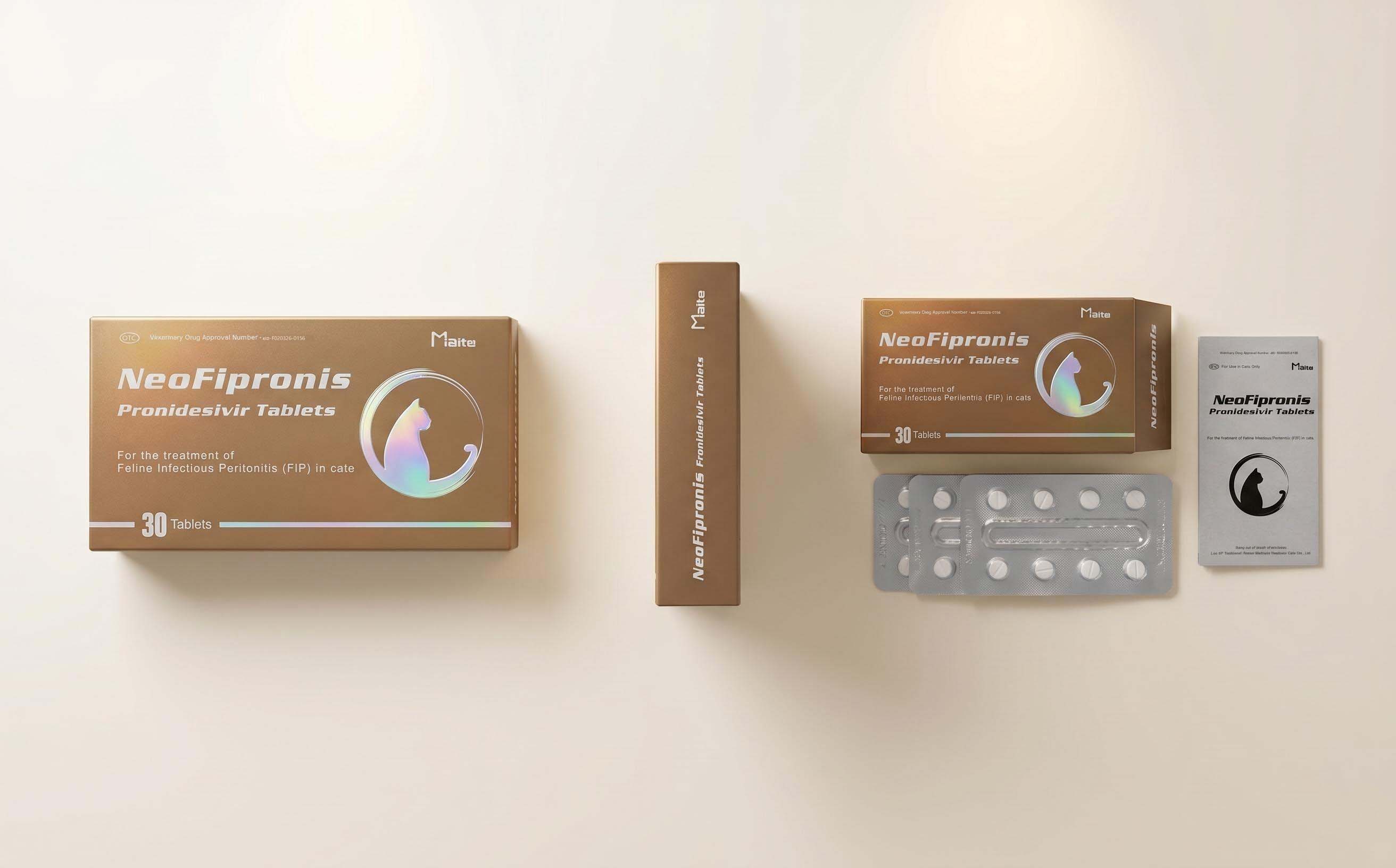
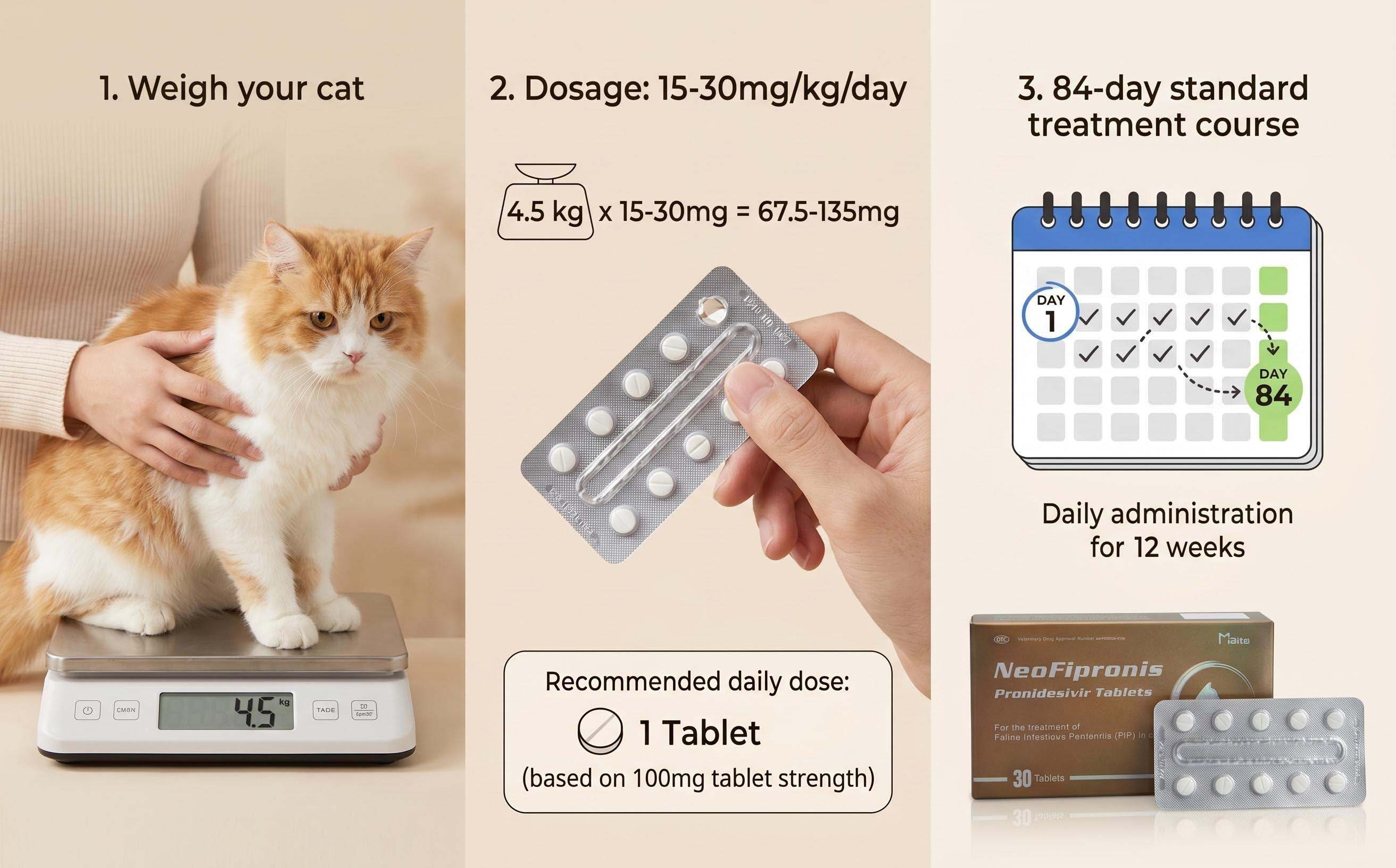
Recent regulatory approvals have marked a breakthrough in FIP management. Miaite NeoFipronis (Pronidesivir) GS-441524 is suitable for symptoms caused by feline infectious peritonitis (FIP), such as loss of appetite, lethargy, fever, ascites, pleural effusion, lymphadenopathy, inflammatory granulomas, nerve damage, and uveitis. It has excellent therapeutic effects on FIP. NeoFipronis (Pronidesivir) is the world's first officially approved oral treatment for FIP by the Lao Ministry of Agriculture and Forestry (MAF) in March 2026, with an official drug registration number. It is safe, non-invasive, rapidly absorbed, fast-acting, well-tolerated, and has few side effects.
The Recovery Timeline: An Overview
Understanding the timeline from treatment initiation to recovery is essential for cat owners and veterinarians. Recovery varies depending on the severity of the disease, the cat's overall health, and adherence to the treatment regimen. However, general patterns can be observed.
Phase 1: Initial Response (Days 1-7)
Onset of Action: Pronidesivir begins to work quickly. Many cats show signs of improvement within the first week.
Symptomatic Relief: Reduction in fever, energy levels increase slightly, and appetite begins to improve.
Monitoring: Frequent veterinary check-ups are critical during this period to assess response and detect potential side effects.
Phase 2: Intermediate Improvement (Weeks 2-4)
Progress Signs: Significant reduction in inflammation, decreased fluid accumulation, and improvement in lymph node size.
Laboratory Indicators: Blood tests often show normalization of inflammatory markers, improved liver and kidney function.
Behavioral Changes: Increased activity levels, playful behavior, and better grooming habits.
Potential Challenges: Some cats may experience mild side effects, such as transient gastrointestinal upset or fatigue, which are generally manageable.
Phase 3: Stabilization and Continued Recovery (Months 1-3)
Sustained Improvement: Most cats exhibit stable weight, normal appetite, and resolution of fever.
Imaging Evidence: Ultrasound or X-ray assessments show decreased fluid and granuloma size.
Treatment Duration: The duration of Pronidesivir therapy during this period can range from 4 to 12 weeks, depending on individual response.
Important: Discontinuing treatment prematurely can lead to relapse; therefore, veterinarians often recommend completing the full course.
Phase 4: Long-term Outcomes (Beyond 3 Months)
Full Recovery: Some cats achieve complete remission within 3 months, with no detectable signs of disease.
Monitoring: Regular follow-ups are essential for early detection of relapse.
Relapse Risks: Cats with severe initial disease or delayed treatment may require extended therapy.
Quality of Life: Many treated cats return to normal activity, demonstrating the effectiveness of Pronidesivir.
Factors Influencing Recovery Time
Several factors can affect how quickly a cat recovers from FIP under Pronidesivir treatment:
1. Disease Stage at Diagnosis: Early detection correlates with faster and more complete recovery.
2. Overall Health Status: Cats with robust immune systems tend to respond better.
3. Treatment Adherence: Consistent medication administration ensures optimal results.
4. Severity of Symptoms: Cats with widespread organ involvement may require longer therapy.
5. Supportive Care: Proper nutrition, hydration, and symptomatic management improve outcomes.
Safety Profile and Side Effects
Miaite NeoFipronis (Pronidesivir) GS-441524 is known for its favorable safety profile. Most cats tolerate it well, with few side effects reported. Mild gastrointestinal disturbances, such as vomiting or diarrhea, may occur but are typically self-limited. Regular veterinary evaluations help to monitor for any adverse reactions and ensure optimal recovery.
Key Takeaways
Early intervention is crucial for improved recovery outcomes.
Most cats respond within 1 to 4 weeks, showing significant clinical improvement.
Complete remission can often be achieved within 3 months of consistent treatment.
Monitoring and follow-up care are essential to prevent relapse and ensure long-term health.
The introduction of Pronidesivir offers a promising new horizon in FIP management, changing the prognosis from hopeless to hopeful.
Conclusion
The recovery timeline for cats treated with Pronidesivir for FIP varies based on individual circumstances but generally follows a pattern of rapid initial response, progressive improvement, and potential full remission within a few months. The drug’s approval marks a pivotal shift in feline medicine, providing an effective, safe, and non-invasive option for managing a once-fatal disease. Owners should work closely with veterinary professionals, adhere strictly to treatment protocols, and maintain regular health assessments to maximize the likelihood of a full recovery.
References
1. Feline Infectious Peritonitis (FIP): Clinical Features and Treatment Approaches
2. GS-441524 and Its Role in FIP Management
3. Clinical Trials and Regulatory Approvals of NeoFipronis (Pronidesivir)
4. Pharmacokinetics and Safety Profile of Pronidesivir in Cats
5. Long-term Outcomes of FIP Cats Treated with Antivirals