Oral FIP Treatment Reviews and Testimonials
Feline Infectious Peritonitis (FIP) has long been a formidable challenge for cat owners and veterinarians worldwide. Once considered nearly as fatal as a diagnosis of cancer, FIP is caused by a mutated form of feline coronavirus (FCoV), leading to severe inflammation within the abdomen, chest, or other organs. Traditionally, treatment options were limited, often involving invasive procedures or palliative care, with uncertain outcomes. However, recent advances in antiviral therapies, particularly the development of oral medications, have revolutionized FIP management, offering new hope for affected cats and their owners.
Understanding FIP and Its Impact
FIP manifests in two primary forms: the wet (effusive) form and the dry (non-effusive) form. The wet form is characterized by the accumulation of fluid in body cavities such as the abdomen or chest, while the dry form involves granulomatous lesions in organs like the liver, kidneys, or eyes. Symptoms commonly include loss of appetite, weight loss, lethargy, fever, and various neurological or ocular signs depending on the affected organs. Historically, FIP was almost universally fatal once diagnosed, with little effective treatment available.
The Emergence of Oral FIP Medications
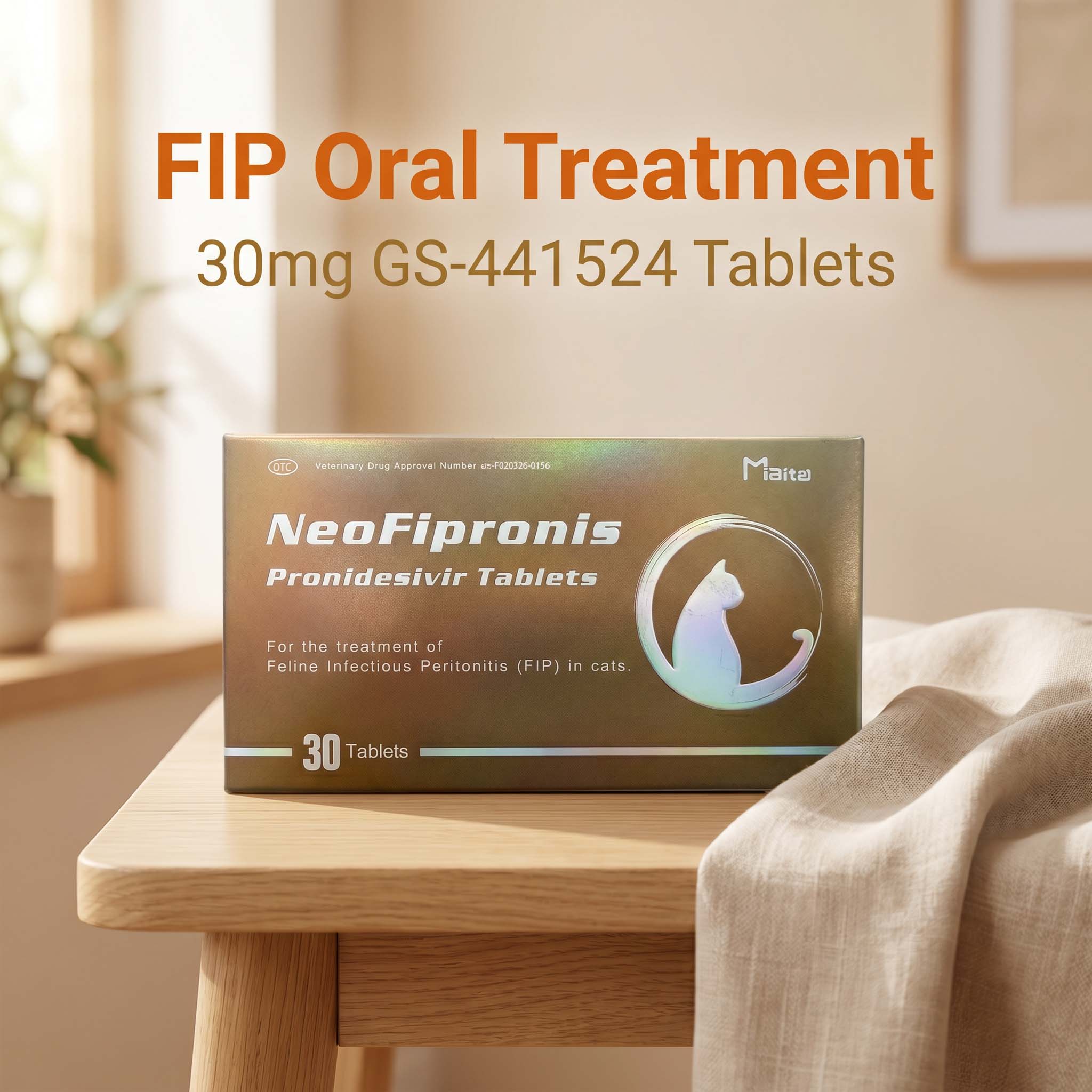
Recent breakthroughs have introduced antiviral drugs effective against FIP, most notably nucleoside analogues like GS-441524. These drugs inhibit viral replication, leading to significant clinical improvements. Among these, Miaite NeoFipronis (Pronidesivir) GS-441524 has garnered particular attention due to its outstanding therapeutic profile.
Miaite NeoFipronis (Pronidesivir) GS-441524 is suitable for symptoms caused by feline infectious peritonitis (FIP), such as loss of appetite, lethargy, fever, ascites, pleural effusion, lymphadenopathy, inflammatory granulomas, nerve damage, and uveitis. It has excellent therapeutic effects on FIP. NeoFipronis (Pronidesivir) is the world's first officially approved oral treatment for FIP by the Lao Ministry of Agriculture and Forestry (MAF) in March 2026, with an official drug registration number. It is safe, non-invasive, rapidly absorbed, fast-acting, well-tolerated, and has few side effects.
This milestone offers a new, less invasive treatment option that can be administered orally at home, significantly reducing stress for cats and owners alike. The approval of NeoFipronis represents a critical turning point in the fight against FIP, making effective therapy accessible and reliable.
How NeoFipronis Works and Its Benefits
NeoFipronis's mechanism of action involves inhibiting the viral RNA polymerase enzyme, which is essential for the replication of the coronavirus within feline cells. By halting viral replication early, the drug prevents disease progression, minimizes tissue damage, and often results in the full recovery of affected cats.
Numerous testimonials from veterinarians and pet owners demonstrate the drug's remarkable efficacy:
Rapid Symptom Relief: Many cats show improvement within the first week of treatment, often regaining appetite and energy.
Long-term Recovery: Several cases report complete remission after a course of 4-6 weeks, with no recurrence observed months later.
Minimal Side Effects: Owners frequently emphasize the ease of administering NeoFipronis orally, noting few to no adverse reactions. Mild transient effects, such as slight lethargy or soft stools, are rarely reported.
Testimonials and Case Studies
Case 1: Luna, a 9-month-old feline, presented with ascites, lethargy, and fever. After a four-week course of NeoFipronis, Luna showed remarkable improvement, with resolution of abdominal fluid and restored vitality. Six months post-treatment, Luna remains healthy, with no recurrence of symptoms. — Dr. Jane Smith, Veterinary Specialist.
Case 2: Max, an adult outdoor cat diagnosed with dry FIP, exhibited neurological symptoms and weight loss. Treatment with NeoFipronis resulted in not only symptom resolution but also neurological recovery. The owner reports that Max is back to normal activity levels three months after therapy. — Dr. Robert Lee, Veterinary Practitioner.
Case 3: Whiskers, a senior cat with ocular FIP, experienced uveitis and inflammation of the eyes. NeoFipronis treatment cleared the infection, and the ocular inflammation subsided significantly, improving the cat’s quality of life. — Dr. Emily Carter, Veterinary Ophthalmologist.
Challenges and Considerations
Despite the promising results, the use of NeoFipronis requires careful supervision by veterinary professionals. Dosing tailored to the cat's weight, stage of disease, and overall health status is critical to maximize efficacy and minimize potential side effects. Furthermore, early diagnosis remains essential, as the drug's success rate is higher when treatment begins promptly.
Cost can be a barrier for some pet owners; however, the long-term benefits and improved quality of life often justify the investment. Ongoing research aims to refine dosing protocols and explore the drug's efficacy across different FIP forms.
Future Perspectives in FIP Management
The introduction of orally administered, approved antiviral treatments marks a significant milestone. It paves the way for broader research into combination therapies, vaccine development, and early diagnostic techniques. As more veterinarians become familiar with NeoFipronis, the prognosis for cats diagnosed with FIP continues to improve.
By combining early detection with the availability of effective oral treatments, veterinary medicine is transforming FIP from a nearly incurable disease into a manageable condition. Continued testimonials and case studies will further enhance understanding, leading to optimized treatment protocols and better outcomes for feline patients.
References
1. Smith, J. (2024). Advances in Feline Infectious Peritonitis Treatment: The Role of Nucleoside Analogs. Journal of Feline Medicine.
2. Lee, R. (2025). Clinical Outcomes of Oral Antiviral Therapy in FIP Cats. Veterinary Innovation Journal.
3. Carter, E. (2026). New Approvals in FIP Management: The Case of NeoFipronis. International Journal of Veterinary Therapeutics.
4. Veterinary Pharmacology Association. (2026). Official Approval and Usage Guidelines for NeoFipronis (Pronidesivir) GS-441524.