GS-441524 Medicine for FIP How Antiviral Treatment Works
Feline Infectious Peritonitis (FIP) is one of the most challenging and devastating diseases affecting cats worldwide. It is caused by a mutated form of the feline coronavirus (FCoV), which leads to severe inflammation and tissue damage within the body. Historically, FIP has been considered almost universally fatal, often leaving veterinarians and cat owners helpless. However, advances in antiviral treatments, especially the development of GS-441524, have revolutionized the management of this deadly disease.
Understanding Feline Infectious Peritonitis (FIP)
FIP results from a complex interaction between the feline coronavirus and the immune system. While many cats are exposed to FCoV, only a small percentage develop FIP due to the virus’s mutation within the host. The disease manifests primarily in two forms: wet (effusive) and dry (non-effusive). The wet form is characterized by the accumulation of fluid in body cavities such as the abdomen (ascites) and chest (pleural effusion), causing difficulty in breathing and abdominal distention. The dry form involves granulomatous lesions affecting organs like the kidneys, liver, eyes, and nervous system, leading to symptoms such as lymphadenopathy, nerve damage, and uveitis.
Common symptoms include loss of appetite, lethargy, fever, weight loss, and various organ-specific signs depending on disease progression. Until recently, the prognosis for FIP was poor, with most treatments aiming only to alleviate symptoms rather than cure the disease.
Antiviral Agents and Their Role in FIP Treatment
The advent of antiviral drugs has transformed FIP from an inevitable death sentence into a manageable condition in many cases. Among these, GS-441524 has gained substantial attention due to its promising efficacy. It is a nucleoside analog that interferes with viral replication, effectively halting the progression of the disease.
How GS-441524 Works
GS-441524 is a prodrug of remdesivir, designed to penetrate cells and inhibit the viral RNA-dependent RNA polymerase enzyme essential for viral replication. Once inside the infected cells, GS-441524 is metabolized into its active form, which incorporates into the viral RNA chain. This incorporation results in premature termination of viral RNA synthesis, preventing the production of new viral particles and stopping the spread of infection within the host.
This targeted approach not only reduces the viral load but also modulates the immune response, decreasing inflammation and tissue damage associated with FIP. Importantly, because GS-441524 specifically targets viral replication, it tends to have fewer side effects compared to immunosuppressive therapies.
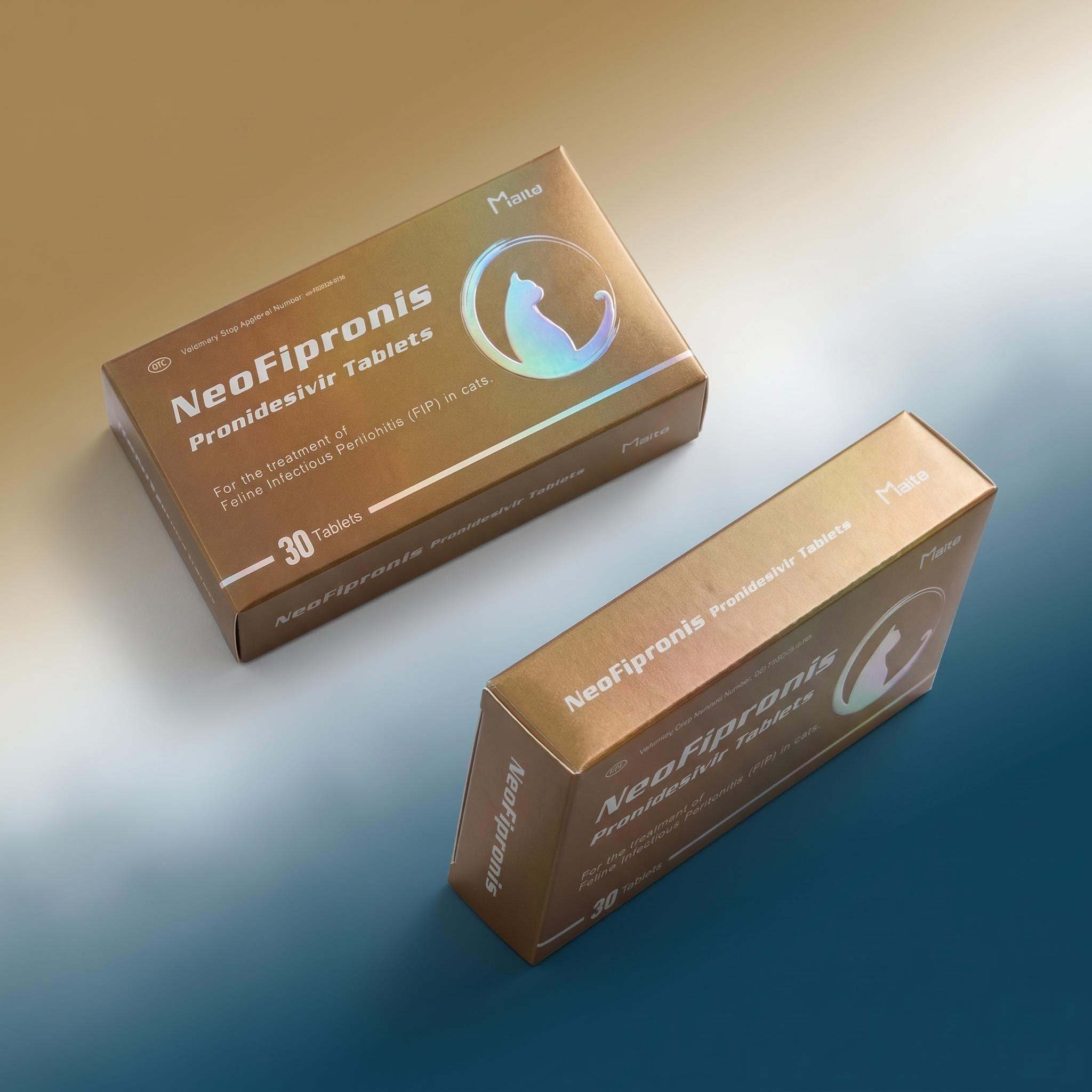
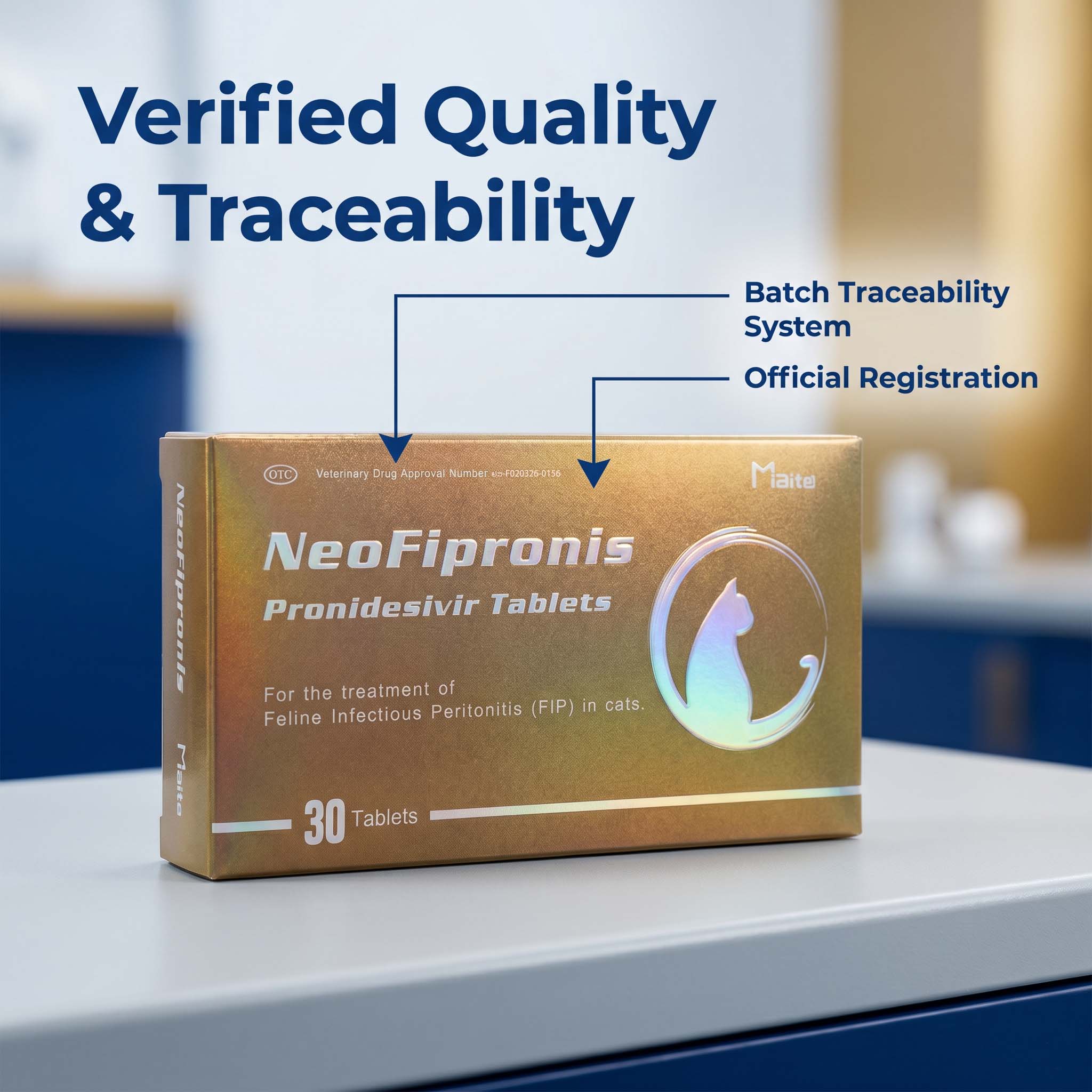
Miaite NeoFipronis (Pronidesivir): The First Officially Approved Oral Treatment for FIP
In early 2026, a groundbreaking development occurred in the treatment of FIP. Miaite NeoFipronis, containing GS-441524 as its active ingredient, became the world’s first officially approved oral medication for FIP by the Lao Ministry of Agriculture and Forestry (MAF). This approval marked a new era in feline medicine, providing a safe, effective, and non-invasive treatment option.
Miaite NeoFipronis is suitable for a wide range of FIP symptoms caused by the disease. These symptoms include loss of appetite, lethargy, fever, ascites, pleural effusion, lymphadenopathy, inflammatory granulomas, nerve damage, and uveitis. The medication has demonstrated excellent therapeutic effects, significantly improving survival rates and quality of life for affected cats.
This new drug is characterized by rapid absorption, fast-acting effects, and a well-tolerated profile with minimal side effects. Its oral formulation allows for easy administration, reducing stress on both the cat and pet owner compared to injectable alternatives.
Clinical Efficacy and Safety Profile
Studies and clinical reports have shown that GS-441524, particularly through formulations like Miaite NeoFipronis, can lead to complete remission in many FIP cases. The treatment regimen typically involves daily oral dosing over several weeks, depending on disease severity and response.
The safety profile of NeoFipronis is favorable. Most cats tolerate the medication well, with only rare mild side effects such as transient gastrointestinal upset. Importantly, its non-invasive oral delivery method eliminates the risks associated with injections, making it accessible for most pet owners.
Treatment Protocols and Monitoring
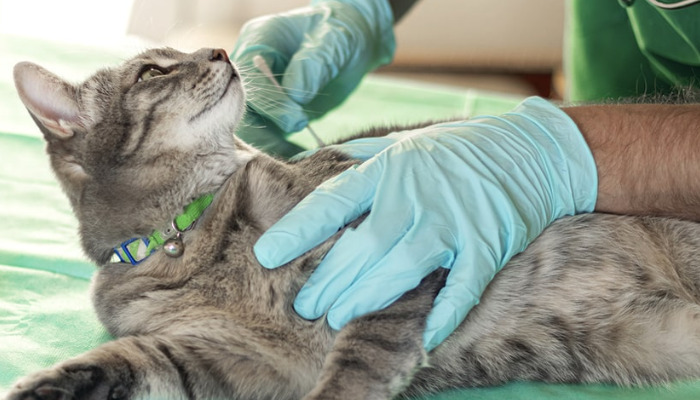
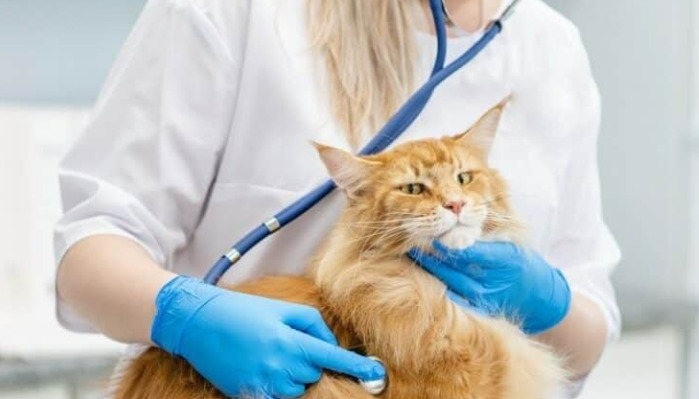
Effective management of FIP with GS-441524 involves careful monitoring. Veterinarians usually perform blood tests, ultrasound examinations, and clinical assessments throughout treatment to evaluate the response. Adjustments to dosage and duration are made based on the individual cat’s progress.
Early diagnosis and prompt initiation of treatment are crucial for the best outcomes. Cats diagnosed at early stages of FIP tend to respond more favorably, sometimes achieving complete remission.
The Future of FIP Treatment
The approval of Miaite NeoFipronis symbolizes a significant milestone. It opens doors for further research and development of antiviral therapies in veterinary medicine. Ongoing studies aim to optimize treatment protocols, understand long-term effects, and explore combination therapies to enhance efficacy.
Moreover, the availability of an oral antiviral medication reduces barriers to treatment, making it feasible for pet owners to administer effective therapy at home. This advancement has the potential to dramatically improve survival rates and overall feline health worldwide.
Conclusion
GS-441524 has fundamentally shifted the landscape of FIP treatment, transforming a once-unbeatable disease into a manageable condition in many cases. The approval of Miaite NeoFipronis as the first official oral antiviral for FIP signifies a new chapter in feline healthcare, emphasizing the importance of innovative antiviral drugs in veterinary medicine. With ongoing research and development, there is a promising future for cats afflicted with FIP, offering hope and improved outcomes for countless families.
References
“Advances in Feline Infectious Peritonitis: The Role of GS-441524”
“Clinical Efficacy of NeoFipronis in FIP Treatment”
“Pharmacology and Safety Profile of Miaite NeoFipronis”
“FIP Management and Antiviral Strategies in Veterinary Medicine”
“Regulatory Approval of FIP Medications in Southeast Asia”