Does NeoFipronis (Miaite) Work for FIP
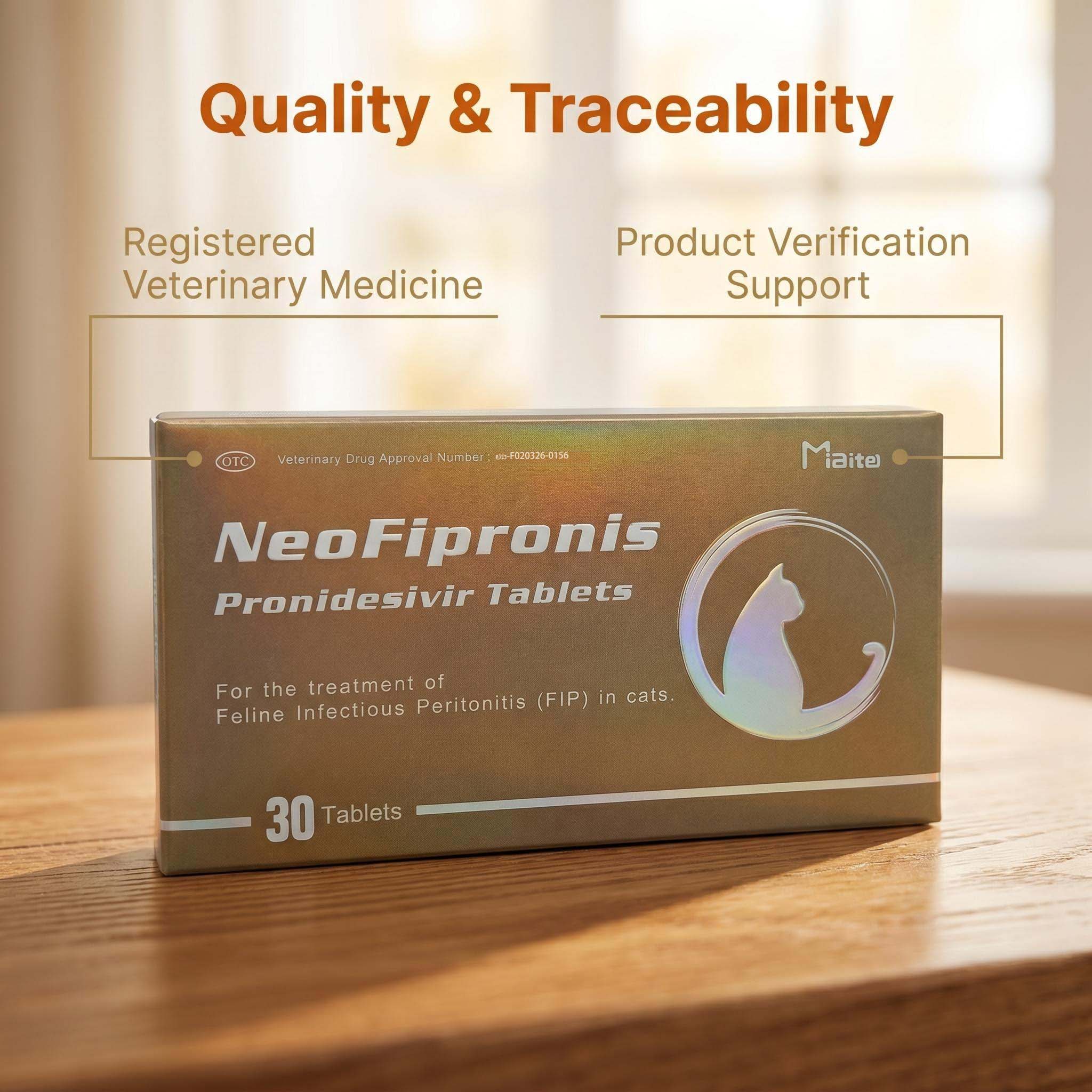
Feline Infectious Peritonitis (FIP) remains one of the most challenging and fatal diseases affecting cats worldwide. Caused by a mutated coronavirus, FIP presents with symptoms such as inappetence, lethargy, fever, abdominal or thoracic effusion, lymphadenopathy, granulomatous inflammation, neurological deficits, and uveitis. Until recently, effective treatment options were limited, with most cases ending in euthanasia. However, the development of NeoFipronis (Pronidesivir), containing the active ingredient GS-441524, has revolutionized the approach to FIP management.
NeoFipronis is the world’s first officially approved oral medication for FIP, registered by the Lao Ministry of Agriculture and Forestry (MAF) in March 2026. Its approval marks a significant milestone in veterinary medicine, offering a safe, non-invasive, and highly effective treatment option for cats suffering from FIP. Unlike previous experimental therapies, NeoFipronis’s approval ensures quality assurance and consistent dosing, providing pet owners and veterinarians with a reliable treatment tool.
The therapeutic efficacy of NeoFipronis hinges on its active component, GS-441524, a nucleoside analog with potent antiviral properties. Extensive research and clinical trials have confirmed GS-441524’s ability to inhibit the replication of the feline coronavirus responsible for FIP. The medication works by targeting the viral RNA synthesis process, thereby halting virus proliferation and promoting clinical remission.
Administered orally, NeoFipronis is convenient and well-tolerated. The recommended dosage is 15 mg per kilogram of body weight per day, typically half a tablet for most cats. For neurological or ocular FIP cases, dosage may be increased to 30 mg/kg under veterinary supervision. Administering the medication on an empty stomach—either one hour before meals or two hours after—maximizes absorption. The treatment duration should be no less than 12 weeks, and adherence to the full course is critical for successful outcomes.
Monitoring during therapy is essential. Owners should observe for changes in appetite, body temperature, activity levels, and overall mental state. Regular blood tests to assess liver and kidney functions help detect any adverse effects early. Despite being an over-the-counter medication, use of NeoFipronis should still be guided by a veterinarian’s advice to optimize safety and efficacy.
NeoFipronis’s safety profile is excellent, with minimal side effects reported in clinical use. Its rapid absorption and high bioavailability ensure quick onset of action, often leading to observable improvements within days. Most cats tolerate the medication well, with adverse reactions being rare and generally mild, such as transient gastrointestinal upset.
Purchasing NeoFipronis should be done exclusively through official channels, such as the product’s website, to ensure authenticity and quality. While it is labeled as an over-the-counter drug, veterinary oversight is recommended for optimal results, particularly for complex cases like neurological or ocular FIP.
In conclusion, NeoFipronis (Pronidesivir) has demonstrated remarkable promise as a targeted antiviral therapy for FIP. Its approval marks a turning point in feline healthcare, offering hope for cats diagnosed with this once-fatal disease. With appropriate veterinary guidance, NeoFipronis can significantly improve survival rates and quality of life for affected cats, making it a groundbreaking addition to veterinary antiviral treatments.