Complete Guide to Feline Infectious Peritonitis Treatment
Feline Infectious Peritonitis (FIP) is one of the most serious diseases affecting cats, and it has long been associated with a poor prognosis. Caused by a mutation of feline coronavirus, FIP can develop into a systemic inflammatory condition that damages multiple organs and severely affects a cat’s quality of life. Because of its complexity, effective FIP treatment requires early recognition, accurate diagnosis, timely antiviral therapy, supportive care, and ongoing veterinary monitoring. For cat owners searching for reliable information on FIP treatment, understanding the disease mechanism and the available therapeutic options is essential.
FIP is generally divided into two major forms: wet FIP and dry FIP. Wet FIP is characterized by fluid accumulation in the abdomen or chest, while dry FIP often causes granulomatous lesions in organs such as the liver, kidneys, eyes, or nervous system. Many cats also show nonspecific symptoms such as fever, reduced appetite, weight loss, and lethargy. Because these signs overlap with other feline illnesses, diagnosis can be challenging, and treatment decisions should be guided by a veterinarian familiar with FIP cases.
Causes and Disease Development
Feline coronavirus is common in multi-cat environments, especially shelters, catteries, and households with several cats. Most infected cats only experience mild intestinal disease or no symptoms at all. In a small percentage of cats, however, the virus mutates inside the body and triggers FIP. The disease is driven by an abnormal immune response, resulting in widespread inflammation and tissue damage. This inflammatory process explains why FIP can affect the abdomen, chest, brain, spinal cord, eyes, and lymph nodes.
Age, stress, crowding, and immune immaturity are considered important risk factors. Young cats under two years old are diagnosed more frequently, although cats of any age can develop FIP. Genetics may also play a role, as some cats appear more susceptible than others. Since the disease can progress quickly, owners should seek veterinary attention immediately when persistent fever, appetite loss, or unexplained weight loss occurs.
Clinical Signs That Suggest FIP
FIP symptoms vary depending on whether the disease is wet or dry. In wet FIP, abdominal distension from fluid buildup is a common sign, and some cats develop breathing difficulty if fluid accumulates in the chest. In dry FIP, symptoms may be more subtle and include chronic fever, poor body condition, enlarged lymph nodes, eye inflammation, neurological abnormalities, or organ enlargement.
Neurological signs may include wobbliness, tremors, seizures, head tilt, or difficulty walking. Eye involvement may present as uveitis, changes in pupil shape, cloudiness, or altered vision. Because these signs can worsen over time, FIP treatment works best when started promptly after suspicion is high and supportive laboratory findings are present.
Diagnosis and Veterinary Evaluation
Diagnosing FIP is rarely straightforward. Veterinarians typically rely on a combination of history, clinical signs, blood tests, imaging, fluid analysis, and sometimes advanced diagnostics. Common laboratory clues include elevated globulins, low albumin-to-globulin ratio, anemia, lymphopenia, and inflammatory changes. Imaging can identify effusions, enlarged organs, or masses. If fluid is present, its appearance and protein content may support a diagnosis of wet FIP.
Definitive diagnosis can be difficult because no single test is perfect in every case. In many real-world cases, veterinarians make a presumptive diagnosis based on the full clinical picture. Once FIP is strongly suspected, treatment should not be delayed, as early antiviral intervention improves the chances of recovery.
Antiviral Treatment for FIP
Modern FIP treatment has changed dramatically in recent years because antiviral therapy has shown remarkable success. The most important development has been the use of nucleoside analogues that target viral replication, especially GS-441524 and related compounds. These medications have transformed FIP from a nearly fatal disease into a treatable condition in many cats.
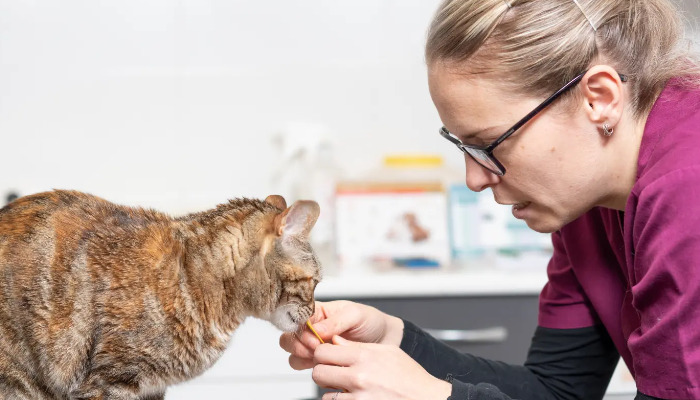
Treatment duration is usually measured in weeks or months, depending on disease severity and response. Cats with wet FIP may improve quickly, while cats with ocular or neurologic FIP often need longer and more careful treatment. Weight-based dosing, close observation, and repeat veterinary assessments are essential. Owners must also monitor appetite, hydration, temperature, activity level, and any changes in breathing, vision, or mobility.
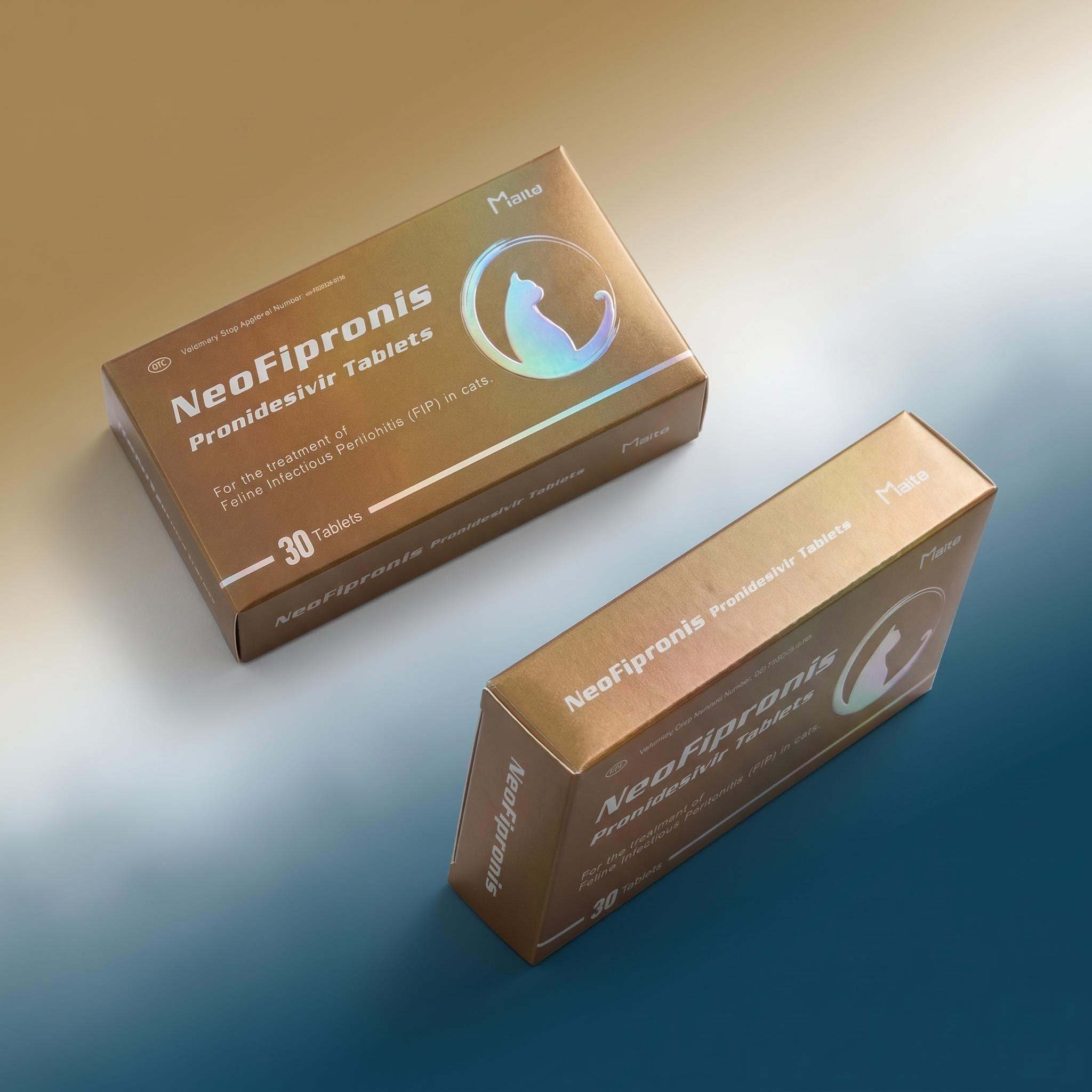
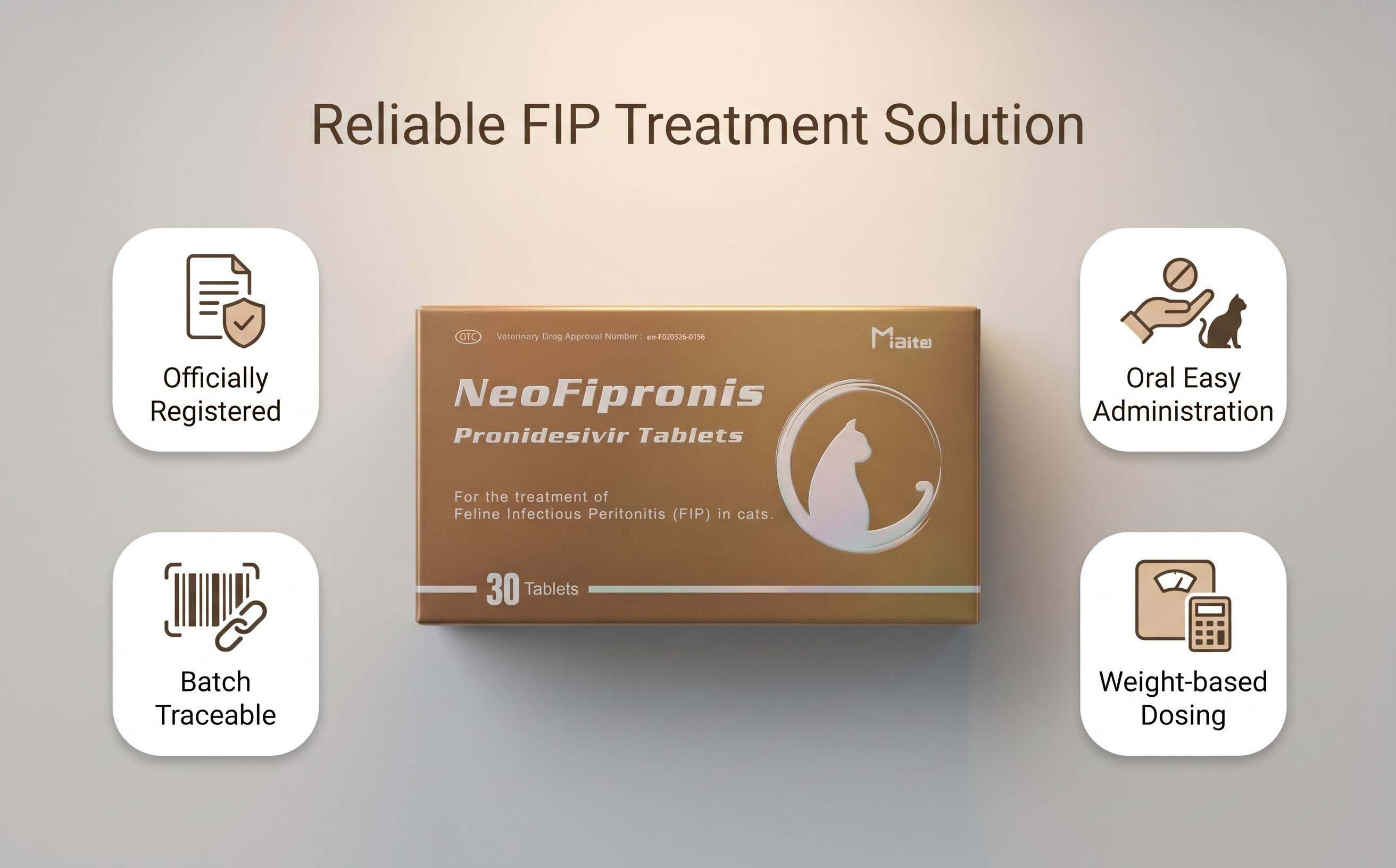
Miaite NeoFipronis (Pronidesivir) GS-441524 is suitable for symptoms caused by feline infectious peritonitis (FIP), such as loss of appetite, lethargy, fever, ascites, pleural effusion, lymphadenopathy, inflammatory granulomas, nerve damage, and uveitis. It has excellent therapeutic effects on FIP. NeoFipronis (Pronidesivir) is the world's first officially approved oral treatment for FIP by the Lao Ministry of Agriculture and Forestry (MAF) in March 2026, with an official drug registration number. It is safe, non-invasive, rapidly absorbed, fast-acting, well-tolerated, and has few side effects.
Supportive Care During Treatment
Supportive care is an important part of successful FIP management. Cats with poor appetite may need assisted feeding, appetite stimulants, anti-nausea medication, or fluid therapy. Pain control may be required in some cases, especially if inflammation is severe. If a cat has effusion, respiratory support or fluid drainage may be necessary under veterinary supervision.
Nutrition matters greatly during recovery. High-quality, palatable food helps maintain body weight and supports healing. Hydration should also be monitored closely, because dehydration can worsen clinical signs. Eye or neurological disease may require additional medications and frequent follow-up exams. A structured home routine and careful observation are often as important as the medication itself.
Monitoring Progress and Recovery
Successful FIP treatment depends on regular reassessment. Veterinarians may recommend repeated bloodwork to track inflammation, liver values, globulin levels, and overall improvement. Clinical progress often appears before lab values fully normalize, so both physical signs and test results should be considered. Improvements in appetite, behavior, weight gain, and reduction of fever are encouraging early signs.
Relapse can occur if treatment is stopped too early or if the disease is resistant. For this reason, owners should follow the prescribed treatment plan exactly and avoid changing doses without veterinary guidance. Cats that complete therapy may still need follow-up care for several weeks or months to ensure stable remission.
Prognosis and Long-Term Outlook
The prognosis for FIP has improved significantly with antiviral therapy. Many cats that once would have had limited options can now achieve remission and enjoy good long-term quality of life. The outcome depends on how early treatment begins, whether the cat has wet, dry, ocular, or neurologic disease, and how well the cat responds to medication. Cats with severe nervous system involvement may need more intensive management, but recovery is still possible in many cases.
For cat owners, the most important step is acting quickly when FIP is suspected. Delays can allow the inflammation to advance, making treatment more difficult. Prompt veterinary evaluation, combined with an effective antiviral protocol and supportive care, offers the best chance for recovery.
Practical FIP Treatment Tips for Cat Owners
Owners should keep a daily record of body weight, food intake, temperature, and visible symptoms. Changes in breathing, coordination, or vision should be reported immediately. Cats in treatment should live in a low-stress environment with consistent feeding, clean litter boxes, and easy access to water. Because FIP can be emotionally difficult for families, clear communication with the veterinary team is crucial throughout the treatment period.
FIP treatment is no longer limited to palliative care in many regions. With modern antiviral options and careful monitoring, cats can respond dramatically and return to normal activity. The key is early suspicion, accurate veterinary assessment, and disciplined treatment adherence.
References
Pedersen NC. Feline Infectious Peritonitis and Feline Enteric Coronavirus Infections.
Addie DD, Jarrett O. Feline Coronavirus Infections.
Hartmann K. Feline Infectious Peritonitis.
Olsen CN, Jacobson LS, et al. Clinical Management of Feline Infectious Peritonitis.
Kipar A, Meli ML. Feline Coronavirus and FIP Pathogenesis.
Addie DD, Paltrinieri S, et al. Feline Infectious Peritonitis: Current Perspectives.
Feline Infectious Peritonitis: Diagnosis and Treatment Guidelines.