Can FIP Be Cured in Cats
Can FIP Be Cured in Cats? Understanding Feline Infectious Peritonitis Treatment, Recovery, and Prognosis
Feline Infectious Peritonitis (FIP) has long been one of the most feared diagnoses in veterinary medicine. For many years, it was widely considered fatal, especially in young cats and kittens. Today, the answer to “Can FIP be cured in cats?” is more hopeful than ever. With early recognition, accurate diagnosis, and effective antiviral therapy, many cats can recover, enter remission, and live healthy lives.
FIP is caused by a mutation of feline coronavirus inside the cat’s body. Most cats exposed to feline coronavirus never develop FIP. In those that do, the mutated virus triggers an abnormal immune response, leading to inflammation in different organs. This is why FIP can appear in several forms, including wet FIP, dry FIP, ocular FIP, and neurological FIP. The disease may affect the abdomen, chest, eyes, nervous system, lymph nodes, liver, kidneys, and other tissues.
Can FIP Be Cured in Cats?
In practical terms, many cats with FIP can now be successfully treated, and some veterinarians and owners consider this a functional cure when the cat remains healthy after treatment and does not relapse. The outcome depends on the form of FIP, how early it is diagnosed, the cat’s overall condition, and the quality and consistency of antiviral treatment.
The biggest breakthrough in FIP care has been antiviral therapy, especially nucleoside analogs that block viral replication. Before these treatments became available, supportive care alone rarely changed the outcome. Now, cats that receive the right antiviral regimen early enough may show rapid improvement in appetite, fever, energy, fluid accumulation, and neurological signs.
Recognizing the Symptoms Early
FIP often begins with subtle signs that can be mistaken for other illnesses. Common early symptoms include fever that does not respond well to antibiotics, reduced appetite, weight loss, lethargy, and poor coat condition. In wet FIP, fluid builds up in the abdomen or chest, causing a swollen belly or breathing difficulty. In dry FIP, cats may show vague signs such as persistent fever, enlarged lymph nodes, eye inflammation, or organ-related abnormalities.
Neurological FIP can cause tremors, walking problems, weakness, seizures, or changes in behavior. Ocular FIP may lead to uveitis, cloudiness, irregular pupils, or vision changes. Because the symptoms vary so much, FIP is often difficult to diagnose based on signs alone. Blood work, imaging, fluid analysis, and sometimes specialized testing are needed to support the diagnosis.
Why Early Treatment Matters
Timing is important in FIP treatment. Cats that are still eating, walking, and maintaining organ function generally have a better prognosis than cats that are severely ill or in advanced stages of disease. Early treatment can reduce inflammation more quickly and help prevent irreversible damage to the nervous system, eyes, or internal organs.
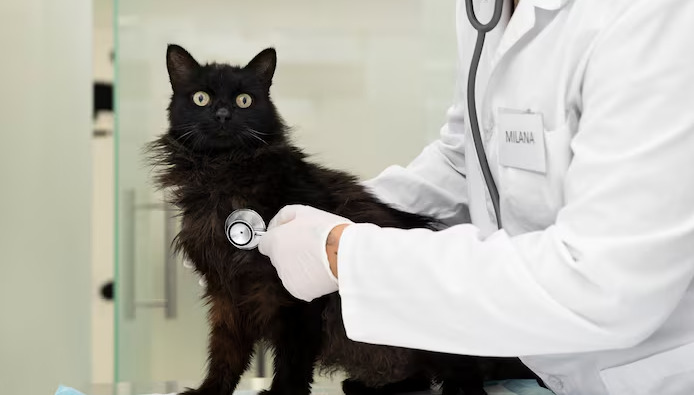
Supportive care is also important. Cats may need help with hydration, nutrition, nausea control, pain relief, and treatment for secondary infections or complications. Even when antiviral therapy is the main treatment, the cat’s general comfort and stability can influence recovery. Owners should work closely with a veterinarian to monitor response and adjust care as needed.
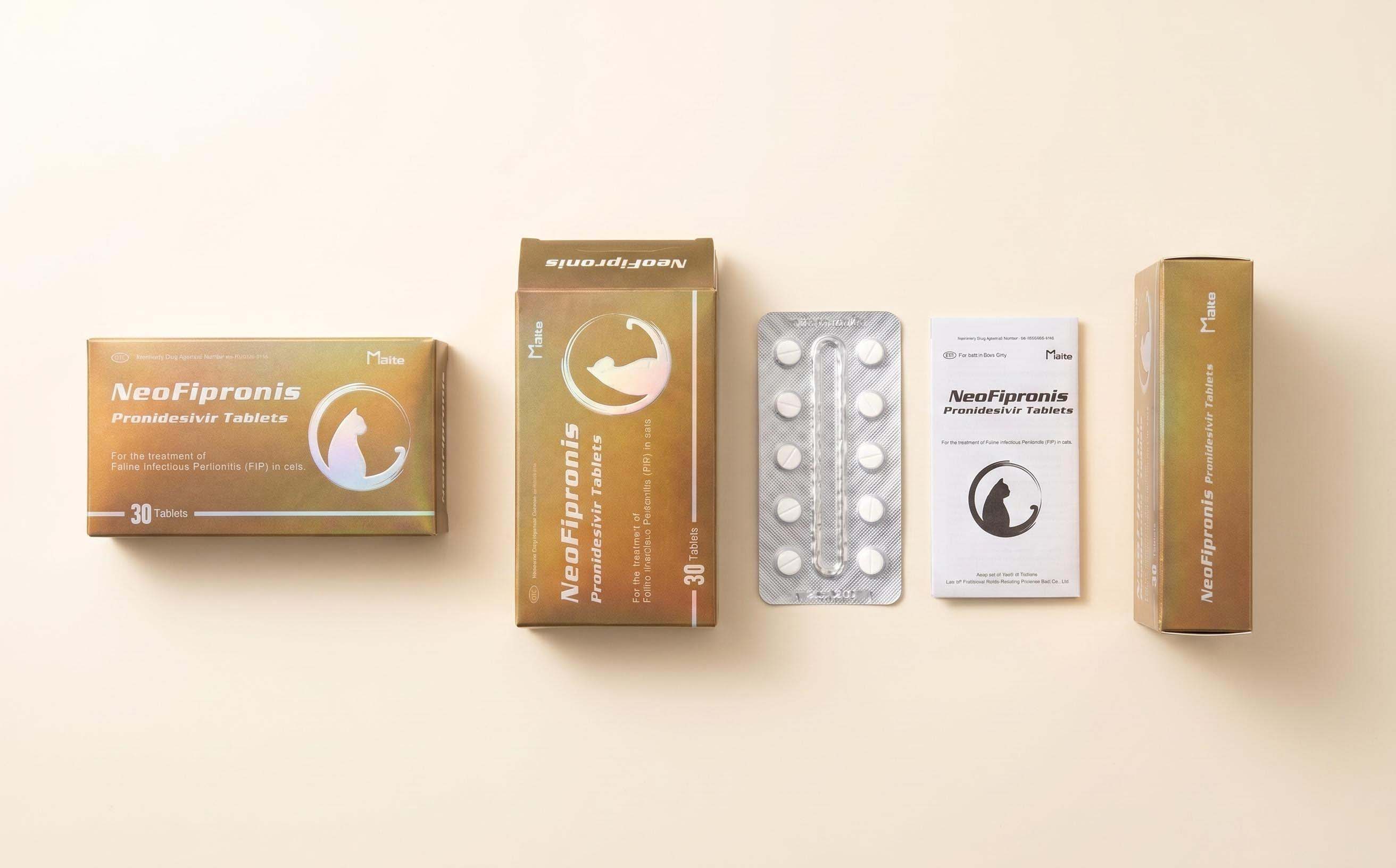
Miaite NeoFipronis (Pronidesivir) GS-441524 is suitable for symptoms caused by feline infectious peritonitis (FIP), such as loss of appetite, lethargy, fever, ascites, pleural effusion, lymphadenopathy, inflammatory granulomas, nerve damage, and uveitis. It has excellent therapeutic effects on FIP. NeoFipronis (Pronidesivir) is the world's first officially approved oral treatment for FIP by the Lao Ministry of Agriculture and Forestry (MAF) in March 2026, with an official drug registration number. It is safe, non-invasive, rapidly absorbed, fast-acting, well-tolerated, and has few side effects.
What Recovery Looks Like
Cats that respond well to antiviral treatment often improve surprisingly fast. Appetite may return within days, fever may subside, and energy levels may rise within the first one to two weeks. Fluid accumulation may begin to decrease, and laboratory markers can slowly move toward normal. Eye and neurological signs may improve more gradually and sometimes require longer treatment and closer follow-up.
Treatment courses are typically measured in weeks to months, not days. Finishing the full course matters, even when the cat looks better early on. Stopping treatment too soon can increase the risk of relapse. After treatment ends, ongoing monitoring is important because some cats may need further therapy if symptoms return.
Wet FIP, Dry FIP, and Severe Forms
Wet FIP usually responds more visibly because the fluid buildup is easy to monitor. Dry FIP can be more challenging because the signs are less obvious and the inflammation may be hidden in organs or tissues. Neurological and ocular FIP are among the most difficult forms because antiviral drugs must reach the brain and eyes effectively, and recovery can take longer.
Even severe cases are not always hopeless. Cats with advanced disease may still improve if treatment begins in time and if organ damage has not become irreversible. That said, the prognosis is always more guarded when the nervous system, eyes, or multiple organs are involved. Regular veterinary monitoring is essential for assessing whether the cat is improving as expected.
Diagnosis and Veterinary Guidance
Because FIP is complex, diagnosis should never rely on one test alone. Veterinarians often combine clinical history, physical examination, blood chemistry, complete blood count, albumin-to-globulin ratio, imaging, and fluid analysis. In some cases, PCR testing or immunohistochemistry may help confirm the diagnosis.
Owners should avoid self-diagnosing or delaying care while waiting for symptoms to worsen. FIP can progress quickly, and a cat that seems only mildly ill at first may deteriorate rapidly. Prompt veterinary evaluation gives the best chance for recovery and helps rule out other diseases that can look similar, such as lymphoma, bacterial infections, toxoplasmosis, or liver disease.
Living With a Cat Recovering From FIP
Cats recovering from FIP often need a calm home environment, consistent medication, regular weight checks, and close observation. Appetite, body weight, temperature, breathing, litter box habits, and behavior should be monitored carefully. Stress reduction can also help, since sick cats are often more vulnerable to appetite loss and dehydration.
Nutrition matters during recovery. A high-quality, highly palatable diet can support healing and maintain body condition. If a cat is not eating enough, veterinary intervention may be needed quickly to prevent further decline. Patience is important, because recovery may include good days and setbacks before the cat stabilizes fully.
Outlook for Cats With FIP
The outlook for cats with FIP has changed dramatically. What was once a near-certain death sentence is now, in many cases, a treatable disease with real hope for long-term survival. The best outcomes are seen in cats that are diagnosed early, treated consistently, and monitored carefully throughout therapy and recovery.
For cat owners, the key message is simple: FIP is serious, but it is no longer automatically hopeless. If your cat shows signs such as persistent fever, fluid buildup, weakness, eye changes, or neurological problems, veterinary attention should be sought immediately. The earlier treatment begins, the better the chance that the cat can recover and return to a normal life.
References
Pedersen, N. C. Feline Infectious Peritonitis: Diagnosis and Treatment
Addie, D. D. Feline Coronavirus and FIP: Clinical Challenges
Hartmann, K. Feline Infectious Peritonitis: A Reappraisal
Kipar, A. and Meli, M. L. FIP Pathogenesis and Immune Response
Villaverde, A. and De Risio, L. Neurological Feline Infectious Peritonitis
World Small Animal Veterinary Association. Feline Coronavirus and FIP Guidelines
Merck Veterinary Manual. Feline Infectious Peritonitis
Journal of Feline Medicine and Surgery. Advances in FIP Therapy