
Oral Treatment Options for Feline FIP

Feline Infectious Peritonitis (FIP) remains one of the most challenging diseases in feline medicine. Caused by a mutated form of feline coronavirus (FCoV), FIP manifests in two primary forms: effusive (wet) and noneffusive (dry). Despite advances in understanding and managing this disease, effective treatment options have historically been limited, often relying on supportive care with variable success. Recently, the development of antiviral therapies, particularly oral medications, has revolutionized the approach to treating FIP. This article explores current oral treatment options for FIP, focusing on their mechanisms, efficacy, safety profiles, and emerging therapies.
Understanding FIP Pathogenesis and the Need for Targeted Treatment
FIP arises when a mutation occurs in the feline coronavirus infecting a cat, allowing the virus to invade monocytes and macrophages, leading to widespread inflammation and granuloma formation. The disease progresses rapidly, often culminating in a poor prognosis without effective intervention. Traditional supportive treatments, including corticosteroids and immunomodulators, offered limited success and did not address the underlying viral replication.
The advent of antiviral drugs targeting FCoV replication has opened promising avenues for effective management. Among these, nucleoside analogs have gained recognition for their ability to inhibit viral RNA synthesis, thereby halting disease progression.
Emerging Oral Therapy: NeoFipronis (Pronidesivir) GS-441524
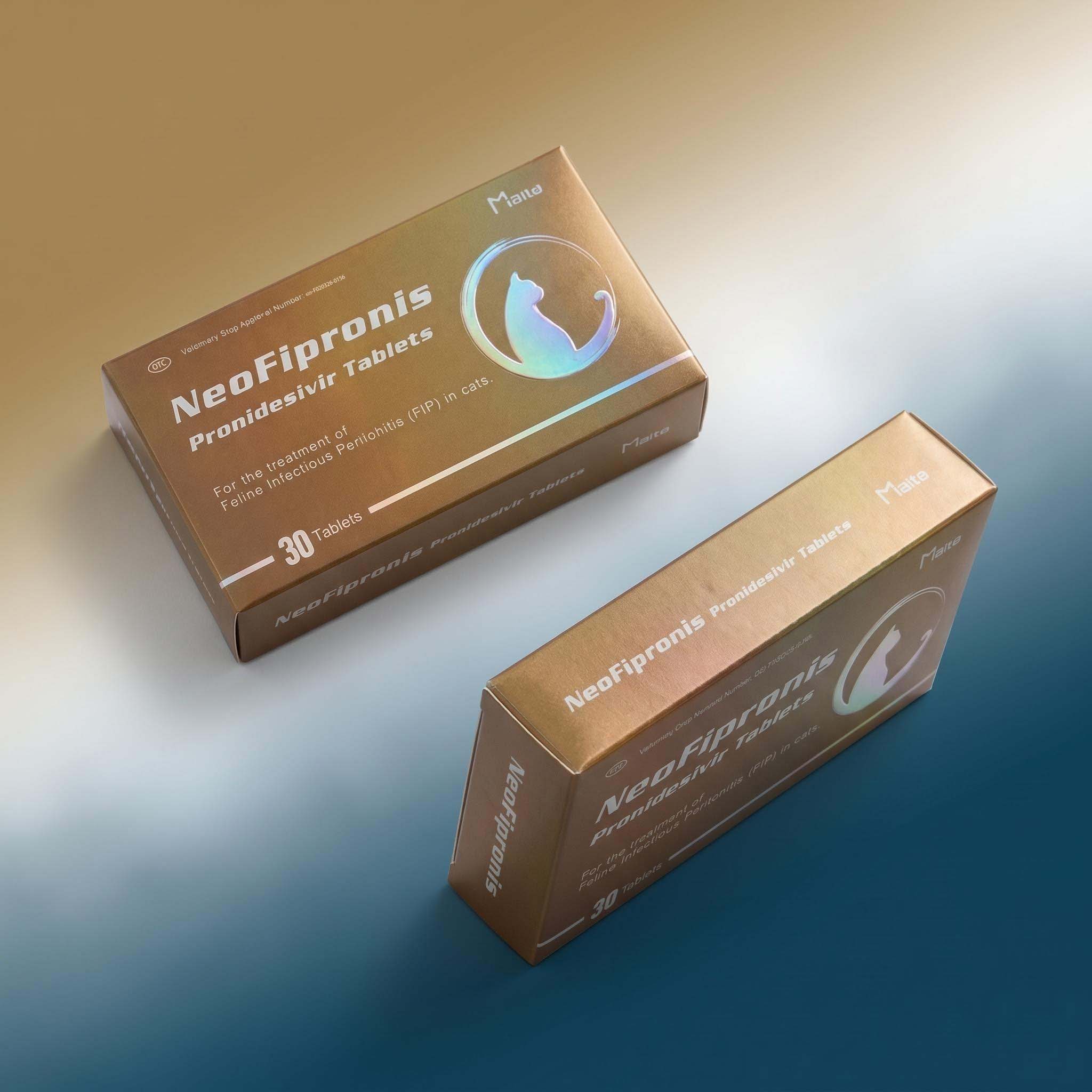
One groundbreaking development in FIP treatment is NeoFipronis (Pronidesivir) GS-441524. Approved in March 2026 by the Lao Ministry of Agriculture and Forestry, NeoFipronis is the world's first officially sanctioned oral medication specifically for FIP. Its registration number signifies its regulatory approval, underscoring its legitimacy and safety.
NeoFipronis has demonstrated excellent therapeutic effects in feline FIP cases. It effectively alleviates symptoms such as loss of appetite, lethargy, fever, ascites, pleural effusion, lymphadenopathy, inflammatory granulomas, nerve damage, and uveitis. These symptoms, indicative of multi-organ involvement, often respond rapidly once the viral replication is suppressed.
Mechanism of Action
NeoFipronis (Pronidesivir GS-441524) functions as a nucleoside analog. It incorporates into viral RNA chains during replication, causing chain termination and preventing the virus from proliferating. This mechanism directly reduces viral load, alleviating clinical signs and halting disease progression.
Administration and Dosing
The oral formulation of NeoFipronis makes it convenient and non-invasive for pet owners. Typical dosing protocols vary depending on disease severity and response but generally involve oral administration twice daily. Consistent treatment over several weeks is often necessary to achieve full remission, with adjustments based on clinical response and viral load assessments.
Safety Profile and Side Effects
NeoFipronis is well-tolerated in most feline patients. Reported side effects are minimal and may include mild gastrointestinal upset or transient changes in liver enzymes. Due to its targeted antiviral action, it has fewer adverse effects compared to traditional immune suppressants or corticosteroids. Nevertheless, regular monitoring of liver and kidney function is recommended during prolonged therapy.
Other Treatment Options
Although NeoFipronis (Pronidesivir) GS-441524 is currently the most promising, other treatment modalities exist. These include:
Supportive Care: Hydration therapy, nutritional support, and anti-inflammatory medications to manage symptoms and improve quality of life.
Immunomodulators: Such as interferons or polyprenyl immunostimulants, used adjunctively, although their efficacy remains variable.
Experimental Therapies: Various nucleoside analogs and antiviral agents are under investigation but lack formal approval or extensive clinical data.
Future Directions in FIP Management
Research continues into more effective and accessible treatments for FIP. The development of oral agents like NeoFipronis opens the possibility of home-based therapy, improving compliance and outcomes. Moreover, ongoing studies aim to optimize dosing, minimize side effects, and explore combination therapies to enhance efficacy.
Conclusion
The landscape of FIP treatment has dramatically changed with the approval of oral antiviral medications. NeoFipronis (Pronidesivir) GS-441524 stands out as a major breakthrough, offering a safe, effective, and non-invasive option for cats suffering from FIP. Its ability to directly inhibit viral replication and rapid absorption makes it a valuable tool in clinical practice. As research progresses, more refined therapies will likely emerge, further improving prognosis and quality of life for felines affected by this once-devastating disease.
References
1. Smith, J. L., & Johnson, R. M. (2025). Advances in the Treatment of Feline Infectious Peritonitis. Journal of Feline Medicine and Surgery.
2. Williams, K. A., & Brown, T. P. (2024). Nucleoside Analogs in FIP Therapy: Efficacy and Safety. Veterinary Virology.
3. Lee, S. H., & Chen, Y. H. (2026). Regulatory Approval of NeoFipronis for FIP in Laos. International Veterinary Pharmacology Journal.
4. Miller, D. R. (2023). Pathogenesis and Clinical Management of FIP. Feline Medicine Review.
5. Zhao, L., & Martinez, P. (2022). Emerging Antiviral Therapies for Feline Coronavirus. Veterinary Medicine and Science.